
1. Introduction:
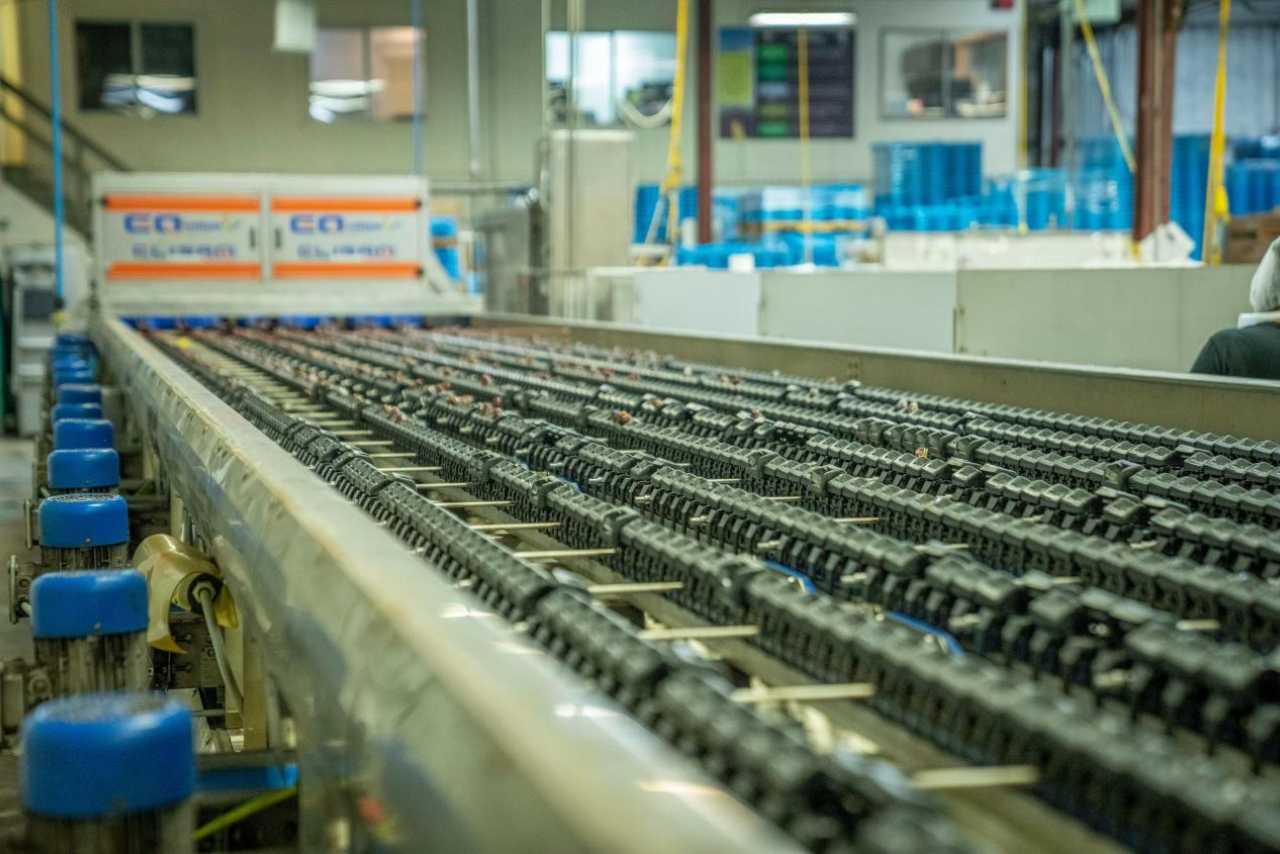
In the new Industry 4.0/5.0 era, clunky, labor-intensive factories are now transforming into sleek, efficient facilities operating in fully automated lights-out mode. Unlike traditional manual machines, such factories use smart production line equipment, which is essentially an array of interconnected systems powered by Internet of Things (IoT) sensors and AI-driven robotics, all running under the umbrella of real-time data analytics that automate assembly, quality checks & packaging.
This hierarchy of operations is now the backbone of modern industry; a recent report from McKinsey highlighted that factories running smart and automated production lines recorded more than 40 percent higher efficiency while slashing defects by half. The report also forecasted that, based on current trends, a $3.7 trillion manufacturing output is expected to be reached by 2030 with the current global adoption rates of smart production lines.
With such industrial trends on a global scale, every industry on the planet, small or big, should take note of what’s happening in this automated world. This article is your guide to smart production line equipment, how it work, how to invest in them, and what to avoid during this process.
2. Basics of Smart Production Line Equipment
2.1 Real-Time Monitoring & Dashboards
Modern automated line equipment is interlinked with an advanced dashboard that cuts response times from hours to minutes and helps in boosting the Overall Equipment Effectiveness (OEE) of the facility by 15 to 20 percent. Think of them as mission control for a factory floor where customizable widgets generate reports, track set KPIs, & even send predictive alerts.
These dashboards are wired with hardware on one end and integrated with Manufacturing Execution System (MES) software on the other. So they are not just passive displays, but proactive advisors that also recommend tweaks in operations to optimize energy use and reduce waste on production lines, which is key for sustainable Industry 4.0 operations.
2.2 AI-Powered Predictive Maintenance
The smart part of such production lines comes from AI, which analyzes sensor data from the equipment and is used to predict failures (72 hours) well ahead in the real world. The “smart” magic lies in machine learning models, which are trained on vast datasets collected from the production lines and are used to continuously improve accuracy.
Modern companies now pair such equipment with AR overlays for technicians, which enable them to fix issues remotely or on-site. This not only minimizes disruptions in production activities but also ensures seamless scalability in peak seasons.
2.3 Modular & Scalable Design
Modern production lines are not fixed or inflexible but feature hot-swapping modules, which can be reconfigured or scaled without halting production. For example, you can swap a packaging arm with a new vision inspection arm in under an hour.
This happens due to standardized interfaces in production line equipment, which are a must here as it is ideal for volatile markets where demand fluctuates wildly. This is extremely crucial for e-commerce companies as they can easily ramp up their production for peak seasons without significant capex spikes.
2.4 Energy Efficiency & Sustainability
Such equipment features the next generation of servo motors & regen braking, cutting power by 40 percent. To manage Environmental, Social, and Governance (ESG) compliance, this hardware should track carbon footprints in its operation, which helps global clients meet green initiatives.
This sustainability is the core focus of companies when investing in new hardware, and they now favor suppliers with low-carbon footprints. As a side benefit, such green equipment and its optimized lines reduce bills dramatically.
2.5 Advanced Vision & Quality Inspection
Camera tech is integrated with such hardware to perform deep learning of operations and detect flaws that a human might miss. The tracked data include colors, cracks in the surface, and deviations from alignments.
Such systems are termed “advanced” for a reason; they can go beyond detection by performing self-training on new products and can also be integrated with robotics for auto-correction. This is highly desirable in certain industries; for example, in consumer goods, it builds brand trust through zero-defect outputs, and in pharmaceuticals, this ensures compliance, which is non-negotiable.
3. Selecting Equipment for Smart Production Line
3.1 Assess Your Production Needs
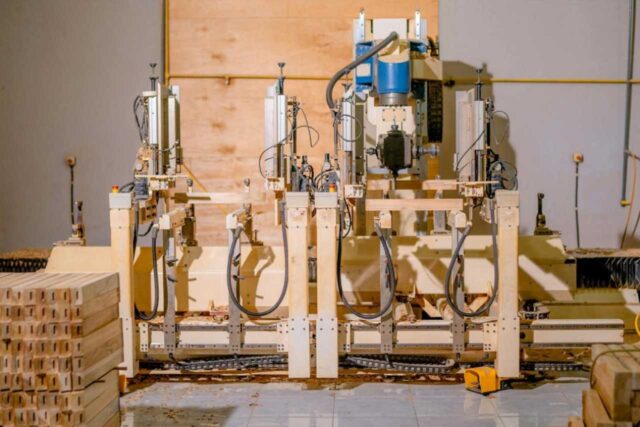
The very first step is to implement a self-audit of current operations and the output goals targeted by management, and once clear data and targets are defined, you can proceed accordingly. For example, low-volume custom work with production lines producing under 1,000 units/day favors flexible cobots.
If product lines handle much higher volumes, say over 10,000 units per day, then the management needs to consider rigid automation. For this, complete mapping is required for the entire workflow. How will the assembly be done? Which testing procedures to use? How to do mass packing?
With all this, you must account for demand variability, as some industries are highly prone to seasonal peaks that demand scalable production lines, and the equipment installed with them should be able to match higher production numbers than usual.
3.2 Evaluate Compatibility & Integration
Once the scale and goals are decided, the next step is to ensure that this equipment will mesh with existing Programmable Logic Controllers (PLCs) and Enterprise Resource Planning (ERP) systems in service (like SAP or SCADA). To get the most compatibility, it is recommended to always prioritize open standards (like OPC UA and MQTT) for plug-and-play.
Consider questions like “Can it sync with your conveyor or vision system? What are its API demos, and what are the results of its interoperability tests.” Poor planning in this phase easily leads to bad integration, which is recorded to cause more than 25% of failed upgrades, as reported in the latest report of Gartner.
3.3 Reliability, Certifications, & Warranty
Robust equipment from worthy vendors is designed to withstand 24/7 abuse during production routines, with warranties covering remote diagnostics. Consider IP65+ ratings (for dust and moisture) and a mean time between failures of more than 50k hours for max reliability. Look for a minimum two-year warranty and compliance certifications such as CE for safety, ISO 9001 for quality, and UL for electrical safety.
3.4 Compare Costs: Total Cost of Ownership (TCO) Over Upfront Price
A comprehensive total cost of ownership calculation should be included in the planning phase, where engineers will consider purchase and installation expenditures (covering 10 to 20%), energy, and maintenance (reaching 15% annually). From one’s perspective, a $300K production line that claims to deliver 25% energy savings easily beats a $200K gas guzzler in long-term operations.
3.5 Test, Negotiate, and Vendor Check
When everything gets on paper, never proceed by buying blindly. Instead, insist on on-site demos or at least proof of concept from the vendors. The package to be delivered should include support responses in less than 24 hours, detailed training, and upgrade paths for future scenarios, if possible. In this upgrade, aim for 90%+ satisfaction for the above criteria.
4. Common Mistakes to Avoid
4.1 Underestimating Training
This is a critical mistake and is also a significant problem in today’s transformational industrial age. The skills gap is also concerning for these new automated systems. Always allocate 2 to 4 weeks for upskilling your staff responsible for operating this new equipment.
4.2 Ignoring Integration Needs
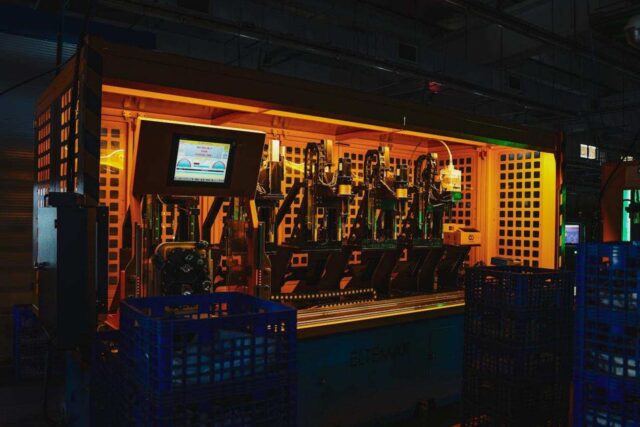
This is one of the most common mistakes, even in the modern industrial era. Investing in product line equipment for integration into autonomous working environments should not be treated as siloed hardware, as it can easily lead to data islands. Always consider open protocols like OPC UA in your equipment to keep things simple and workable for the future.
4.3 Neglecting Cybersecurity
Interconnected and autonomous does not mean these systems are immune to hacking, as ransomware is still a reality and is seen to paralyze vulnerable equipment used in production lines. Always stress IEC 62443 compliance when investing in new hardware and build zero-trust models with heavy firewall implementation.
4.4 Overlooking Local Conditions
Every region is unique with different weather conditions. The local conditions should always be considered, with factors like dust, humidity, and vibrations, as these factors can easily degrade unprotected gear. To address this, check IP ratings meeting the operating environment.
4.5 Skipping Pilot Tests
Even with everything on track for your upgrade plans, it is recommended to always start with one line first. Pilot tests are a standard procedure to validate ROI on a small scale and are a safe step before moving to a full rollout. Scaled testing with new hardware is a common mistake and should be avoided at all costs.
5. Smart Inspection for Production Lines in 2026
For this hardware rollout, an intelligent test and inspection system is crucial for success, as these systems are designed to integrate directly into the production line and can verify the equipment’s operational status. JETTEST, a national high-tech and “Specialized, Refined, Differential, Innovative” enterprise with 18 years of experience in industrial testing, provides automated testing hardware that easily interlinks with MES and higher-level automation platforms and helps maintain the strict quality and compliance requirements of global buyers.
For example, JETTEST’s Optical Shaft Inspection Instrument package can be used to record precise dimensional & geometric data from rotating shaft parts in production lines without physical contact. Instead of relying on slow tactile checks and manual gauges, such systems instantly identify quality issues and interlink with higher-level automation systems to lay down a fast, data‑driven, integrated process. In addition to optical inspection, our core portfolio includes fully automated PV inverter test systems and energy storage battery pack test lines, featuring our exclusive 80% energy-saving load technology that significantly reduces testing costs.
This system proves extremely useful in automotive & motor assembly production lines for ensuring shafts used in gearboxes, pumps, and motors meet tight tolerances before they get assembled. This creates a seamless inspection process integrated into the production line workflow. Our solutions have been widely adopted by leading manufacturers such as Growatt (Vietnam & Thailand), helping them reduce field failure rates by 70% and pass local certifications smoothly.
6. Wrapping up
By understanding the above-mentioned basics, carefully planning for compatible and scalable systems, avoiding common deployment mistakes & integrating intelligent inspection solutions for smart production line equipment like the ones from JETTEST, companies can easily achieve results with higher throughput, stronger compliance, and much lower defect rates.