
1. Introduction
As most of the global manufacturing businesses race toward new standards of Industry 5.0, work as we know it is now embracing human-robot collaboration powered by AI and ultra-fast edge computing. Automation in manufacturing industry is no longer a choice but is becoming a necessity to stay competitive, which cannot be ignored.
But in this new wave of tech revolution, manufacturers face a make-or-break moment as many factories run into mechanical bottlenecks with global competition demanding zero-defect output and rising labor costs.
Moreover, the transition to such advanced systems itself requires a clear understanding of these new standards, accurate projections of efficiency gains, and ROI and FCC/CE compliance readiness.
2. Why Automate Your Manufacturing in 2026?
The latest projected numbers of manufacturing output are $16 trillion by 2030, and more than 40 percent of this will be scooped by AI-powered facilities. This projection is bringing market pressure as well as a wave of new, exciting opportunities for businesses with efficient operations.
Major issues like a significant skilled worker gap for a new, advanced AI-powered work environment are pretty much still there. Prepping current manufacturing operations for the human-AI symbiosis of Industry 5.0 is also quite challenging, and implementation of this AI integration requires careful analysis of ROI and training costs.
But businesses that overcome this are already witnessing a slashing of operational expenses by 25 to 30%, along with cutting defect rates in their operations from 5% to 0.5%. This is saving millions in annual budgets for them, but the question of “how and how much to spend” remains for those who are witnessing this integration of automation in manufacturing industry.
Below is a clear roadmap for such business entities planning to take the next step in revamping their business operations to achieve better accuracy, decrease downtimes, and increase throughput.
3. Actionable Steps of Automation Integration
3.1 Assess Your Current Manufacturing Setup
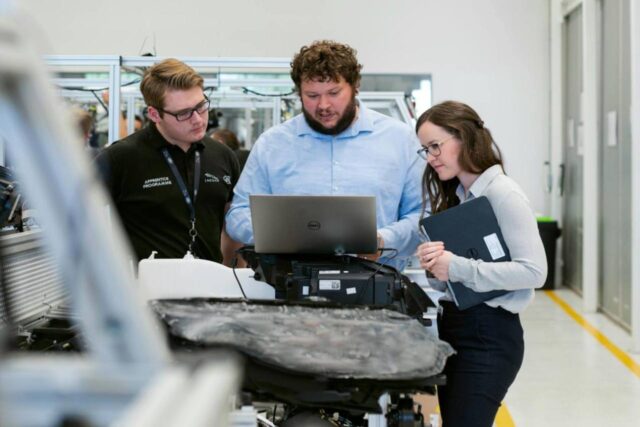
The very first step is to assess your current operational baseline and mark it as a critical assessment phase for the entire automation plan. Skipping this step can easily lead to inefficient processes or selecting mismatched technologies for the integration of automation systems.
Professional teams use tools like Lucidchart and Miro for process mapping of current facilities, which use value stream mapping techniques to record every workflow from the raw material intake in the factory through final packaging. The goal here is to mark non-value-add versus value-add activities in the manufacturing site. This mapping makes it easy to identify primary bottlenecks in the manufacturing lines and helps in creating KPIs like overall equipment effectiveness, or OEE.
Others include downtime frequency, throughput variance by shift, and defect rates per million opportunities. For comparison, a typical automated facility exceeds 85% OEE compared to approx. 65% for a manual operation. Technology readiness audits and labor analysis identify infrastructure capabilities and automation priorities and are done with tools like Tinkercad (free) and Siemens NX (paid).
3.2 Define Goals
Specific, measurable, achievable, relevant, and time-bound, or SMART, is taken into consideration, as this framework prevents scope creep. In real life, more than 40% of automation projects exceed budgets, and to avoid that, SMART is used. It gets rid of vague objectives like “automate everything,” as it can easily lead to poor technology selection and implementation failures.
For this, budget allocation templates are used to prevent mismanagement of resources in the six areas of these goals. To track progress, specific metrics dashboards are established, and the goals on these dashboards are different for different industries. For example, the food industry focuses more on traceability with IoT MES systems, and the electronics industry prioritizes zero defects through AI vision, etc.
3.3 Select Core Automation Technologies
Once you are done assessing KPIs and benchmarks are all set, the next stage is to select automation technologies relevant to your business goals. For this, companies prioritize the highest ROI solutions first and categorize them as tier 1 automated tech.
Examples of such a tier of automation solutions are Universal Robots UR10e cobots and Cognex In-Sight D900 AI vision systems, which are designed to give back ROI in 8 to 12 months and perform different roles in automated factories. Then comes the Tier 2 infrastructure, which is typically operational software that supports production management.
Decision matrices guide selection balancing cost, ROI, implementation ease, and scalability. Cobots and AI vision qualify for Phase 1 implementation due to superior metrics across all categories. MES systems suit Phase 2 after establishing an automation foundation. OPC UA compatibility ensures future-proof integration across vendors and technologies.
3.4 Design Your Factory Layout for Seamless Integration
For such a highly efficient working environment, its space also has to complement the cobots and fully automated systems to run without safety hazards. Companies use zone-based architecture, which divides factories into five specialized areas and also enables a solid reduction of 18% cycle time through U-shaped flow.
These zones are the inbound zone (AGV docking), prep/buffer zone (robot tending), primary assembly zone (for cobots), quality control zone (for AI vision), and outbound zone (for palletizing). This approach is combined with ISO 10218 safety zoning to protect humans working in such zones.
In these zones, a 2 meter × 2 meter footprint plus a 1.5 meter safety radius is maintained. A 19″ rack space for edge servers is a standard, while for conveyors, a radius of 1.5 meters × 1 meter is maintained.
3.5 Source Reliable Equipment and Partners
Numerous ROI case studies have revealed that factors like CE/FCC certification, 24-month minimum warranties, and local support within 200 miles are some of the most important factors to consider when selecting equipment and automation partners. Automation integration is a risky investment as a business is letting in a new vendor in an already set business and for a tech it has no experience with.
That is why it is highly recommended to always go with vetted automation partners for procurement of hardware and ongoing support. Always pay attention to missing CE documentation, industry unfamiliarity, absent pilot programs, and lead times exceeding 8 weeks.
3.6 Build Your Automation Team and Skills Roadmap
For a typical production line of an SME or large-scale enterprise, you are going to manage a team of 1 automation engineer with 2 robotics technicians, 1 data analyst, and personnel for IT support. For this team, skills like PLC + ROS2 for engineers, MES and PowerBI for analysts, and cobot training for technicians are required.
Manufacturing businesses employ phased onboarding for such a team, progressing to at least one month of pilot operations. Neglecting this can easily create skills gaps and is shown to cause serious bottlenecks and hurt ROI or cause ROI delays.
3.7 Test, Certify & Scale
It is recommended to start in a four-phase rollout structure in which Phase 1 lasts for 1 to 4 weeks and involves testing of single-station pilots. Once done, move to Phase 2, lasting a maximum of three months, in which you proceed with integrating full production lines.
Next is phase 3 for another three months, in which stress testing is conducted, and phase 4 involves processes for FCC certifications, including emissions testing and CE Machinery Directive certification.
Once done, develop live KPI dashboards (with Tableau Public or AWS IoT) to track OEE trending and other variables like energy consumption, predictive maintenance alerts, etc. As data grows, use it as a foundation for further scaling.
4. Mistakes to avoid
- One of the most common mistakes is skipping baseline assessments, which leads to more than60% of automation projects failing. To avoid that, always complete 14-day OEE audits before any official procurement begins.
- Another one is to automate everything, which is observed tolead tomore than 40% budget overruns. Use SMART goals (as explained above) to avoid this.
- Poor planning for factory layouts is another very common mistake that can compromise safe operations and lead to inefficient flows. To avoid this, consider U-shaped zones with a1.5-metersafety radius per cobot.
- Investing in wrong technological solutions is another common mistake related to automation in manufacturing industry. To avoid this, re-prioritizeTier 1 technologies(as mentioned above) according to specific business needs.
- Automation integration stallsdue to inadequate training of staff operating them. Introduce at least 3months of PLC/ROS training to stay away from stalling.
- Along with training, change management is also commonly ignored, which is observed to result in 45% adoption failure.Combine profit sharing incentives and safety trainings to tackle this resistance.
- Another common problem is hurdles in MES integrationwith ERP/CRM systemswhen creating data silos. To fix that, use OPC Unified Architecture (OPC UA) from day one for maximum compatibility.
5. JETTEST for Compliance and Precision
In the abovementioned section of testing, certification, and scale, burn-in testing systems are used by companies as an essential final quality checkpoint. Such systems are designed to stress-test (load cycling, thermal stress of 0 to 125°C, and voltage spikes) power supplies used in integrated automated manufacturing lines for a certain period of time to catch mortality failures.
In 2026, JETTEST burn-in systems have earned a strong niche reputation in the automation industry, bringing up to 95% failure detection in such automated manufacturing lines along with FCC/CE compliance and up to 12% OEE improvement, paving a way for zero-defect production.
These testing systems are designed as an automatic ICT test + automatic FCT testing platform with a dual or multi-position station. It features a universal design for maximum compatibility and can be configured for different process requirements managed under common compliance.
Moreover, these systems have earned a reputation for zero export rejections, smooth and scalable expansion, and eliminating field returns. An easy recommendation for a company pursuing automation integration in 2026 and aiming for quicker automated competitive advantage in their Industry 5.0 factory.
6. Conclusion
The above actionable blueprint of automation in manufacturing industry of 2026 is going to push your business operations into the Industry 5.0 era with increased efficiency and a certain ROI. The above-mentioned structured approach eliminates common pitfalls (mentioned above) while maximizing sizable returns.