

1. Introduction
One of the worst nightmares for a business in the Industry 5.0 era is a scenario in which its shiny new robotic arms grind to a halt mid-shift. This can quickly cost the company thousands, sometimes even more, in scrapped parts and lost production uptime, but all this mess can be avoided if a framework of a reliability test system is in place.
Such catastrophes are already occurring. According to Gartner’s latest 2026 industry report, global automation downtime costs $50 billion annually and is projected to rise to $60 billion by 2026. Industries most prone to such a nightmare are high-speed lines for EVs, the manufacturing of PCBs, and consumer electronics.
And to tackle this, companies are now actively seeking intelligent, adaptable, and much more penetrating test systems, the unsung heroes in modern working plants. Ignoring them can tank your operations, and using them can do wonders. Below is your actionable intel on how to get started with reliability test system deployment.
2. Why Are Reliability Test Systems Essential in 2026?
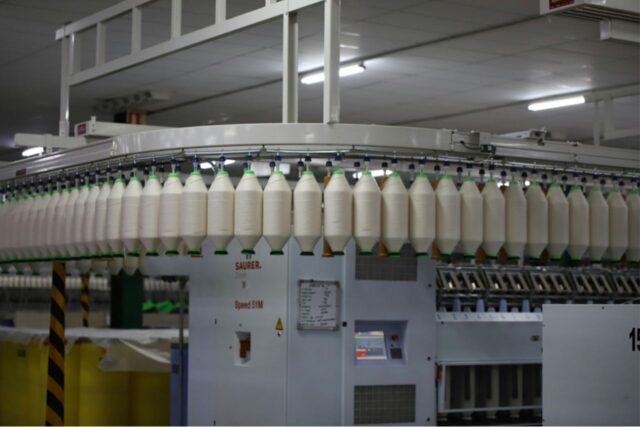
Because 2026 is the year of big claims originating from a working environment where AI-human collaboration with hyper-connected robotics exists. Such systems are hyperefficient both on paper and in reality, but when “reality” kicks in in the field, the downtime from unreliable components is now observed to devour projected profits.
Humid summers can easily melt down solder in robotic arms; high current spikes can cause electromigration, leading to fried computer chips; and vibration fatigue can lead to snapping arms in high-speed sorters. Most of these failures are linked to untested environmental stress, resulting in only 80% uptime (vs. 95%+ for tested systems), as mentioned in the 2026 Automation World Industry Reliability Report.
To increase this uptime, it is now absolutely imperative to use a multilayered, reliable test system to make one’s factory thrive in automation’s unforgiving arena. Such a system will address the failures from the root cause and also help the managers handle robotics integration challenges. Moreover, these systems also help in driving compliance with FCC and CE standards and increasing ROI.
3. Top 8 Reliability Testing Techniques for 2026
Below are the top eight industrial techniques that represent the gold standard for 2026 automation and a toolkit to increase reliability in a system.
3.1 Burn-In Testing
This is the most commonly used technique in the electronic industry, in which the products are exposed to 125 percent of electrical and thermal loads. Think of this technique as a stress interview for an interviewee where the employer puts as much pressure as possible through tough questions, and only the tough ones survive.
In the industrial world, this stress is essentially excessive electrical and thermal loads, which are exposed in multi-zone ovens with temperatures ranging from 85°C to 150°C and voltage elevation to 1.5 times the nominal voltage for electronic components. The goal here is to simulate worst-case scenarios for ICs, sensors, or robotic motor drivers in the system. It is carried out for a time duration depending on the targeted value of the mean time between failures.
3.2 Highly Accelerated Stress Screening
This technique applies calculated and well-tailored stress by using customized ramps of vibration and temperature spikes with statistical process control that flags outliers. Think of this technique as precipitous failure hunting in a system with precision strikes, or stress, as we may call it.
These testing techniques push products under observation to absolute failure limits via rapid temperature swings, typically ranging between -100°C and 200°C. It also exposes these products to multi-axis vibration with profiles like random 5 to 2,000 Hz sweeps at a value of 20 g RMS, all synced with thermal ramps.
The test also inspects a system with defined USL/LSL spec limits when exposing it to voltage glitches of 10% overshoot or undervoltage. Unlike a gentle check, this technique is designed to quickly uncover design weaknesses, as the goal here is to catch assembly flaws without leading to overkill.
3.3 Highly Accelerated Life Testing
This testing goes one step further in reliability testing as it exposes the system to the absolute limits of both temperature and vibration. We are talking here via rapid temperature swings of -100°C to 200°C and multi-axis vibration, which can climb up to 60g.
For this, systems like liquid nitrogen/heaters are used with 10°C/min ramps across -100 to 200°C and vibration shaker tables, which can output between 5 and 5,000 Hz with 60 g to simulate real orientations. This extreme testing system boosts reliability by spotting problems in EV controllers, weaknesses in robotic arms, and bottlenecks in vision systems.
3.4 Highly Accelerated Stress Audit
This is basically a complete testing routine in which periodic HALT-like audits are done to maintain production reliability. It is used as a periodic checks for your reliability test system routine for robotics-integrated lines and is carried out as quarterly or per-lot-like stresses.
Such a reliability-checking system is often used for auto sampling in a company’s manufacturing execution systems. It is used whenever management decides to check a new stock from a new supplier as a post-change check or during a process tweak.
3.5 AI-Powered Predictive Failure Analysis
This uses neural nets on sensor streams on which ML models are executed to predict system failures from partial data with more than 98% accuracy. Such a system doesn’t rely on traditional reactive testing but uses its processes to receive multi-sensor inputs of vibration, temperature, strain, and current via edge-deployed models to foresee when a failure would happen.
The sensors work with convolutional neural networks, which extract time series data of the system, while recurrent neural networks handle sequences. The entire network is trained over historical data of HALT/HASS systems in place and integrates seamlessly with cobots via MQTT/OPC-UA to detect any drift from nominal set values. This is the backbone of a typical Industry 5.0 cobot work environment and also significantly increases reliability and efficiency in a facility.
3.6 Vibration Reliability Testing
This reliability check system is used for isolating mechanical weaknesses by using FFT analysis and electrodynamic shakers with sinusoidal/random profiles up to 100 g. It pinpoints mechanical weaknesses, especially, and is very useful for identifying such weak points in robotic joints or PCB fixtures.
For this, modal analysis is done on the rigid structures on which these tests are run, between 1 and 4 hours, with multi-axis profiles, and is then coupled with various FFT processing modes on MATLAB or Python.
3.7 Environmental Stress Screening
This technique is used to simulate shipping and storage abuse in milder profiles for a business and is extremely vital for operations dealing with global supply chains. It is less stressful than the ones we mentioned above but is equally crucial for maintaining reliability.
Such a system uses temperature and humidity cycles between 0 and 70 degrees Celsius and 20 and 95% RH with a vibration range of 10 to 30 g and an altitude of 10 to 50 kPa over the span of 24 to 96 hours.
3.8 Shock Testing and Thermal Cycling
This form of testing focuses on mechanical and material integrity under rapid, repeated stress of high‑g impulses. This analyzes a system’s integrity in question, especially linked with robotics, which is also exposed to liquid-to-liquid immersion with 1,000 cycles.
Such rapid temperature shifts reveal expansion mismatches, harden any EV controllers against potential mismatches, and help in robotics integration, leading to a solid uptime boost. The combined routine of shock and thermal testing is essentially a compound stress profile that logs continuity, resistance to detect degradation, intermittent opens, and leakage current in its circuit.
4. Implementing Best Practices & Future Outlook
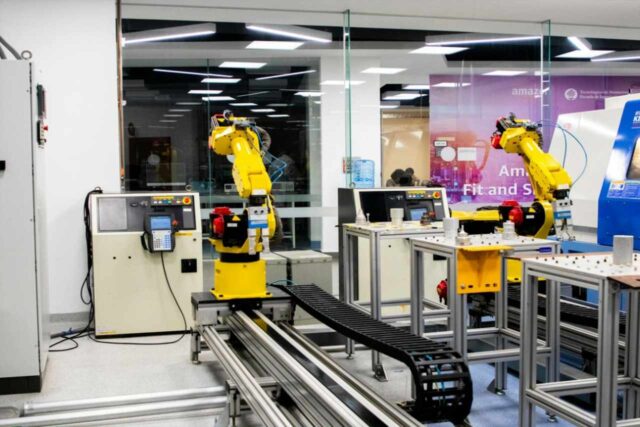
A successful implementation of such testing routines demands a phased roadmap designed for your automation setup. Companies carry out a detailed failure modes and effects analysis in their facility to prioritize which techniques (mentioned above) to start with.
From there, they can pilot on 10% of output using modular chambers designed to integrate via OPC-UA with robotics. Once all is in place, you can start to scale in the future by using AI predictive analysis over ESS with standards of mean time between failures of more than 1 million hours and overall equipment effectiveness of more than 95 percent.
In 2026, the above-explained landscape of reliability test systems is evolving into a much more efficient platform powered with quantum sensors, 6G edge sensors, and zero-defect digital twins. Such futuristic platforms are now observed to bring 99.99% predictive accuracy in reliability systems expected to cut down global downtime below $40B before 2028.
5. Common Pitfalls of Reliability Test Systems
5.1 Overlooking Scalability Planning
Not implementing rigorous cost-benefit analysis for one’s business when opting for advanced reliability testing routines like HASS is a major red flag. Each industry requires a specific scale of such reliability system checks, and spending more is an overkill (or the opposite) that can seriously hurt ROI.
To handle this, use a phased cost-benefit analysis, lease pilots, benchmark against MTBF targets, and most importantly, plan modular expansions in your reliability checking framework.
5.2 Neglecting Data Integration
One of the most common mistakes when deploying reliability systems is treating them as isolated silos. When doing this, systems become prone to skipping real-time data integration of the facility with integrated robotics/MES, which can easily lead to blinding managers to any potential failures/erode uptime gains.
This mistake is already causing 35% of unexpected downtimes in Industry 5.0 setups of 2026, according to Gartner. To handle this situation, management is recommended to fuse streams via Kafka, train their ML models on combined datasets for 98% RUL forecasts, and also automate quarantines to achieve a unified dashboard system from day one.
5.3 Stress Profile Customization
Each working environment is unique, and not customizing profiles for reliability systems can easily lead to false positives or missed defects, which can tank production uptime. Testing facilities in different regions of the planet require unique test profiles tuned to their working conditions.
To avoid this, companies first conduct baseline FMEA and modal analysis to re-evaluate ramps for their current working conditions. Software like ReliaSoft is used to set 95% Cpk alignment; the idea here is to transform a generic testing profile for their facility and then validate this framework against field data.
6. Reliable Burn-in & Accelerated Testing in 2026
The above-mentioned set of reliability tests relies on system-level discipline to deliver what they are expected to. These systems themselves heavily rely on physical execution platforms with dedicated burn‑in and aging platforms that can simulate and execute controlled electrical (and thermal) stress profiles to estimate and accurately log early life failures.
These burn-in and aging platforms act as “stress engines” for reliability checks and are highly sensitive to the accuracy of test profiles. JETTEST pioneers with intelligent burn‑in and test platforms that are designed as modular and highly configurable hardware and can easily fit in automated product lines of power supply, new energy, and automotive electronics products.
Such burn-in hardware is designed to effortlessly integrate MES, SCADA, and line‑level control systems in their production lines and handle high‑temperature, high‑current, or cycling‑load scenarios with extreme data detail for each unit. In the above reliability checking framework, JETTEST’s burn-in systems become a core/key component for data‑rich testing operations.
7. Wrapping up
A reliability test system acts as the factory’s invisible shield that fortifies the automation drives of companies against downtime. JETTEST’s burn-in systems help companies enhance their reliability testing routines by translating high‑level reliability requirements into concrete and modular operations with high efficiency.