
1. Introduction
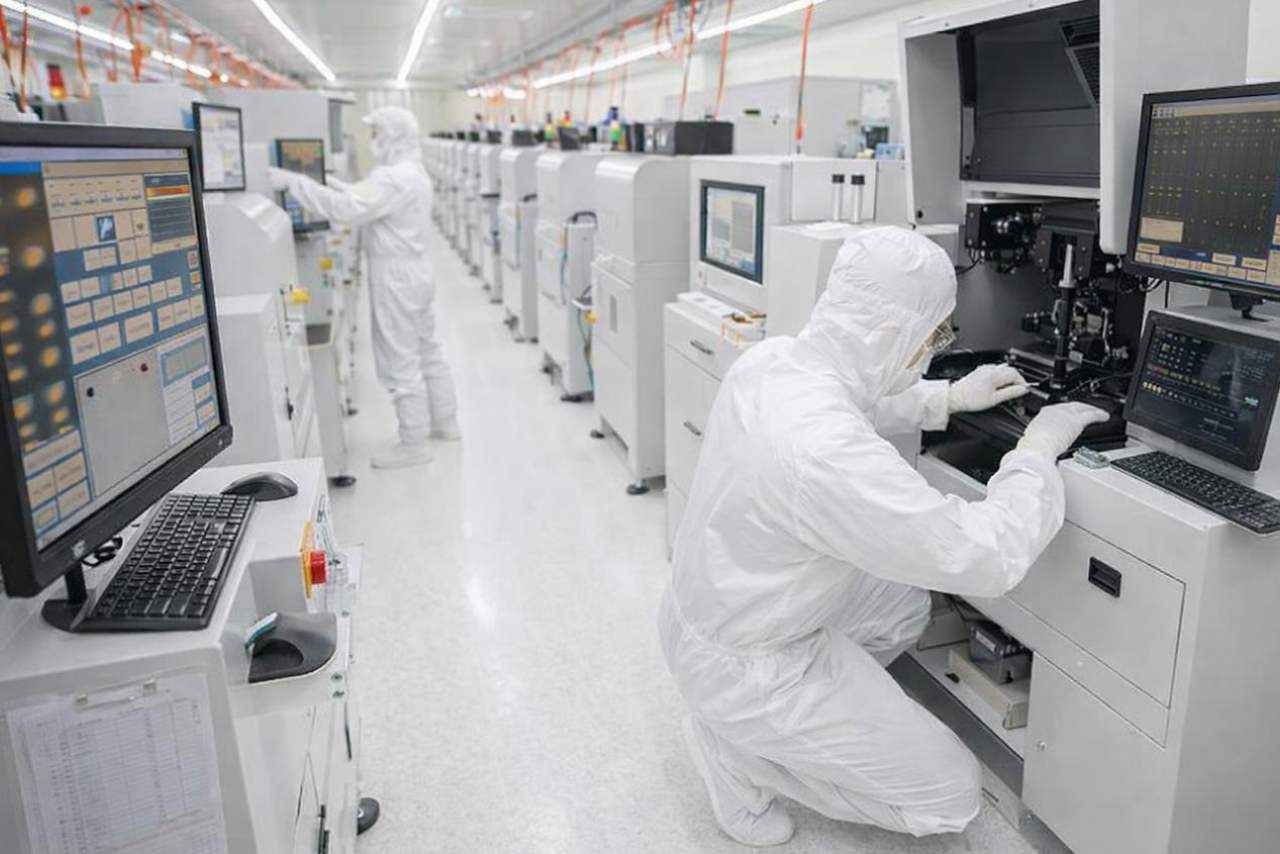
Testing systems have also been a quality gatekeeper for manufacturing all around the world, and with the arrival of improved semiconductors and automated technologies, these platforms have become more intelligent, more flexible, and more precise. In 2026, understanding what is ATE, how it works, & how it is changing with improving chip technology is crucial, as these systems are a strategic part of the industrial production of almost everything.
With the rising bar of chip complexity every year, testing systems are now much more capable and are extremely significant to accurately verify the manufacturing of mainstream products. Below, we explored all of that and also discussed how improved ATE systems are impacting sectors of power, solar, and renewable energy applications.
2. What is ATE?
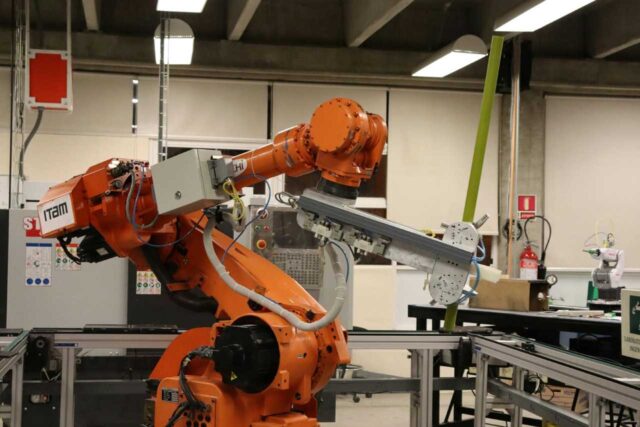
Automated testing equipment (or ATE) is a quality and reliability checkpoint for a manufacturing company. It is comprised of computerized systems and robotics, both of which are used to automatically run diagnostic and stress tests on devices to commence quality control. The prime goal of automated test equipment, or ATE, is to verify that a manufacturer’s electronic device in question is working according to the specified specifications.
At a high level, this equipment works by generating signals, applying them to the device in question, measuring the corresponding response, comparing the result against an expected standard, and finally recording the outcome. All this works automatically using software scripts without human intervention and is done so to get high accuracy and speed in high-volume production, especially in semiconductor and automotive manufacturing.
Think of it as a system that is not just a single traditional machine in the simple sense. But it is a complete testing ecosystem that works with different sets of hardware and software, several measurement systems, and control logic, interfaces, and many other supporting components working in harmony to evaluate semiconductor devices.
The main difficulty in such a system is to maintain precision, for which specialized electrical interfaces are used along with advanced software controls, measurement modules, and structural components designed to maintain industrial-grade repeatability and reduce error in measurements. For this, ATE uses advanced hardware and software architecture to keep up with the speeds and accuracy expected of it.
3. ATE Physical Architecture
3.1 The Instrument Chassis
This is the main body of the instrument, which is designed to deliver a stable configuration and protect the instrument from external forces like environmental stress, vibration, and mechanical instability. The chassis is designed to give the platform a controlled physical framework to keep it protected from outer electrical interference as well.
Inside, there are usually modular standard bays like PXI and CompactDAQ, along with signal generators, digital multimeters, oscilloscopes, etc. Modern ATE available to manufacturers comes as modular solutions, which come in handy when they might need one setup for testing high-speed digital devices and another for mixed-signal or power-heavy electronics.
3.2 Power Unit
Testing equipment needs stable power to confirm the working state of other devices, which makes the power unit not just a supporting component but a core part of ATE. To be maximally compatible with what it’s going to test, it is designed to deliver AC & DC power up to high capacities, along with support of single or three-phase distribution.
The high-capacity range is required to match the electrical infrastructures required for testing products from different industries, including computing, solar electronics, automotive systems, and industrial controls.
3.3 Thermal Management
Both the equipment & the devices under observation generate heat, which makes thermal management extremely crucial. Modern ATE is designed with advanced power electronics and cooling systems to make sure that the sensitive instruments do not overheat.
For that, an array of integrated fan kits is used, integrated with temperature sensors and control logic for efficient airflow management, which can also quickly respond to heat buildup. Such thermal control is extremely important for preserving measurement accuracy.
3.4 Safety & Emergency
A dedicated safety and emergency kit is in place to keep the Device Under Test (or DUT) and the operators safe when in the vicinity. For this, systems like thermal shutoffs and circuit protection are used to keep the device, machine, and operator safe.
Such equipment also supports production continuity, as this software layer not only stops a fault in a manufacturing line but also helps isolate the problem so the rest of the line can continue operating when possible.
4. ATE Software Architecture
4.1 Rack Control Unit API
It is a dedicated API that talks directly to the ATE’s rack-internal microcontrollers, which are designed to monitor the entire system health, control startup/shutdown voltage, and check fan speeds.
4.2 Test Executive Layer
A top-level software framework sits on top of the digital core of ATE, which is designed to manage the entire testing sequence for a specific product, record its log data, limit access based on set privileges, and generate final reports. This layer is also more connected to data analysis & production systems.
4.3 Instrument Driver
Also called an abstraction layer is an intermediary code for ATE that translates generic testing commands into hardware-specific languages. These layers allow operators to quickly swap out obsolete or broken test gear without rewriting the entire test program.
5. How ATE Works
Traditional ATE systems were basically a simple pass-fail check, but with the rise of modern electronics and semiconductor tech powering them, these systems have exponentially changed, making the question “what is ATE” and “how ATE works” a bit complex to answer.
This is because modern ATE go one step further than just checking if it works; they also analyze how well this device works in real-life conditions and under what conditions it works, where it starts to drift when things become too tough for it, and whether such a device, when being tested, can be trusted in the field.
For this, device preparation is done by proper physical placement and its alignment, electrical connection, and test configuration. This setup is different for each device, as different chips in a device require different test profiles. Once set, the ATE simulates desired operating conditions and generates controlled signals to check the device response.
Modern ATE can generate multiple simulation environments and can detect the slightest deviations across several variables that help manufacturers understand how a device will behave in the real world. Operational characteristics like power consumption, timing, output behavior, and stability, etc., are noted. The final step is data capture and feedback on the data collected during the tests.
6. Fueling of Chip Complexity
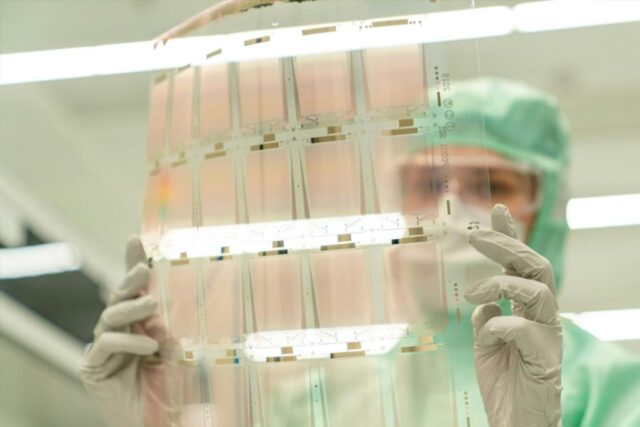
In 2026, the semiconductor industry is observing a huge upgrade in computational and hardware production capabilities. Now, the chips are no longer simple, single-function devices but are much denser, integrated, and run in highly optimized systems that can easily combine multiple functions in a tiny space.
With these new chips, the modern industry of today is already embracing huge technological advancements; the computational power required to support such devices with advanced chips is also evolving to higher thresholds. The same applies to ATE, as the devices they are dealing with are much more complex and demand more computations to be analyzed.
In 2026, the ATE architecture must be capable of analyzing varied signal behavior and much more demanding production environments than ever before. Moreover, this has to be done with more speed and efficiency to match Industry 4.0’s 24/7 light-out operations. The modern ATE has evolved in four major areas with the arrival of advanced chips:
7. ATE & Chip Complexity in 2026
Modern ATE now comes with better electrical performance, better thermal handling, and more flexibility. The latest automated testing is not a separate entity but an integrated one, which is not just for rejecting failures but to improve the entire manufacturing process control, reveal hidden variations in it, and also support continuous operation in the very high-speed and automated facilities of 2026.
Now, such testing equipment is made to be much more modular, with more flexibility to support different chip formats & advanced packaging styles. Software ruining these systems is now analyzing a higher number of conditions, more branches, and more result interpretations.
Another major change is that modern ATE and its related systems are now built to fit into Industry 4.0 environments, which are not slow, isolated testing stations like they used to be. Now, they are connected, continuously data-driven, 24/7 operations where quality information must move quickly through the factory.
8. Modern ATE and Its Impact
8.1 ATE and Power Sector
With the high demand for smart power systems, manufacturers now need advanced and much more flexible ATE that is more realistic in workflow and can handle demanding situations. Such equipment should be able to analyze inverters, controllers, drives, and battery interfaces of modern-day systems while operating safely when load conditions, temperature, or their power demand change.
Distributed generation & flexible DER capacity in modern utilities where advanced power electronics are needed to operate reliably in complex grid environments. To avoid field issues, advanced ATE, which can simulate thousands of real-world simulations, is used to avoid hefty repairs in the field.
8.2 ATE & Solar Sector
A typical solar plate comes with a long field life, does not create air pollution or greenhouse gases when operating, and takes only one to four years to repay the energy used to manufacture it. At the same time, the electronics used in solar products must be validated to match their field life for durability, consistent performance, and thermal stability.
This is where advanced ATE is making an impact for solar inverters and power management electronics. These new generations of systems can detect and predict premature failure and underperformance in the field and ensure that a setup becomes a dependable energy source with the least possible chance to fail in the field.
8.3 ATE & Automotive Industry
Manufacturers of modern EVs need the ATE to make sure that they yield high and low defects across very large production runs. Such manufacturers are now using automated and interconnected controllers, IoTs, robotics & other communication systems, which all work together to influence robotic adjustments and inline quality control.
Modern automated testing systems are designed to analyze the electronics that feed intelligent manufacturing of this kind and make sure that the facility delivers faster launches, fewer returns, and better consistency across device batches. Latest Chinese EVs are making headlines for their faster production in light of factories, which all integrate next generations of integrated ATE in their manufacturing lines to reduce downtime, improve yield & keep factory automation aligned with 24/7 production needs.
9. Key Challenges of Automated Testing
9.1 Data Handling
Automation and intelligence generate much more data. related to factory systems, daily production schedules, maintenance routines, and the standard quality control processes. For such a facility, automated testing does not operate in isolation. To maintain the value of automation and a constant feedback loop of testing, better integration frameworks need to be upgraded over time.
9.2 Real-world integration
Even with huge advancements in manufacturing systems, ATE, dashboards, and IoTs, manufacturers still face a common issue of real-world integration between their workflows and automated testing routines. Often advertised as universally compatible equipment, in real life, things go otherwise.
This is because RAID changes on technical fronts, where different systems may speak a different data language, operate on a different timing cycle, or follow a different workflow altogether. This chronic incompatibility makes smooth integration harder than it first appears.
9.3 Rapid chip design cycles
Due to the rapid advancements in semiconductor chips brought about by the latest generation of AI models and innovative robotics technology, automated testing systems are under constant pressure. ATE is now exposed to new devices that often arrive with much more advanced architectures designed to achieve different performance targets, which means the test setup must be updated quickly; otherwise, systematic errors can slip by.
10. Automated Testing with Jettest
In today’s high-demanding and ever-evolving manufacturing facilities, modern ATE systems need to keep up with the computational power rooted in better chips and high-stress environments and long operating cycles. JETTEST enables manufacturing facilities to get deeper reliability assurance with the full suite of its automated testing range, designed for modern manufacturing facilities.
One such example is the high-power supply multi-temperature zone B/I system, which is designed to work for power electronics, solar equipment, battery systems, and other applications. This unified platform of high-power burn-in systems enables manufacturers to execute a practical way to test endurance, thermal resilience, and overall physical stability in one workflow.
Similarly, motor driver auto test lines from JETTEST are designed to analyze and maintain the speed of these drives while maintaining consistency. This hardware is extremely helpful in ensuring the reliability of a variety of industrial systems interconnected with motor drivers, which are extremely common in every industrial system, automation, smart control, and electric mobility application.
11. Key Takeaways
A straightforward answer to the trending question of “What is ATE?” is that such equipment simulates and exposes real-life conditions for a certain device and measures its response, comparing the final results to an expected standard. Modern ATE is designed to analyze devices with much more powerful, much denser chips, which work as an integrated reliability layer that positively impacts safety, efficiency, and continuous manufacturing.