
1. Introduction
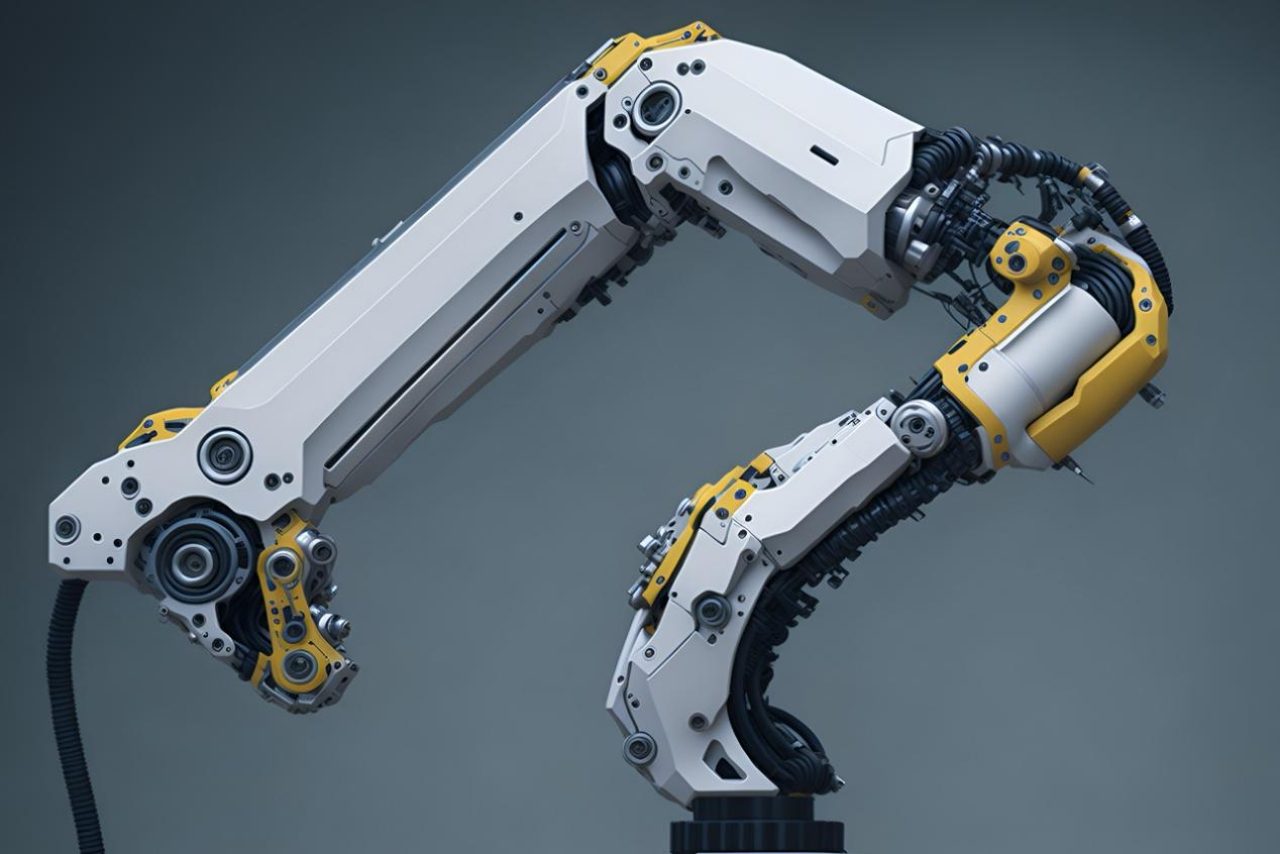
We live in an industry 4.0 manufacturing era where large-scale facilities are already reaching their peak with autonomous robots, sophisticated sensors on equipment blinking like fireflies, and blazing-fast data streams. This standard was once seen as a pinnacle of human revolutionizing of industrial tech as we know it, but then came large-scale cyberattacks on a number of large automakers.
Thus, businesses were stranded for months and exposed how this new system of manufacturing is still fragile to external factors. This is where Industry 4.0 hit its strategic ceiling and its limitations made way for the newer 5.0 models. We are going to discuss that here in detail.
2. Industry 4.0 Manufacturing Era
The fourth industrial standard was pushed by Germany in its 2011 initiative, which essentially laid down the foundations of “lights-out” factories by using pillar technologies of big data, AI, the Internet of Things, and cyber-physical systems, all blended to work together without human intervention in the operation, promising up to 85 percent productivity gains.
Having said that, before this was the computer revolution, marking 3.0 for industrial change; assembly lines paved the way for 2.0, and steam engines were the first to bring about the 1.0 industrial revolution.
The latest one worked by letting the machines literally talk to each other (IoT), and then their communication of petabytes was processed in the cloud with AI algorithms, a classic machine learning mechanism to forecast the future for manufacturing and detect any wear and tear on those machines.
This was quickly adopted by large-scale industries to cut down waste, do real-time quality control, and increase productivity while increasing throughput in many industries, including the automotive industry and pharmaceuticals.
3. Core Limitations of Industry 4.0
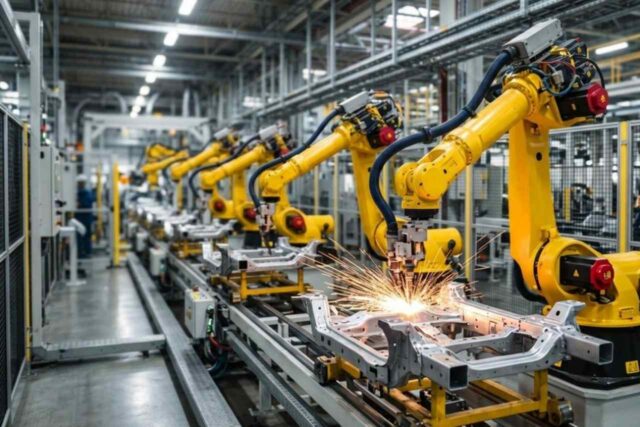
Although this standard brought real-world applications with strong results of reaching an 85 percent productivity increase, it was still not future-proof. This industrial standard runs entirely on deterministic algorithms that excel at repetitive tasks done on production lines.
But this can easily crumble during a sudden change not predicted. It prioritized automation in manufacturing over adaptability, which doesn’t always work. The reason behind this is rigidity in Industry 4.0 manufacturing technological designs and philosophy, as these systems were made to run in only known patterns but easily falter in the case of novelty.
Moreover, scaling often ran into trouble because an IoT device and its backend system from one vendor won’t mesh with another’s AI. The interconnection between hundreds of machines in a manufacturing site was great for efficiency, but it also created a giant vulnerability magnet for itself.
Such a system was prone to cyberattacks with literally hundreds of weak points originating from its connections to other machines. Just one breach would act like a domino and completely halt any manufacturing operations.
When the world witnessed such massive cyberattacks on industrial systems, a strong desire for a new industrial system pushed the idea of Industry 5.0 in 2021 by the EU, which took a mature form in just five years to reshape the industry as we know it. ‘
4. Human-Centric Evolution of Industry 5.0
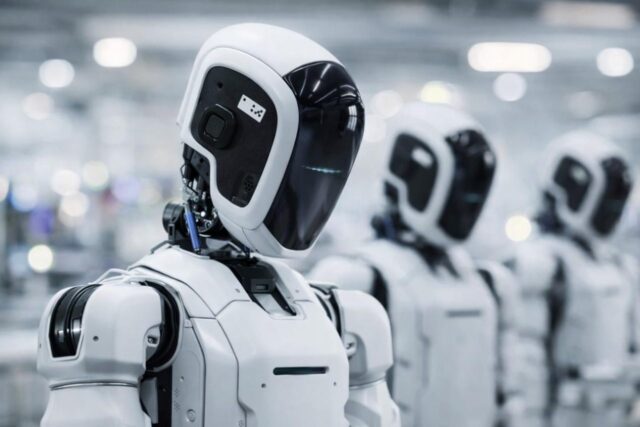
Unlike Industry 4.0 manufacturing, this next-generation model brings humans and machines to work together rather than letting machines work all by themselves. It solves the biggest issue of a manufacturing facility being prone to failure when sudden changes come in the system, along with many other direct advantages.
It revolves around three goals: the first is resilience, which gives such systems the ability to adapt to any disruption. The second is personalization, meaning this system can be reprogrammed to produce personalized goods according to individual customer needs, and lastly, the standard promotes sustainability to produce less waste and use less energy. Several new technologies are making all of this happen.
5. Enabling Technologies of Industry 5.0
5.1 Human-Machine Collaboration
To bring about “collaboration between robots and humans,” cobots powered by AI are used through cyber-physical systems (or CPS). This new technology makes human-robot coworking happen rather than machines replacing humans on a manufacturing site. The goal here is to fuse the accuracy of such AI-powered systems with the ethical reasoning and intuition of humans in a manufacturing industry.
Such a setup also takes away the stress of fatigue-based tasks from humans, where any form of unattended errors can lead to catastrophic issues with the final product. These cobots can easily sense force and can touch with different parameters while working alongside humans in safe protocols.
This collaborative working environment is already being implemented for several industries in 2026. The agriculture sector, where a swarm of drones collects field data while the farmers operating them use AI insights for precise pest control and other actions for better farming results.
5.2 Enhanced AI and ML
These new models of AI and ML are programmed to become collaborative partners rather than just doing repetitive tasks. They use predictive analytics in machine learning by analyzing very large databases and can predict any failure in manufacturing lines (prescriptive maintenance) before it happens, while suggesting corrective measures.
This is done with advanced sensors of IoTs, operational technology (OT), and AI systems to build a continuous loop of information. This results in quick adaptation of human activities by cobots in the working environment and also ensures the safety of humans in the field.
5.3 Digital Twins
They evolve from purely machine-focused twins to a human collaborative system that also helps humans develop resilient and sustainable ecosystems in a manufacturing site. These twins replicate the human element in them, essentially becoming a human digital twin by modeling the physiological, psychological, and even emotional states of an operator and allowing them to adjust the behavior based on fatigue levels.
Such advanced twins make it easy to collaborate with humans in a working space and can receive complete sets of commands or just a simple, understandable conversation through tools like extended reality or virtual reality. This is extremely useful in a manufacturing industry where such tech is used to train cobots in real time, on-site, or even remotely, just using human physical inputs.
5.4 Low Latency Intelligence
All this fancy digital twin technology to mimic human movements in robots can instantly fall apart or even become unsafe if latency is not taken care of. Imagine a sudden movement and reaction times are lagged by a few milliseconds, which could cause a huge catastrophe on a production line.
This is why Industry 5.0 uses low latency for human-to-robot connectivity rather than Industry 4.0 machine-to-machine connectivity. This ensures smooth working of collaborative robots and enables instant haptic feedback for these robots, just like in a physical world for humans, and it is also pivotal when training through AR.
Although edge computing takes away a lot of pressure for maintaining the low latency threshold in a system, the need for low latency, through 6G systems still remains at the core of Industry 5.0.
5.5 Biotech
The goal here is to make production lines adaptive and self-regulating, and for this, biological systems are directly embedded with manufacturing processes. Unlike Industry 4.0’s mechanical sensors and rigid automation systems of the Industry 4.0 manufacturing era, the goal here is to integrate AI systems, robots, and all the available advanced biology knowledge, all in one place.
Such an arrangement prioritizes the well-being of the worker in the manufacturing site and also boosts environmental stewardship in the entire production cycle of a specific product. Such a system is essentially an “adaptive plant,” which considers “human-in-the-loop” in each action by monitoring their physical and mental states.
5.6 Blockchain and 6G
As mentioned above, the biggest problem with the earlier Industry 4.0 standard was its vulnerability to being hacked or to crumble in the time of chaos. Tamper-proof traceability was needed, and that gap is filled by blockchain’s decentralized ledgers. This significantly improves system security and brings confidence among all parties as well.
Aside from the security, such an industrial system also demands <1 ms latency to avoid any delay in its operating model, and this is what 6G promises to deliver. This means any form of AR data used when collaborating in a manufacturing site is always delivered with max possible speeds along with its other applications in this industry model.
7. Need for Precision Testing Platforms
When planning to execute this revolutionary shift of Industry 5.0, many operational gaps start to appear for different industries. This is where a precision testing service like Jettest bridges these gaps and seamlessly connects the current Industry 4.0 manufacturing to a human-centric future of industry 5.0.
Jettest is an established leader in the industrial landscape that specializes in precision test equipment and has earned strong market presence for implementing full production line automation around the globe in diverse sectors.
The company also leads smart factories making their transition to industry 5.0 and helps them to implement cyber-physical integration with complete confidence. It uses its precision linear modules to benchmark the existing lines and deploy turnkey automation to check for disruptions, essentially checking any phase 1 gaps before the transition to deployment of human-AI symbiotic systems.
8. Wrapping up
Industry 4.0 manufacturing standards revolutionized the world and how humans work as we know it but also introduced inherent fragility to conditions like being prone to cyberattacks or changes in supply shocks. Industry 5.0 fixes that by bringing human-robot collaboration with advanced AI and ML models. Jettest helps businesses embrace this transition and acts as a precise validator for this technological leap.