
1. Introduction
We thought the year 2020 was the worst, and yet 2026 is bringing even more surprises. Geopolitical instability, especially in the Middle East energy routes, and worldwide supply‑chain fragility, all of which are exposed this year. This is worrying manufacturing businesses and related entities all around the globe and also demands more efficient quality control in manufacturing to protect their interests.
Although the world we live in has been in flux lately, this doesn’t mean businesses have to become vulnerable to collateral damage to their operations, reputation, and customer trust. This is where reliability-upgraded QC systems should be adopted, which are especially tuned to disruptions of 2026. Read along to learn how to revamp your QC strategies this year.
2. What is resilience in quality control?
The concept of resilience in manufacturing came into real attention during the 2020 COVID era when many industries faced disruptions, and their aftereffects still reverberate in the market of today. In both theory and practice, the resilience in quality control for any form of industrial manufacturing is defined by reliability in its operations and the level of awareness.
These two are the basis for predicting and preventing any future disruptions and directly ensure that the manufacturing operations of a firm continue smoothly even in the face of challenges. This is why companies are now focused on developing the right set of capabilities and revamping their quality controls with strong resilience across their entire value chains.
3. The 2026 Manufacturing Landscape: Key Disruptions
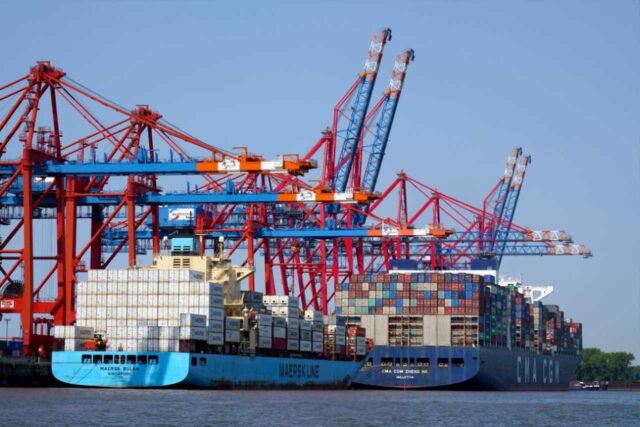
The most significant reason behind QC systems becoming more critical than ever is permanent disruptions in the supply chain caused by macro‑level forces. Such a situation is unprecedented, as businesses are usually modeled to absorb temporary shocks in the market of internationalization and interconnectedness, but this is not the case anymore in 2026.
Problems like sudden increased material and industrial energy prices (that were not even forecasted) and supply chain volatility linked to many other factors are shaking the stability of business operations. Supplier concentration, changing government policies, and logistics bottlenecks are all linked to disrupting supply chains.
Moreover, higher compliance requirements and skill gaps for quality checks in the supply chains are now demanding an even higher QC framework, which is data-driven in real time and is both proactive and adaptable this year.
4. Core Principles of Resilient Quality Control in 2026
A strong and more flexible QC doesn’t have to be complicated but should have a set of very clear and repeatable principles. The first, the most important one, is to shift from inspection to prevention right from the source. As supply chains are more prone to disruptions, now only design‑for‑quality methods are to be implemented to maintain stable operations.
IoT‑based process monitoring and machine‑level KPIs are now not just an option but a necessity in modern supply chains, which feed real-time data to QC systems and prevent the production of defective items, let alone batches of them.
Moreover, making supply chains and their QC systems more resilient and responsive requires frequent updates in sampling plans, inspection logic for the items they deal with, and digital SOPs to keep their operation effective. Resilience has become one of the key characteristics of Industry 5.0, and such measures will ensure a firm’s quality control in manufacturing this year is intact.
5. Building a Resilient QC Framework for 2026

The entire framework is based on how quickly you acquire “data” across your value chains and how swiftly your response is to that change. To do that, follow these six steps to make your manufacturing business and its QC framework more resilient.
5.1 Reaffirm Critical Quality Characteristics
First, the five to ten most critical quality characteristics (or CQC) should be selected based on the ranking decided through failure mode and effects analysis (or FMEA). Such practice will help the teams pinpoint exactly which characteristics (e.g., tolerances, dimensions, different functional attributes, etc.) have the most significant impact on the final product integrity.
All these selected characteristics will also govern 80 percent (termed “risk priority number”) of the failures in QC protocols and should be reaffirmed in the entire production lifecycle. This will ensure a high chance of the primary success factors of a specific product manufacturing run.
For example, if your manufacturing businesses involve electronic components, then the component thermal resistance on a chip or its solder joint integrity will literally account for 80 to 90 percent of failures in a final product, so it should be ranked higher.
5.2 Digital Twin and AI
The combo of these twins can create virtual replicas of the production line of a manufacturing facility and can predict and detect forecast failures with accuracy reaching 95% in a risk-free environment. But this is not a generic out-of-the-box solution, as the QC framework should train AI on 2+ years of data for this specific line in the software they intend to use to get those acclaimed accuracy results.
This digital twin will work with the feed from real-time data streams of IoT devices and refine the deployed model in a continuous feedback loop. Such an evolving virtual model brings the manufacturing into a state where maintenance is identified and suggested before a single defective part is manufactured.
We are also witnessing unplanned downtime reduced by approximately 30 percent due to the simulations of supply shortages to test alternate machining paths generated by these twins.
5.3 Adaptive Statistical Process Control
Businesses have to move beyond the traditional SPC graphs and AI-adjusted limits in their operations. This year, adaptive SPC is at the forefront, which uses AI to adjust control limits in real time according to real-time operating conditions.
In essence, it becomes a “real-time navigational tool” for operators and allows them to tweak machine parameters and their manufacturing lines as the supply chains are squeezed or relaxed. This also helps them to reduce scrap rates and simultaneously maximize the yield of high-grade components. Roll it out in a two to three-month window with operator training to bring a smooth transition in your operations.
This evolved SPC is already bringing positive changes for semiconductor fabs, where companies are reporting more than 20 percent scrap reduction even with volatile market conditions and rising energy spikes.
5.4 Risk‑based sampling plans
In 2026, firms have to ditch their usual acceptable quality limits, and now they have to make sampling plans based on a new risk matrix, which makes them look more deeply into where they are investing their resources.
These include supplier score, how much material risk there is with them, and how much they are affected by the geopolitics in their region. In other words, one-size-fits-all criteria have to go, and a “trust but verify” system has to be adopted. This ensures that your strategy of quality control in manufacturing is in place and has evolved according to the global supply chain’s volatility.
5.5 Predictive quality models
They are machine learning architectures under the umbrella of autonomous quality management that are designed to forecast defects and can identify “pre-symptoms” of any form of physical failure in real life. Robust data pipelines are required to calculate the probability of a defect in each batch coming into the facility, which can be scored even if it was passed after initial automated checks.
Once these models are deployed, they evolve towards built-in rather than inspected-in behavior once they identify any anomaly in the final product. This evolution also allows them to be used directly linked to machine controllers.
5.6 KPIs, Dashboard, Corrective Actions
To check if all this framework is being implemented and followed, the management has to develop KPIs depicting operational health. This will allow the production team to keep track and follow up on any anomalies and focus on where the QC framework for management is falling behind.
Most common KPIs include keeping the supplier defect rate well under 1%, ensuring Overall Equipment Effectiveness (or OEE) never goes below the 85% threshold, and other factors like Defects Per Million Opportunities (or DPMO) under 100.
6. Jettest and Resilient Quality Control
In the world of unpredictability, turning to specialist partners that can help businesses add a full layer of QC capability has become a strategic requirement. In 2026, Jettest earned a strong reputation for procuring businesses’ electronic test equipment and manufacturing automation, which helps them harden their QC management against any disruptions.
The company is a recognized and well known professional entity for automated industrial solutions ranging from test stations to burn‑in racks. Both are used to conduct functional, safety, and endurance tests of the entire fleet of manufacturing lines and can also be deployed only to the family of high-value chains to identify defects well before they reach customers.
Moreover, a firm’s predictive-quality models and SPC systems can use rich test data from JetTest solutions that help data-driven QC support for entire manufacturing operations. These test stations are also used to instantly validate any new suppliers and their new material batches, without risking the already in-place operation. They also directly integrate into the assembly or burn-in line while maintaining simplicity and efficiency to the entire setup.
7. Conclusion
Effective quality control in manufacturing industry of 2026 demands managers build a resilient QC framework running on smart sensor-based hardware and AI synergy. In the volatile business landscape of today, Jettest helps firms turn resilient quality control in their manufacturing businesses into a tangible and stable reality.