
1. Introduction
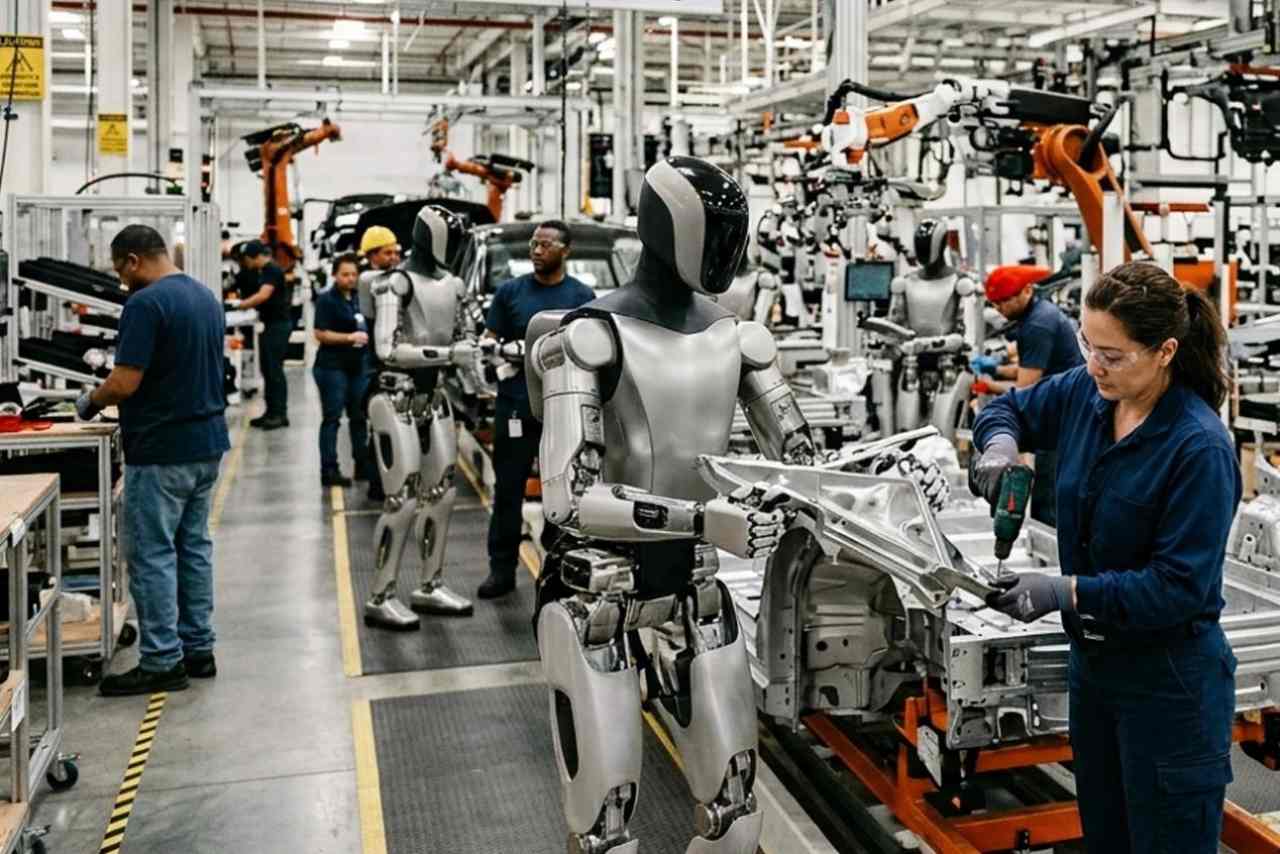
The entire goal of implementing automation in manufacturing is to enhance efficiency while needing as little human interaction as possible. This is done by implementing advanced work routines, primarily on better-aware hardware that can integrate technologies like AI, robots, and super-smart systems.
In 2026, the cobots (or collaborative robots) powered with AI are already bringing more than a 40 percent productivity spike in businesses and are bringing more positive changes in the market of supply chain fragilities and rising power costs. This new tech has now gained serious traction, and we are going to round up what’s happening in this industry today and what to expect ahead.
2. Automation and Manufacturing in 2026
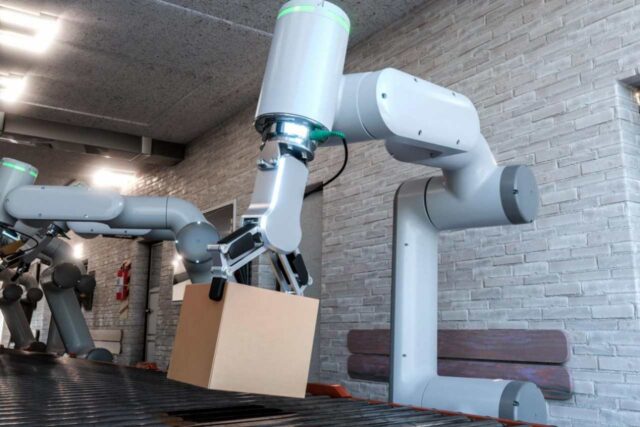
In the past, automation in manufacturing has been limited to cost‑intensive and high-maintenance systems that worked in highly structured environments. In 2026, automation will be implemented with much smarter systems operated by both humans and robots in an actual collaborative mode without any barriers.
This working mode is, in fact, one of the cores of Industry 5.0 principles, in which cobots are now assigned only the repetitive tasks in manufacturing, while human force is only utilized to focus on creativity and better oversight of the entire operation. Such an automated mode uses a digital twin working concept, where the real data is being fed to cobots, creating a bidirectional feedback loop in a digital model, and lets influence physical work, all in real time.
Such digital twins and cobots working in AI systems with real-time feedback essentially bridge the gap between the design of the product and its implementation in reality while carrying out virtual commissioning, cutting down production costs, and planning time. Predictive maintenance and the optimization of the entire manufacturing process also come hand in hand with such systems. More in detail below.
3. 2026 Key Trends in Autoamted Manufacturing
3.1. Integration: Cobots + AI
Autonomous mobile robots, or AMRs for short (you will hear this word in the coming months), are already dominating the 2026 manufacturing industry. These robots now don’t need tracks and can work with LiDAR, SLAM, and utilize advanced holograms via AR glasses.
This gives them the autonomy to operate with root-cause diagnostics within their system and trace defects in raw materials, all in real time. AI-backed blockchain logs maintain traceability in such systems and help manufacturers perform predictive maintenance, with variables exceeding 50 this year.
This is an extremely significant application for industries like pharmaceuticals, where recalls cost millions. Variables like temperature, vibration, and other critical factors are monitored with predictive maintenance during the production of pharma items, where it can detect any defects in raw materials with an accuracy reaching 90 percent. This cuts down downtime in the production process from hours to minutes and avoids recalls.
3.2. Smarter Maintenance
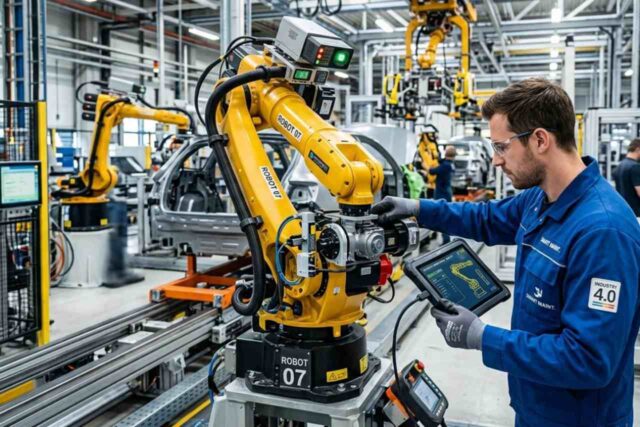
The revolutionary standard of industrial maintenance in 2026 is AI-driven CMMS, or Computerized Maintenance Management Systems. Running on IoT data with time-series forecasting, these systems can predict any failures in the window of 72 to 96 hours before the event could happen. Moreover, RPA, or robotic process automation, is utilized to auto-generate work orders for this potential fault.
Then, digital twin systems (as mentioned above) can effectively simulate repairs, which are used to train the technicians on-site through augmented reality overlays and VR. Aside from maintenance, the system also flags bottlenecks in management dashboards by seeking data from unified SCADA, MES, and PLCs in the manufacturing facility.
3.3 Automation with Green Energy
The above-mentioned AI-driven systems are now also used to promote “green” and sustainable manufacturing practices. Large-scale businesses are now achieving energy reduction up to 25% in their operations by optimizing their HVAC systems and significantly cutting Scope 2 emissions.
Cobots and AI systems are also employed to save energy in lighting and the usage of industrial motors. “Lights out” operations, along with dimming of lights in idle zones or even slowing non-critical manufacturing lines using AI algorithms, will be a practice of 2026. Lights-out manufacturing is already pretty much a common thing in Chinese mainstream industries and is now also becoming a norm in other manufacturing sectors all over the world.
3.4 Enhance Data Automation
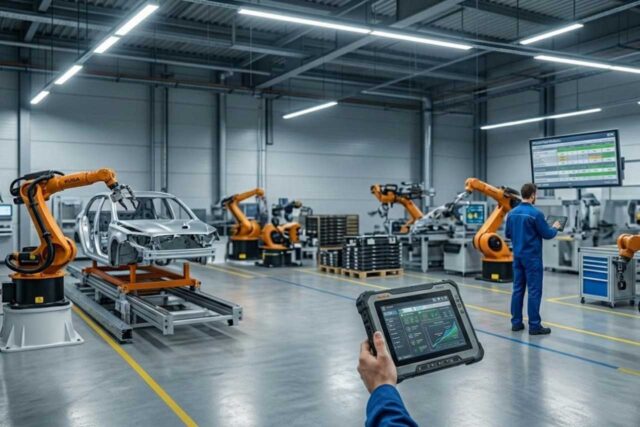
IDP systems are now the brain of data automation, where general-purpose data processing libraries like Kafka are acting as the nervous system behind manufacturing facilities. Such systems, together with IDP, or Intelligent Document Processing technology, use OCR and NLP to scan and inject data from companies’ invoices (even handwritten), packing lists, company logs, and detailed engineering blueprints.
This information is processed through unified AI gateways, both as structured and unstructured data at a petabyte scale, and generates real-time, in-depth analytics while reallocating the cobots even in the middle of some other tasks. A citation style is employed with such data automation, which can quickly adapt to new document formats with high accuracy, all without manual entries.
This setup further enriches the database of the system and can run in-depth analytics all in real time to make accurate decisions for adjusting cobots’ priorities, paths, or task sequences. Both IDP and the real-time analytics serve as a nervous system of automation for the entire operation while complementing each other.
3.5 Scalable Edge AI is here
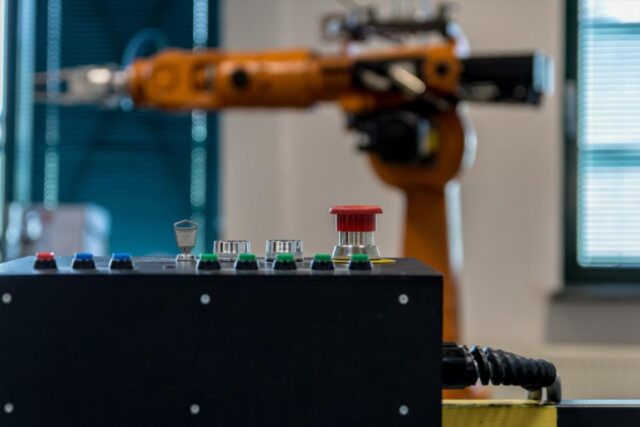
The goal of this “edge computing” here is to make faster decisions at the site, and for this, AI‑powered computing systems are deployed directly on a collaborative robot in the field while cutting off reliance on the server to make a decision. Along with speed, this makes these AI powered cobots also comply with Industry 5.0 standards, where human‑safety‑first is a priority.
Such edge computing makes it possible to make ultra‑low latency decisions on the spot in quantized models and makes it easier to do wide‑scale rollout without rewriting low‑level code when assigning or reassigning work for different people. This computing has given birth to E‑AIaaS, or Edge AI as a Service, which essentially is just passing over-the-air updates to a fleet of cobots with their new directions.
4. ROI Analysis of Automation in Manufacturing
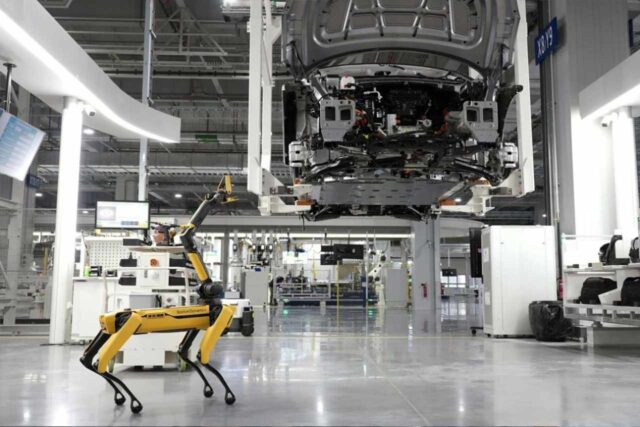
As one would expect, the greatest benefit is increased efficiency, but the numbers coming out this year were not expected. Cobots with AI-assisted systems working with humans are now observed with a 35% throughput increase in manufacturing, where such robots can literally work twenty-four hours and can handle 5x more volume.
This is directly resulting in 40 percent labor costs for the businesses and quicker paybacks of all scales of investments with significant NPVs as well. Upskilling of labor and safety enhancement are also side benefits; as such, cobots working with precision, thanks to AI calculations, eliminate repetitive strain and chances of injuries in the workforce.
Moreover, such systems are extremely feasible for scaling of operations, as most of these cobots are manufactured with modular designs that help scale the business 10x without rebuilds. Now we can easily replace robot arms, their mobile bases, or end‑effectors without redesigning the entire production line, which is very cost-effective during the scaling of a business.
Such cobots can be considered as plug-and-play building blocks in a modern manufacturing environment of 2026 that don’t just give one‑time efficiency but also are a future-proof solution to deliver significant impact on ROI by lowering the marginal cost of each additional unit that is added.
5. Future Outlook Beyond 2026
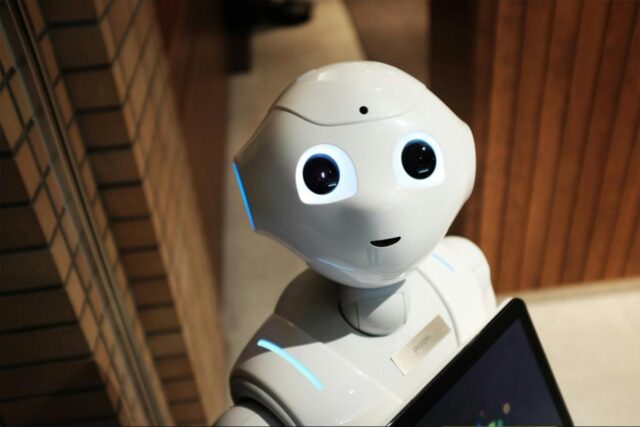
The next big leap in the manufacturing automation industry will be the arrival of hyperautomation with the help of advanced neuromorphic chips, which will introduce the mimicking of human intuition for these cobots and AI system integration. This will make the systems of today much more human-like and productive with the help of gesture-based controls.
New and practical versions of technologies like BCI (brain-computer interfaces) and quantum AI systems are expected to hit the market in 2023, which will make these systems more autonomous and process data on an exabyte scale.
Edge computing is expected to become the new norm, where data will be processed closer to machines for faster decision-making rather than relying just on servers. Such tech is expected to lower emissions by half, reducing e-waste to almost 60 percent while skyrocketing productivity in manufacturing.
6. JetTest for Cutting-Edge Automation Solutions
For such new revolutionary systems running with AI and cobots, the manufacturing industry has to constantly upgrade its current operations to ensure reliable power solutions and smooth transitions for scaling. This requires businesses to adapt to new expertise, future planning, and reliable technology partners.
For the successful transition in the future we discussed above, Jettest has positioned itself as an industry-standard testing and automation intelligent manufacturing equipment solution. It promises to serve businesses in a way that they can scale with confidence for this massive, transformative AI-powered future coming ahead.
Jettest has earned a strong reputation in the industry sector of testing and automation systems dealing in precision manufacturing. The company also has a long-standing market presence for reliable industrial testing ecosystems and solutions for scalable and customizable offerings.
Such products enables firms with exceptional accuracy and long-term stability in their operations while making them ready for future automation scaling. With 17+ years of industry expertise in intelligent and precise manufacturing for partners all around the world, Jettest is a launchpad for the automation of future.
7. Wrapping up
The year 2026 is revolutionizing automation in manufacturing practices for businesses with the advent of cobots, AI systems in the background, an array of IoT, and smart factories. Companies that fully embrace automation and strategize partnerships with Jettest this year are better positioned to compete for the future.