

1. Introduction
America is at the forefront of the profound global AI-powered transformation in the manufacturing landscape. Still, at the same time, the same region’s industry is also grappling with unprecedented challenges. This is why online searches like “how to make resilient supply chains,” “efficient manufacturing practices,” and “best practices for implementing lean manufacturing USA” are trending this year.
And that’s quite obvious why people are searching for solutions to these problems, as rising gas costs, regional political instabilities affecting supply chains, and relentless pressure to adopt Industry 4.0 technologies are big problems this year. But to deal with this unprecedented situation, companies are now even more focused on lean manufacturing methodologies to keep them more resilient & stable against the changing landscapes of businesses.
Sometimes understood, this framework is not a one-step shield to be installed but is a continuous improvement that focuses on eliminating waste and empowers frontline workers to create value for customers through streamlined processes. The word “improvement” is quite broad & evolved here, as there are too many frameworks, and most of them demand that managers integrate traditional lean tools with modern digital technologies, AI, IoT sensors, & predictive analytics.
We have tried to cut through the online noise of guides & explainers to filter out the most relevant lean manufacturing theory and the absolute best practices for implementing lean manufacturing USA edition so that organizations of this year can have a clear roadmap for advancing their lean journey.
2. Lean Manufacturing and USA Industry
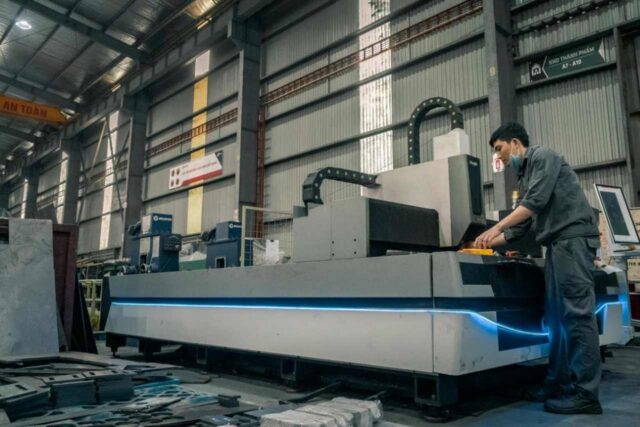
The term “initial lean maturity” expresses consistent application of core lean tools with measurable improvements that are connected to at least three key performance indicators. According to a report from the National Institute of Standards and Technology in 2025, only 48 percent of US manufacturers have reported achieving this maturity status.
Moreover, among them, only 19 percent reached “managed lean maturity,” which means that in these facilities, lean practices were completely standardized & monitored across multiple departments. Lastly, only seven percent gained “optimized lean maturity,” which is the operating level where lean thinking is embedded deep in their organizational culture & showed significant signs of continuous improvement through strong decision-making based on workable data.
Nonetheless, that 48 percent gap represents a tangible competitive disadvantage for American manufacturers as their issues are piling up. Components at lower levels of this lean spectrum are observed to operate with 23 percent higher defect rates, 31 percent longer cycle times, & 41 percent more inventory holding costs compared to those that have achieved optimized maturity levels. These numbers need to be fixed with solid & definite measures towards lean manufacturing.
3. Lean Manufacturing Best Practices
3.1 Make Document Standards
One of the most common mistakes that sabotages lean initiatives is automating before standardizing manufacturing practices. This strategic and a grave administrative mistake is still quite common in 2026. One of the reason behind it is availability of increasingly user-friendly automation software and cheaper robotic systems which make AI-powered systems accessible to manufacturers of all sizes.
But the temptation of new systems trending this year is understandable: automation drives in the industry promise to solve labor shortages, reduce costs, & improve consistency. But when a factory automates a process that hasn’t been standardized, they are not only improving efficiency but also looking for waste at high speed.
This is where standardization comes in, as standard work defines the predefined sequence of operations, especially in new AI-powered work. It applies to the timing of each step, the required tools & raw materials, &, most importantly, the quality criteria that must be met.
A recent study of 450 manufacturing facilities in the USA found that new automation projects in 2025 failed at a 67 percent rate when process standardization in their facilities was incomplete, but only 19 percent reported healthy success rates when standard work was fully documented & enforced.
These bosses with success rates reported doing this; their standard work started by observing how work is actually done, not how it is supposed to be done, as real shop-floor observation reveals hidden variations, unofficial workarounds, & shortcuts. They observed that multiple operators doing the same task often perform it differently, even in mature processes.
So they built a standard method that involved collaboration with frontline operators, not imposed from above. Operator involvement created ownership in the standard, which is key for consistent real-world adoption. Other components of these standards include visual instruction, not just simple & dense SOP documents, & these instructions at the point of use or in digital systems that allow quick media support.
3.2 Secure Visible Leadership
All the above mentioned frameworks play their part, but leadership commitment is the most critical among them all and weighs heavy in our list of best practices for implementing lean manufacturing USA edition this year. A rather common mistake is believing that when executives approve a proper training budget, they think they are doing lean manufacturing but often miss visible, sustained leadership commitment that lean transformation actually requires in an industry.
And this is now unequivocal from data received in surveys last year: more than 60 percent of failed lean initiatives can be traced directly to leadership commitment gaps. Moreover, sustained commitment through proper leadership to a lean system gave almost 4.7 times optimized lean maturity.
For these surveys, these attributes were checked: How often do leaders of their companies go to the actual shop floor? Are they consistent in doing so? How quickly do they respond to problems raised by their frontline workers? What percentage of time & budget is allocated to lean activities in the workplace versus the usual production pressure? Do the personnel responsible for driving lean transformation stay in their roles, or are they reassigned when production gets really busy?
3.3 Eliminate the 8 Wastes
Industrial waste is considered to be the most significant enemy of modern lean manufacturing. In fact, the prime goal of lean practices is to deal with this waste, which identifies and classifies it into eight types, all of which consume manufacturing capacity & resources.
These eight wastes, also known as DOWNTIME, plague most manufacturing operations. The first one is “defects,” where products don’t meet specified quality standards; “overproduction,” which is producing more than what can be sold; & “waiting,” which is wasting resources in idleness, like workers or equipment waiting for the next work.
Next is “non-utilized talent,” which is waste related to management not using employees’ skills for the business to their potential; “transportation” for unnecessary movement of raw materials & components; “Inventory” for mismanagement of materials; “motion” for unnecessary staff movement; and “extra-processing of products,” including over-engineering, redundant approvals, unnecessary quality checks, etc.
Investigating any of these wastes introduces a cascade of improvement opportunities for a manufacturing facility, as all these wastes are interconnected. To fix these wastes, value stream maps are created, which are a visual representation of all the steps in a manufacturing process being carried out in a facility according to the value they carry.
Once that is done, managers create a new future state map that eliminates waste and improves the workflow with more value & less waste measured and monitored through key metrics. But getting these value maps to work requires discipline and persistence while working with actual working data and a real-world implementation plan, not just for the books.
3.4 Deploy Purpose-Built Lean Software
If this section had been written fifteen years ago, the author here would have focused on conventional whiteboards, paper-based systems, and managing MS Excel spreadsheets to track metrics for lean manufacturing. But in 2026, purpose-built lean software is here, which is much more efficient at managing and detailed reporting.
From time performance dashboards to fully automated data collection from shop floor equipment, digital work instructions that update instantly across all shifts, and AI-powered improvement opportunity identification, all are already being implemented in manufacturing facilities.
In a recent study done in 2025, more than 680 manufacturing facilities in the USA were studied using lean-specific software & were found to have achieved 15 percent higher overall lean performance as compared to the generic software or the ones not using it at all.
This is because these software features include digital work instruction systems, value stream mapping, Lean training/competency management systems, Kaizen, and improvement tracking systems. It also concluded that to get maximum results with software, companies should put special effort into standardizing their document work before digitizing it for use in such software.
3.5 Cross-Functional Teams
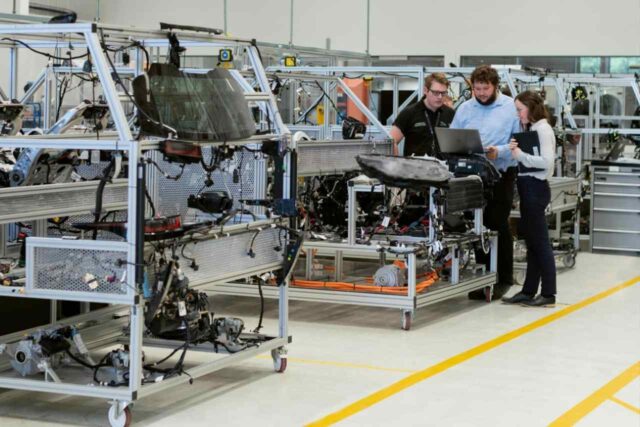
Organizational silos are still a thing this year. These silos are reported to treat functional optimization on their own metrics while the overall system suffers. This trend is incompatible with lean manufacturing practices by nature, as they require systems thinking and cross-functional collaboration to eliminate waste and create flow.
To make things lean, cross-functional teams need to be created that have clear and effective structure. Each team should have a defined charter of what problem or opportunity the team is addressing, what the goals & success metrics are, and what the timeline for them is.
Moreover, a designated leader is chosen, who is someone responsible for facilitating this team, making sure that their work stays on track, and helping them to remove obstacles. The concept of cross-functional membership is employed, in which representatives from all their respective functions are involved in the problem.
Common problem-solving methodologies include DMAIC (or Define, Measure, Analyze, Improve, Control), A3 problem-solving, 8D (or Eight Disciplines), and Plan-Do-Check-Act (or PDCA). The regular responsibilities for each team are coupled with a priority on improvement, with special emphasis on protecting meeting time, allocating a budget for experiments, and dedicating time to this objective.
3.6 Nearshoring for Supply Chain Resilience
After COVID and recent global tensions, the fragility of just-in-time global supply chains has been greatly exposed to everyone in the market. Never before has climate change started to create new risks through extreme weather events, which are also observed to disrupt transportation. This is where lean manufacturing is also extending its role in building supply chain resilience. This is how:
Traditional lean manufacturing practices emphasize management of minimizing inventory through an optimized just-in-time production strategy. This new JIT uses advanced AI-powered data analytics that can quickly and accurately identify which materials are most critical & most vulnerable to disruption in supply chains. With such smart software, management can increase safety stock for high-value items while maintaining normal or even low inventory for the ones with low risk.
Another popular trend is moving production closer to end markets to deal with uncertainties, where again, lean manufacturing is extremely essential for making nearshoring economically viable. As nearshoring facilities are prone to higher wage rates along with other higher costs, lean practices help companies to compete with offshore production.
4.4. Lean Workflows with Jettest in 2026
Lean manufacturing principles are designed to target different areas of operations. Among them, a critical one is the “quality at the source” principle, which dictates that any defect should be caught & fixed at the point where they occur, not at the end of the production line. Also mentioned in the “DOWNTIME” above, the “defects” are among the most destructive and costly.
To manage these constraints in 2026, factories need to invest in precision testing capabilities, which enable lean manufacturing. JETTEST has established itself in the industry as a recognized entity for providing electronic test equipment & manufacturing automation for mainstream industries like new energy and automotive electronics. A diverse portfolio of equipment covers all production stages and embodies the quality-at-the-source principle we mentioned above.
For example, the Automatic Motor Driver Burn-in Line and Automatic PTC Heater Test & Burn-in lines from JETTEST are designed for performance verification and endurance testing and strengthen lean manufacturing results. This equipment is fully automated and easily integrable to existing manufacturing lines, helping facilities to achieve higher OEE and core lean manufacturing goals.
5. Wrapping Up
Before we sum up our comprehensive take on the best practices for implementing lean manufacturing in USA edition, it can be concluded that implementing such practices requires more than just adopting isolated tools. Manufacturers need a sequenced approach for implementing lean principles and trusted testing equipment to get rid of most defects right from the start.