
1. Introduction
We are pretty sure that you have already come across online articles and news about how intelligent automation in manufacturing industry is making incredibly profound and promising improvements, but very few are talking about how to make this transformation, especially in terms of ROI.
Because these shiny new automated systems are not cheap and come with long durations of ROI. Businesses are concerned about developing a crystal-clear, actionable roadmap for deploying intelligent automation that is grounded in real data and real-world results.
We are going to make this goal easier as we go on a deep dive into what intelligent automation is and what should be ROI benchmarks. Moreover, we also discussed the seven most important tips from experts that should be on your radar during automation planning.
If management does what is explained below, we expect a decrease in downtime of around 40 percent using AI-driven predictive maintenance, payback periods of 12 to 36 months, and healthy realized ROI ratios in the range of 10:1 to 30:1 within this time period.
2. Intelligent Automation in Manufacturing
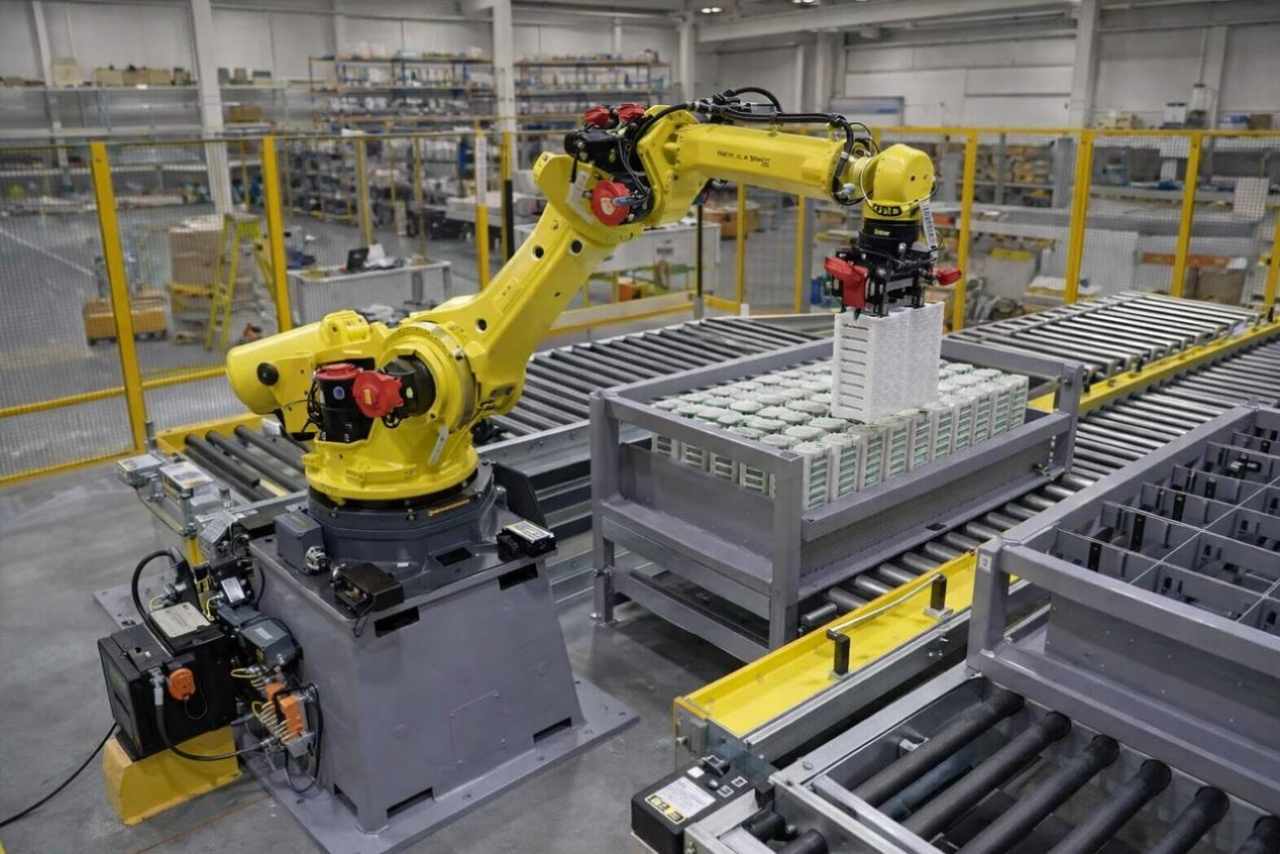
When we use the term “intelligent” with automation, it basically points to a system that is using “automation + data + AI + humans,” all included for a manufacturing workflow in a closed loop. In this framework, a large number of IoT sensors & advanced vision systems capture and stream high-resolution data from each machine. This data is fed to AI-powered dashboards, which process this data with advanced machine learning and AI algorithms.
These models use previous historical maintenance & failure data to estimate the remaining useful life of assets. If it is near the end of life, they can quickly trigger maintenance to be done by humans before unplanned downtime. All this is happening in real time, so “what’s happening now” is taken into consideration rather than just next-day reports; hence the term “intelligent” is given to such systems.
3. Improving Automation ROI in 2026
3.1 Start with Clear, Measurable Objectives
To make sure that every investment maps to measurable business value, a company’s strategic KPIs should first align with automation drives. These can include revenue growth, throughput, uptime, quality metrics, cost per unit, etc. This will not only guarantee better ROI towards the required goals but will also make it easier to justify budgets and prioritize high-impact use cases.
These KPIs can be attached to objectives like an increase in yield, reduction in cycle time, lower maintenance costs, etc. When selecting these goals, one can use the SMART goals framework so that their goals are specific, measurable, achievable, relevant, and time-bound. This strategy should drive meaningful procurement from management along with more suitable design choices in the manufacturing lines.
3.2 Leverage Predictive Maintenance
To increase ROI, management should give extra attention to predictive maintenance, or PdM, which is a continuous maintenance protocol (as explained above). This practice increases Mean Time Between Failures and reduces Mean Time To Repair, which is typically one of the most important goals of an organization.
In 2025, studies revealed that companies that focused on predictive maintenance after their intelligent automation drive saw a 20 percent increase in MTBF and a 15 percent reduction in MTTR. These numbers also negatively affected unplanned downtime by 30 to 50 percent in many facilities.
In 2026, companies are using the next generation of computerized maintenance management systems to monitor predictive failures and can auto-create work orders. These work orders are integrated with modern ERP systems, which can quickly arrange spare parts procurement, related labor scheduling in the facility, & production planning.
3.3 Focus on High-Impact Use Cases
Such use cases can be unique for each manufacturing facility & the product type they are involved in. For example, vision-based automated quality inspection is a use case that has quick returns (6 to 12 months) for manufacturing industries involved in batteries, semiconductors/electronics, solar panels, etc. For batteries, manufacturing issues like micro-cracks in electrode coatings, welding defects, & misaligned separators are high-value and high-precision processes that need to be paired with intelligent vision systems to detect such faults.
To define high-value use cases, managers have to assess each potential application against criteria of deployment complexity, scalability potential, & cost of the problem they are aiming to solve. Doing this right will not only compound ROI but will also build momentum for automation drives for true scaling. In 2025, several similar industry companies in the US reported reduced unplanned downtime by 30 to 50 percent & major cuts in labor costs related to maintenance, reaching 18 percent.
3.4 Invest in Data Quality and Integration Early
Final results of the highest form of intelligent automation still depend on the accuracy and integration of the data it is fed with. Without high-quality and well-integrated data, such intelligent systems are bound to fail in their objectives; in other words, all the goals associated with KPIs, along with predictive maintenance goals, will stay out of reach, hence spoiled ROI.
One of the most common reasons behind compromised data quality is data silos, inconsistencies originating from different time measurement units of OEMs, or missing data from dead sensors or uninstrumented equipment in a manufacturing facility. To deal with such issues, management needs to focus on data governance, setting proper standards everywhere in their operations, & well-defined architecture.
3.5 Optimize Energy Use
Managers should be focusing on AI-driven energy optimization strategies to transform how their equipment and production lines consume power. For this, analyzing real-time sensor data, energy pricing signals, and equipment usage patterns should all be considered to make better decisions and increase ROI of their automation drives.
For this goal, management should be focusing on real-time load balancing, equipment scheduling, and peak shaving to get immediate results in energy cost reduction. Distributing loads among all the available phases and working shifts to avoid inefficiencies improves energy reduction numbers. Moreover, peak shaving strategically reduces these numbers during high-rate periods & also simultaneously deals with costly demand charges.
3.6 Design for Scalability & Modularity
With all the above strategies in mind, we recommend starting small and then scaling fast. Managers should be focusing on a targeted pilot on a single production line to start their automation journey, which is not necessarily going to affect the entire operation at once. These pilots will help them test predictive maintenance measures on a single piece of equipment, like one motor or vision inspection at one bottleneck.
From there, they can start to measure actual savings in the form of reduced downtime, defect detection rates, human labor cost savings, etc. Once confidence is gained from this equipment, then scale fast to build the business case with hard data before committing to an all-out enterprise-wide deployment.
4. ROI Benchmarks for Intelligent Automation
4.1 Common payback range
For most of the industries, the common payback range of intelligent automation in the manufacturing landscape ranges from 6 to 18 months, during which most automation projects are observed to get full return on their investment within the first 12 months. These numbers can vary for industries planning hardware-intensive automation drives.
For example, a company planning to invest in robotic assembly cells or fully integrated ATE systems should expect a range of 12 to 18 months in most cases. But here is the catch: there is good, solid survey data indicating that companies with mature data infrastructure and clear use cases can recoup their investment in less than 6 months in some cases.
4.2 Typical ROI percentages (Cross Industry)
There is enough online data available from different manufacturing industries that points to typical ROI percentages of 200 to 600 percent over 3 years of operation after the deployment & smooth operations. Median ROI percentage touches 300 percent, which translates to more than 3 to 6 million dollars in annual savings and is much more in very large-scale operations.
But these ranges are highly spread among different scenarios and stages of automation drives. For example, early-stage adopters often report ROI in the range of 100 to 200 percent, while those with multiple automation deployments in place are seen to easily achieve 500 to 600 percent ROI through compounding efficiency gains, proper training in place, & automation knowledge transfer.
4.3 ROI ranges by industry
Automated manufacturing facilities in industries like battery & related energy products run with objectives of zero-defect requirements, safety-critical quality, high equipment costs, formation/aging energy optimization, etc., can get their spending back in 9 to 12 months, with ROI ranging between 250 to 500 percent. Similarly, solar panel manufacturing is seen to have a similar time range, with ROI ranging between 200 and 450 percent.
For industries where automation in packaging is also linked with critical factors like hygiene compliance and reduced waste, like food & beverage and pharma, they can get their ROI in ranges between 12 to 20 months. For general manufacturing, expect a 200 to 400 ROI with 3 years of operation (as mentioned above), with 180 to 400 percent in the first 9 to 18 months. These numbers are mean values based on data from different industries and related surveys but pretty much give a rough idea of what to expect in one’s case.
5. Common Implementation Mistakes
5.1 One of the most common mistakes is deploying automation tech in one’s factory without first defining measurable business objectives tied to specific KPIs (explained above).
5.2 Managers and engineers should make sure that data infrastructure is ready for their automation systems, as treating data quality as an afterthought is quite a common mistake too.
5.3 Prefer open architecture in automation equipment based on industry standards (OPC UA, REST, MQTT, APIs) to avoid locking in only one OEM ecosystem and paying premiums over the long term.
5.4 Avoid big-bang deployment, as there are so many risks and redundancies when bringing in this transformation in an already set business. Instead. Always deploy automated systems in phased rollouts.
5.5 Another grave mistake is to consider automation as purely a technology solution in a factory while altogether neglecting the human element. A comprehensive change management and training system is required to get back ROI quickly and in large percentages.
5.6 Many companies fail to invest in intelligent electronic test equipment to go along with automated manufacturing systems, which can easily sabotage precision in different stages of manufacturing lines.
5.7 Automated factories generate a large amount of data, and a common mistake related to it is that many organizations fail to regularly monitor and maintain this data, which leads to deviation from KPIs, falling system performance, and lowering ROI.
6. Jettest for Securing ROI
To secure the success of automation drives and shrink ROI recovery time ranges, JETTEST offers businesses end-to-end testing automation products that are designed to provide precision-based product validation in their manufacturing routines. These systems are designed to perform component verification and final product validation with the highest accuracy possible.
This is done to ensure the tiniest forms of defects don’t get past and are caught early before they end up in the real field. For example, manufacturers involved in energy storage and battery production, which also happens to be the most common industry to embrace automation drives, are using the household energy storage pack assembly line from JETTEST to improve consistency in their production workflows and significantly reduce manual intervention.
Similarly, the final ATP line for energy storage packs has earned a strong reputation in the same industry due to its comprehensive final-stage verification & product performance testing. Such systems are designed to make sure that automation systems not only increase throughput but also improve accuracy, which eventually accelerates payback periods of automation while building a solid foundation for scalable intelligent manufacturing.
7. Wrapping Up
Intelligent automation in manufacturing is not just about creating an autonomous facility working on its own but is one that is connected, runs on high-quality, data-driven production environments, is designed to achieve high-value goals against KPIs, and also uses human expertise to improve its operation.