
1. Introduction
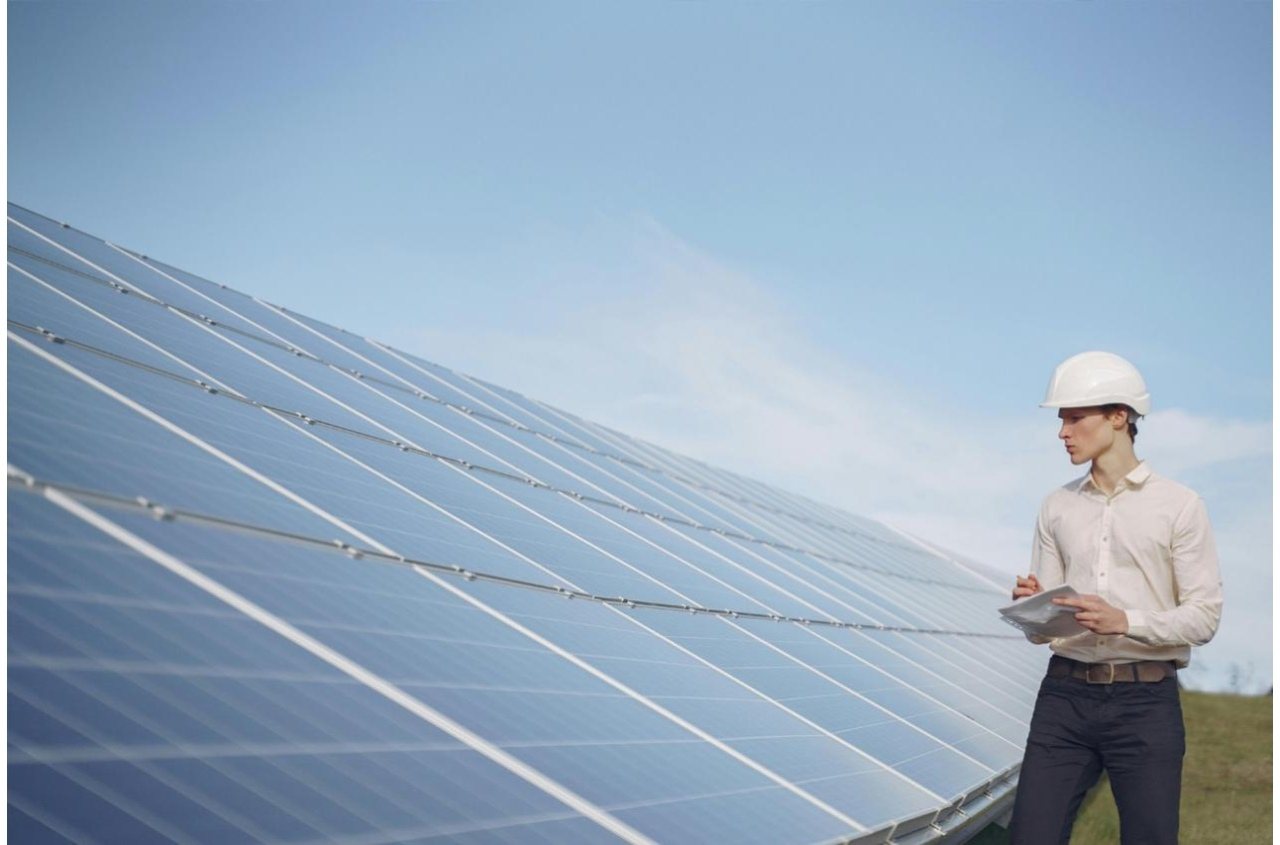
Rising fuel costs, global clashes of economies, and a multipolar world are forcing businesses to consider renewable energy sources, in which the solar and battery industry stands at a critical inflection point in 2026. As this global demand accelerates & energy storage becomes ubiquitous, the pressure on manufacturers involved in this industry to deliver high-quality production for long-lasting solar power systems and the batteries powering them has never been greater.
To ensure that these battery storage systems for solar systems perform consistently over time, their manufacturers are heavily focusing on battery aging protocol and are already seeing yield improvements of 30 to 40 percent, along with strengthened brand reputations and dramatic reductions in after-sales service calls.
The same is the case in the EV industry, where such tests are used for predicting range, safety verification, second-life valuation, warranty management, etc. Below, we are going to explore these testing schemes and how modern technology is reshaping quality production for batteries in 2026.
2. What Is Battery Aging?
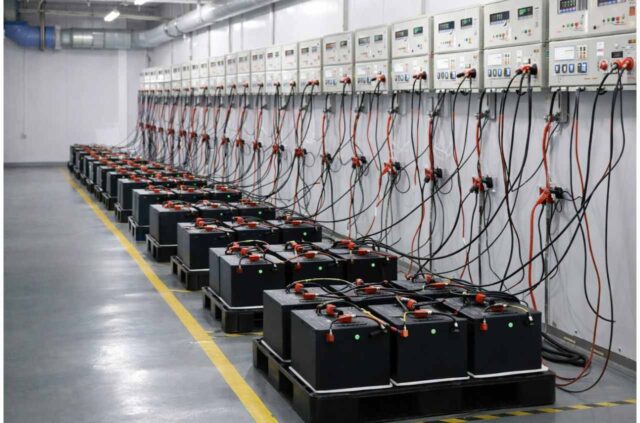
This is a significant testing procedure in the manufacturing of modern batteries, during which they are subjected to controlled charge-discharge cycles and environmental conditions over extended periods. These tests simulate the passage of time & usage of the batteries under inspection in a compressed timeframe and allow manufacturers to understand how it will behave after months (or even years) of operation before it ever leaves the factory.
The term “aging” doesn’t mean any deterioration here but, in fact, expresses the deliberate, controlled process during these tests that is simulated to stabilize the battery’s internal structure and related electrochemical reactions.
These simulated conditions bring the battery to a predictable and consistent state to accurately reflect its long-term and real-life performance characteristics. It allows these batteries’ electrochemical structure and reactions to mature so that they reach a stable & predictable operating state. These testing routines play a central role in improving the final product reliability and warranties.
3. Types of Battery Aging
The testing process of a battery is often considered a monolithic process, but it actually encompasses several distinct types. Each test is designed to serve different purposes and analyze batteries to give unique insights to maintain quality production in factories. Two board categories come under cyclic and calendar aging of batteries, but within these testing categories, there are also several other specialized aging methods designed for specific applications and quality objectives and battery chemistries.
3.1 Calendar Aging
Batteries attached to solar systems can experience long periods of partial use or low charging periods during winter. This can also trigger battery degradation, and this is exactly what calendar aging checks in new batteries through simulated conditions.
It does that by checking battery characteristics that appear with the passage of time, even when the battery is not being actively cycled or used. Moreover, this test also analyzes battery performance if they spend weeks (or even months) in inventory before installation or if they remain at partial charge for long periods of time.
To carry out this test, the batteries are stored at controlled temperatures imitating a real-world scenario with controlled states of charge (or SOC). Their storage time can typically range from weeks to months or sometimes compressed into just days or weeks in accelerated testing. It analyzes battery characteristics like charge retention, internal resistance changes, self-discharge rate, voltage stability, & battery thermal behavior.
3.2 Cyclic Aging
This kind of battery aging refers to the battery usage “cycles,” which naturally introduce degradation and lower stabilization values through repeated charge-discharge cycling. The testing scheme simulates the actual operational use of batteries in industries like EVs and solar energy storage systems and is arguably the most important type of aging for quality production, as it simulates the conditions batteries will face in actual operation.
This test simulates the discharging of batteries to power homes in solar systems or the grid at night. It also simulates a combination of variations in load depending on weather conditions and energy consumption patterns. The same applies to the EV industry, where batteries can face extreme temperatures in use and during charging.
Modern testing equipment automatically controls variables like discharge current of batteries, their voltage limits, capacity limits, temperature, and rest periods. The defect types manufacturers aim for during these tests are micro-shorts, depth of discharge, charging and discharging speeds, temperature during operation, etc.
The number of cycles simulated in these tests varies widely depending on the application and required quality standards. For example, in automotive applications, cyclic aging might be 200-500 cycles; consumer electronics can range between 50 and 100 cycles; and solar energy storage systems can have 500 to 2000 cycles, as they are expected to last 10 to 25 years with daily cycling.
3.3. Specific or Combined Simulated Aging
Apart from the above two, manufacturers can also execute specific or combined schemes for aging. For example, a manufacturer might only arrange a mechanical stress aging test in which they will simulate the physical forces batteries are forced to experience during their transportation, installation, and real-world working to identify structural weaknesses, battery components that fail under mechanical stress, and general assembly defects.
Similarly, manufacturers also conduct temperature-only or electrical aging to check the data of their batteries. In most cases, companies arrange multiple stress factors simultaneously to identify possible failure modes of their produced batteries that only occur when the above-mentioned multiple stressors interact.
5. Intelligent Aging Technologies of 2026
In industrial battery manufacturing, traditional aging is used to collect vast amounts of data, with a long list of important parameters measured thousands of times per second for each cell. Modern facilities now use AI and machine learning to process test results with millions of data points per second, as both serve as extensive and transformative pillars for factors.
5.1 Improved quality with AI & ML
Modern aging equipment is powered with AI systems, which not only make it a super-fast and efficient computing network but also can accurately identify complex patterns in aging data that would be invisible to humans and make predictions about cell behavior weeks or months in advance.
These systems use several types of unsupervised machine learning algorithms that identify anomalies & outliers in battery aging data without prior training and greatly help improve production quality. Moreover, AI and ML don’t just flag and alert problems during these tests but also learn from historical aging data spanning years of production & field performance.
And the results are already promising for the industry, especially as seen in the new EVs coming to the market. Battery manufacturers implementing these new AI-powered technologies are already reporting 25 to 35 percent improvement in their defect detection routines.
5.2 Failure Prevention with Predictive Quality
New technologies in industrial aging systems use aging data, machine learning, & statistical modeling to remove defective battery cells from production before they reach customers. The battery goes through a predictable pattern of production and quality checking in which its behaviors can be detected weeks, months, or even years before actual failure occurs through simulated testing techniques.
These predictive tests monitor battery failure reasons like SEI layer growth that increases resistance and reduces storage capacity, lithium plating of the battery that causes internal shorting for permanent failure, natural electrolyte decomposition that reduces ionic conductivity, electrode cracking, separator degradation that allows internal shorting, and several other degradation mechanisms.
Machine learning combines physics-based and empirical models to predict these degradation mechanisms for future failures with high accuracy and can handle large datasets of such data to quickly identify complex patterns and continuously improve accuracy as more data becomes available.
5.3 Circular Economy in Battery Aging
Optimized aging systems and the next generation of algorithms now use the minimum temperature required to achieve aging objectives for each, which results in the use of reduced heating energy while maintaining aging effectiveness. This is also paired with modern tech focused on the circular economy, like smart scheduling of these tests and advanced insulation & heating systems that are designed to reduce energy loss from aging chambers.
Moreover, in modern aging facilities, rejected batteries during QC checks are not wasted altogether, as their cells that fail aging for premium applications might still be suitable for less demanding applications. Such batteries mostly end up being used in backup power or low-power electronics.
Batteries with end of life are also not just dumped but are processed to retrieve valuable materials like lithium, cobalt, nickel, and copper, reducing the need for mining and the environmental impact of battery production. Before this, manufacturing facilities used accurate aging data to assess battery health at end-of-life to determine whether they should be recycled or switched to a lower-value task.
6. Challenges in Battery Aging Technology
6.1 High Capital Costs
Not a significant issue for large-scale operations, but mid-sized and developing businesses have to face staggering initial costs for modern aging systems and complete assembly lines. The infrastructure, which includes charge-discharge cyclers, aging chambers, monitoring systems, data infrastructure, facility upgrades, & installation systems, can cost millions.
Moreover, the return on investment for such advanced aging infrastructure, while significantly positive, is realized over years, which can easily create cash flow challenges for new players in this industry. They also struggle to justify huge investment capital despite clear long-term returns because the huge number and slower returns strains their financial resources.
6.2 Long Aging Durations
Battery aging procedures described above have become incrementally better at getting results, but they still inherently require considerable time to conduct. For example, in 2026, typical aging tests for solar storage batteries range from 7 to 30 days, depending on the protocol. Sometimes these days can go up to 14 to 21 days on average for tighter protocols.
This becomes more challenging in peak demand seasons and results in the inability to balance aging time with throughput demands. This is observed to create ongoing operational challenges for maintaining quality, and to tackle this, manufacturers preplan their production ahead of peak seasons.
6.3 Integration Complexity
This was the most widely reported problem among the industries experiencing a transition to automated systems, as their new battery testing systems experience integration issues with their already in-place multiple manufacturing systems, including manufacturing execution systems, ERP, QMS, and CRM systems.
Moreover, processing tons of batteries for aging generates terabytes of data when run with automated systems and requires sophisticated data infrastructure, including high-speed network infrastructure and massive storage systems, adding more to costs and integration issues.
7. Jettest for Advanced Quality Solutions
In the modern automation and advanced battery aging and manufacturing drive, JETTEST has been at the forefront to provide manufacturers with complete infrastructure solutions to deal with the above-mentioned challenges. As a leading provider of new energy equipment, JETTST offers specialized testing & assembly systems that are industry tested to deliver for leading industries, specifically solar energy storage and EVs.
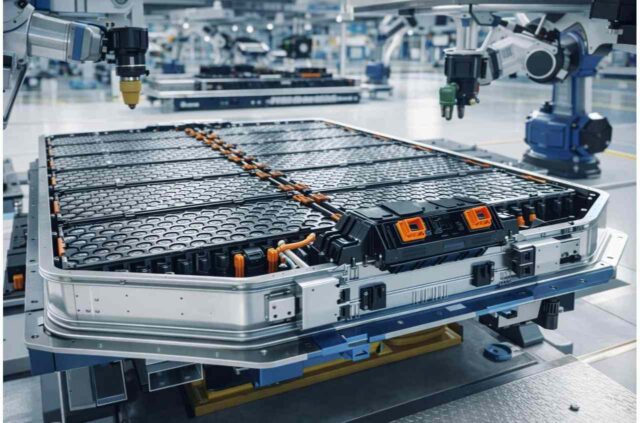
In 2026, their household energy storage PACK assembly line represents the foundation of industrial battery manufacturers and covers the battery module assembly process with integrated testing at every stage. This advanced hardware is designed to commence automated quality verification, which directly supports the battery aging benefits and provides early defect detection by catching micro-shorts, SEI instability, weld defects, and electrolyte filling inconsistencies.
This intelligent, integrable line enables the intelligent aging protocols and predictive quality analysis to be implemented with a higher success rate and helps manufacturers achieve their commitment to the higher quality standards of maxing 15 to 25 year warranties, especially in the solar storage industry.
8. Wrapping Up
Battery aging and its related technologies have evolved into the cornerstone of quality production for mainstream industries of 2026. Manufacturers face challenges like high capital costs, integration complexity, and long aging durations, but the benefits are significant, and ignoring them is not affordable in the competitive global market. Jettest’s solutions directly address these challenges by solving integration complexity and one-stop diagnostics for their battery aging routines.