
1.Introduction
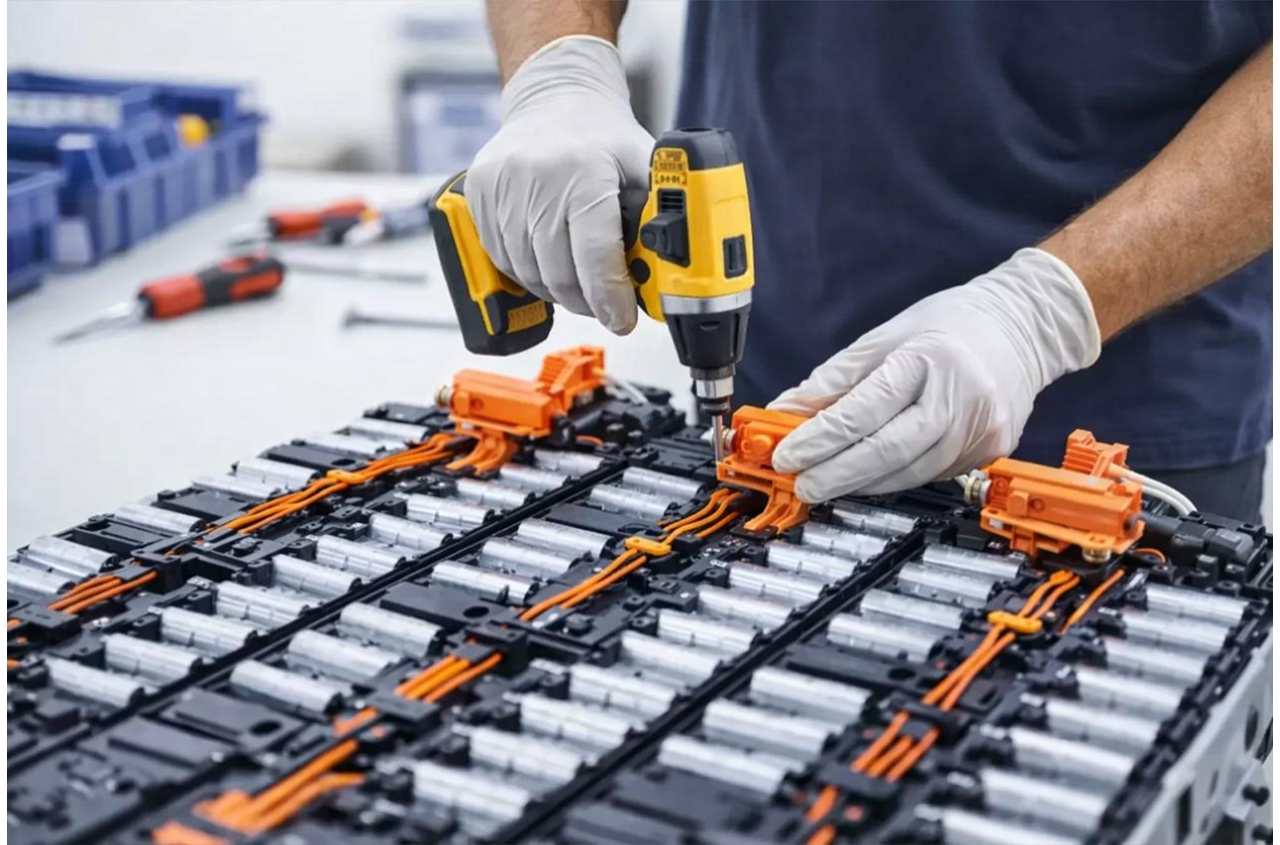
Even with the next-generation solid-state batteries and significantly more advanced related technologies coming to the EV industry, battery degradation still remains a major problem in quality control procedures. To battle this, companies have developed strict aging test protocols for EV batteries to ensure that their cells, modules & packs meet safety standards (like UL 2580) & degradation benchmarks.
These tightened QC frameworks use advanced automated testing equipment, which can detect early signs of battery failure “symptoms” & quickly eliminate any weak cells in such batteries before they may reach the actual production lines. Below, we explained this QC framework, its key frameworks, and how it is implemented in the modern EV industry.
2.Key Parameters for QC of EV Batteries
2.1 Capacity Fade
One of the most common parameters is the slow loss of charge held by a cell in a battery compared to its nominal rating. In technical terms, this means that a battery designed to deliver 100Ah gradually gets down to 90Ah or below; that is, its capacity is fading just like getting old.
This parameter translates into a shorter driving range in EVs and reduced usable discharge time for stationary batteries. It is also the most visible symptom of any kind of battery degradation regardless of the technology used to build it.
2.2 Internal Resistance
As its name suggests, this parameter is about how much the internal materials of a battery cell resist the current flow. This happens due to several reasons; SEI growth, loss of active material for moving charge, and electrolyte changes are the most common reasons.
This resistance in a battery cell causes a lot of issues for a battery pack in EVs, as it easily leads to more heat generation at the same current it was designed to operate at, causes greater voltage drop under normal load, and overall works with reduced power capability and efficiency.
2.3 Voltage Hysteresis
This parameter indicates the difference between the charge & discharge voltage curves recorded at the same state of charge. The change in these curves shows that the battery is experiencing growing internal losses due to reasons like structural changes in the electrodes and lithium plating.
This can lead to reduced efficiency and can also cause safety issues in an automobile, as it can lead to local hot spots and internal shorts. Among all these parameters linked with quality control procedures in an EV factory, this one is most commonly associated with the safety & real-world reliability of an EV battery pack.
2.4 Coulombic Efficiency
This is a crucial early-warning indicator for spotting parasitic reactions and internal leakage happening inside a battery. It is calculated as the ratio between the total charge taken out from the battery during its discharge cycle and the total charge that went inside during the charge cycle.
Related to capacity fading, this ratio is 100 percent when battery packs are healthy, but when side reactions like lithium plating, electrolyte decomposition, etc. start to happen in the battery, it leads to a subtle but continuous drop in CE.
2.5 Open Circuit Voltage Curve Shift
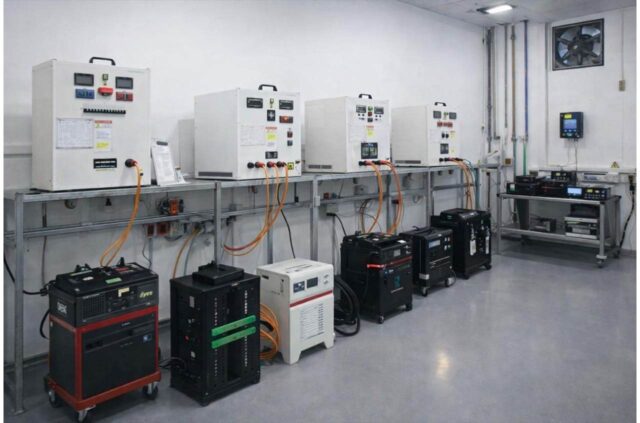
Battery management systems use this curve for estimating an accurate state of charge for a specific chemistry of EV battery and show the relationship between a battery’s cell voltage & its state of charge. In battery aging testing routines, this curve is used to simulate controlled charge and rest periods.
Engineers analyze battery performance by comparing the new OCV curves with those of stock batteries and study them to come up with design limits for safe battery charging. The curves that exceed the limit indicate that such a battery design will not be able to manage accurately in a pack under an EV.
2.6 Self-Discharge Rate
Before making it to the final assembly or even in a car that is parked for weeks, how much charge its battery holds over time is an important quality parameter for the EV industry. This rate monitors how quickly a battery cell loses its state of charge when it is stored for a long period and stays this way without any external load.
This parameter is used to assess batteries with long storage or standby periods and is checked with simulated aging procedures at a preset temperature for a specific time duration; it is also a crucial one to check a battery’s reliability throughout its life.
3. Advanced QC Testing Methods for EV batteries
3.1 In-Situ Diagnostics
The testing methods explained here provide information about EV batteries related to simple terminal voltage and surface temperatures, but these testing methods go beyond that. Special sensors are used to integrate directly inside or near a battery cell to analyze and output localized information.
Used primarily on instrumented sample cells or modules, this testing scheme is excellent for detecting non-uniform current distribution, layer delamination, gas pockets, and local hotspots. It is used to improve test protocols for battery testing and helps engineers get a better interpretation of standard QC metrics of EV batteries.
3.2 High-Frequency Impedance Spectroscopy
The abovementioned resistance testing is done for collective resistance inside the battery, but to study a single “resistance” value for a battery, the method of high-frequency impedance spectroscopy is used, which gives testers a complete frequency-resolved fingerprint for a battery with specific chemistry.
For this, the battery is monitored for its response against small AC signals across a range of frequencies, which is important for QC protocols. High-frequency regions in the results are important to study current collectors, contacts, and ohmic resistance. Similarly, the lower AC spectrum affects diffusion & mass transport limitations, while the mid spectrum has an effect on charge-transfer processes at the electrode–electrolyte interface.
3.3 Elevated Temperature Anchoring
Industrial-grade modern batteries are also prone to getting damaged internally when the temperature is higher in their surroundings. Common issues like SEI growth, electrolyte breakdown, gas formation, etc. are linked, but this can take months to actually happen. For this, the battery is exposed to artificially elevated temperatures in special testing chambers.
Depending on the chemistry, the temperatures are raised from 40 to 60 degrees. Engineers record how sensitive the cell design is to this thermal stress, whether the battery degradation shows expected results (or is worse), and how to extrapolate this simulation to real-world lifetimes using appropriate models.
4. Core Quality Control Procedures for Aging Tests
4.1 Pre-Aging Screening & Cell Selection Criteria
Aging tests are not the only quality control procedures in modern QC of modern EV batteries, as pre-screening is usually in place to check initial requirements. This usually includes the minimum capacity of the battery & rated coulombic efficiency thresholds after formation cycles. Other checks include initial DC resistance, visual and safety inspection, and binning for targeted aging.
This is also supplemented by visual inspection done with smart visual systems in place that can detect minor deviations in physical dimensions, dents, swelling, tab misalignments, leakages, etc. These pre-aging screenings let in “worthy” candidates only in the testing chambers.
4.2 Standardized Temperature & Cycling Protocols
These protocols are developed against the SoC window, C-rate, and specific kinds of chemistry for a battery and are strictly standardized for the entire testing scheme. For this, tightly controlled temperature environments, fixed rest periods, and reference cycles embedded in the protocol are strictly arranged for testing.
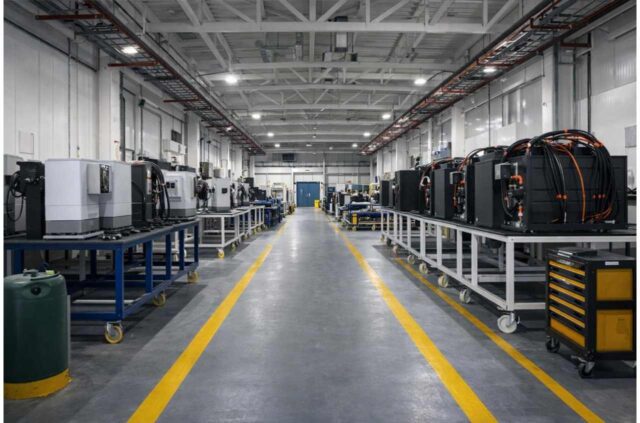
Modern factories use automated testing equipment for this stage, which is extremely fast to manage this aging layer of QC and integrate with pre-existing production lines. Moreover, such equipment helps engineers manage a controlled experiment that supports both quality control & long-term reliability modeling.
4.3 Voltage, Current, & Impedance Monitoring
High-resolution voltage and current logging for a battery under observation is done at different inputs to analyze voltage sag, its recovery, & transient behavior. If there are any unexpected voltage dips, irregular profiles, or overshoots, they are marked as abnormal performance for a battery.
Similarly, tests for periodic internal resistance and thermal correlation are analyzed in this data with the end goal of turning this data into actionable quality signals. This picture of data, if it points out an anomaly in battery behavior, will point to a “capacity” issue that has not happened yet.
4.4 Data Validation & Outlier Rejection Rules
These processes are managed with data integrity checks to make them usable and integratable to other systems in an Industry 4.0/5.0 model. For this, high-end traceability is maintained to connect the results with review workflow.
The batteries, which show anomalies, are flagged, and their data patterns are analyzed by quality and process engineers. Again, this is handled by modern automated testing equipment, which automates this entire procedure and reports back the results in the MES dashboard in an instant.
5. Advanced Aging Test Solutions from Jettest
Modern EV manufacturing facilities are designed to work in an interconnected Industry 4.0 model with fast-paced production lines and a predictive maintenance working model. For such a factory, automated, production-grade aging equipment is being used to match the demand and throughput potential of modern factories.
Such automated testing equipment is designed for high-throughput battery pack production lines of EV factories & can automate the workflow to capture the data companies need for robust quality control.
One such solution that got a lot of attention in the global market is the Final ATP line for energy storage packs from JETTEST. Designed to enable integrated cycling, accurate data logging & reliability verification for the testing schemes we explained above, this hardware has earned its name as providing automated endurance & high-end aging test capabilities to the EV industry.
Designed to ensure full functionality & outgoing quality as rated by a factory, this hardware automated the entire QC procedure for every product, enabling efficient, reliable one-stop production. With extreme traceability support & MES protocol compatibility, it also empowers engineers to work with accurate data in rework workflows and helps them convert an inconsistent process into a precision quality filter.
6. Wrapping Up:
Modern electric vehicle factories work with a data-driven filter of quality control procedures, which are designed to accelerate continuous monitoring of battery capacity to catch anomalies and also build a stronger link between the in-house tests & real-world lifetime performance.