
1. Introduction
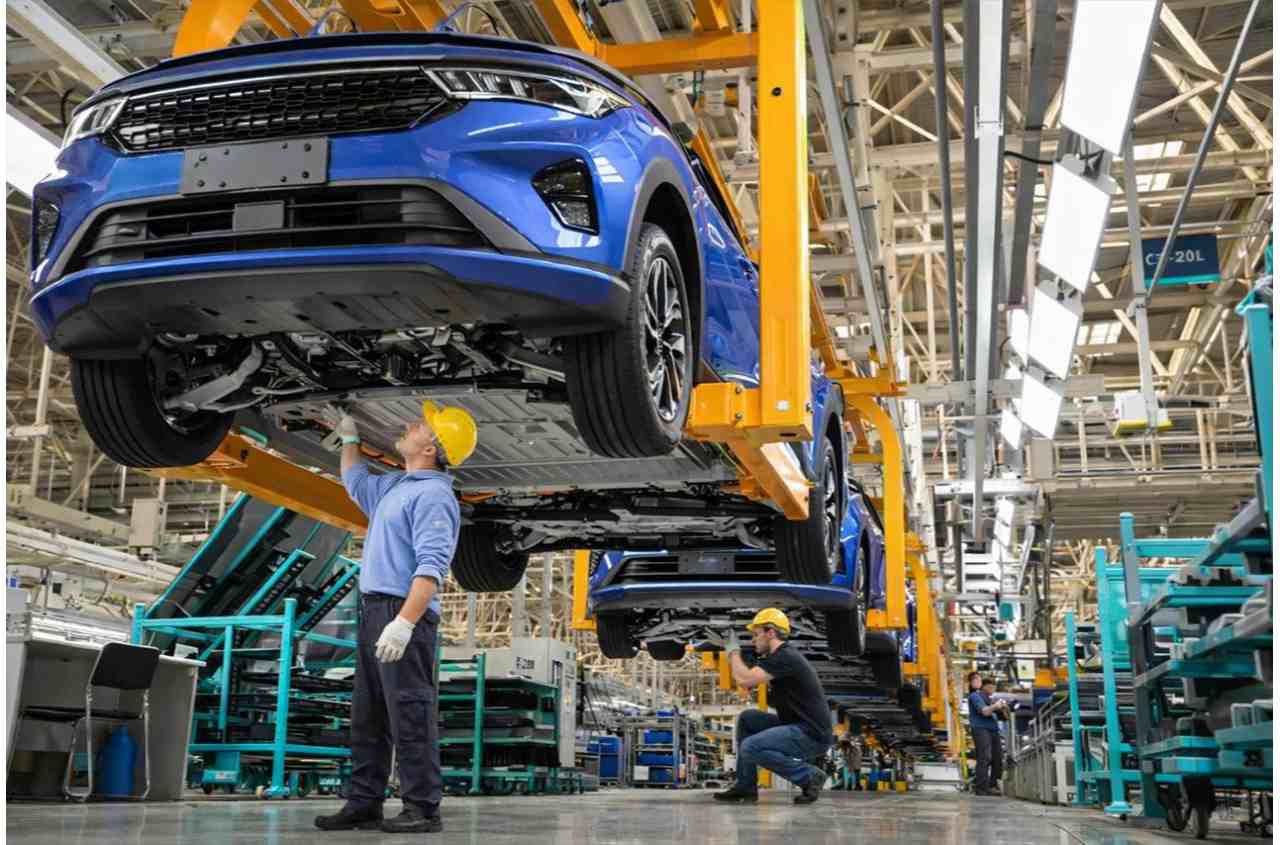
The modern EV factory industry works with a strong data-driven quality control process in manufacturing routines that are designed with AI-powered systems to maintain absolute consistency, safety, and efficiency on their production lines. Such an implementation is not just an operational choice but is the result of immense pressure to scale production quickly while maintaining strict quality standards.
Moreover, manufacturers have to implement a QC framework that can help them control process variation throughout the production flow, not just at the end, as the very high-value nature of the parts and sophisticated engineering involved are not economically viable to rework or scrap at the end.
The EV production industry of 2026 is becoming more complex, with more and more players flocking in, pushing the competitiveness bar even higher. This also means that there is no room for production anomalies, recalls, and reworks. And for this, manufacturers need to establish QC systems that can detect variation early and keep every stage of the line under control.
We explain below a six-step framework backed by several academic research studies and on-field surveys carried out around the globe, and it is designed to implement a much more efficient and realistic quality control approach for the EV manufacturing industry.
2. Improving Quality Control in EV Manufacturing
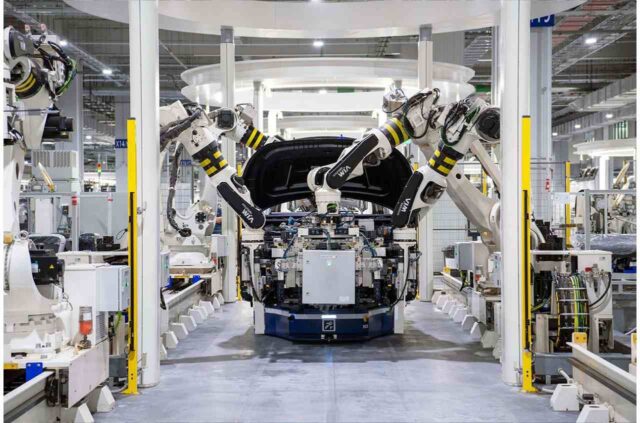
This year, advanced technologies like deep learning, in-process laser monitoring & automated end-of-line testing are the backbone of modern EV manufacturing routines. Manufacturers have now successfully increased efficiency, improved consistency, and reduced defect rates before final assembly.
This is happening because this standard of quality control process in manufacturing EVs covers both physical defects and process deviations simultaneously to match fast-paced production lines. For industries scaling their manufacturing or getting into more stable operations, this six-step framework will enable them to move towards efficient & error-free, data-driven operations.
2.1 Define Quality Standards and CTQs
The first step is not execution but spending resources standardizing critical-to-quality (from Six Sigma) requirements for each component and process being implemented for the production lines. In a classic quality management approach, these requirements are specific, measurable characteristics of a product’s features that customers see as necessary (Voice of the Customer) in what they are buying.
In an EV manufacturing facility, this means that management has to take actionable metrics so that such businesses can meet expectations and reduce defects. These CTQs in the EV industry are battery cell performance and long-term integrity with longer drive range, motor torque consistency for smoother on-road performance, thermal stability for regions where temperatures reach 45 degrees and above & electrical safety thresholds.
2.2 Build Process Monitoring Into Production
Backed by solid research in the past few years and now being implemented in real-world factories, defining these CTQs (mentioned before) and relying on real-time data capture, in-process sensing, and sensor-based tracking sets the stage for better quality control process in manufacturing EVs. Such an arrangement catches defects well before they show up in the final production car.
Such a fast-paced and interconnected process control in EV factories works with advanced AI-powered vision systems, torque, vibration, and temperature sensors, all feeding this data into the MES along with machine performance signals. Such an arrangement does two core things for quality: extremely tight control of production variability in car parts and predictive maintenance (explained below) if there is a deviation bound to happen.
2.3 Use Early Defect Detection Methods
According to the latest EV quality research of this decade, implementation of a digital twin and its strengthening with advanced systems of computer vision, infrared imaging, and X-ray inspection are all the basic pillars one has to invest in. Such an infrastructure in an EV manufacturing site enables early defect detection in production lines & lets quality teams intervene before defective units continue down the line.
Reactive inspections don’t just sit well in the current fast-paced production of EVs & are quickly being replaced by modern early-defect detection production lines. This production practice also marks the single most significant shift for quality management entities in a large-scale industrial environment.
2.4 Strengthen Testing and Verification
Even with early detection & interconnected sensory production lines, strengthening testing systems is imperative for today’s demanding quality control process of EV manufacturing. Integrated end-of-line inspection is carried out with systems that are designed to be compatible with the speed and data complexity of such manufacturing lines and can automate the testing routine with already in-place infrastructure.
Recent research and surveys done for analyzing electric motor inspection of EVs in various manufacturing sites around the globe found that modern tolerance limits of such factories are now reaching such lower levels that automated methods are now increasingly and absolutely necessary to maintain consistency & reduce missed defects.
To strengthen the testing layer for such high-value products, there is a need for non-invasive inspection methods & low-latency data-linked (automated) test platforms that can quickly and autonomously compare test results against predefined quality thresholds set by ML models. Solid research data is also confirming that such investment enhances the final approval process in EV manufacturing.
2.5 Improve Workflow Efficiency
With so many sophisticated technologies in place to monitor, detect anomalies, and automate everything in a fast production routine, the next challenge for managers is to get maximum efficiency required for their operations among all these systems while reducing bottlenecks, downtime, and repeat failures.
For this, lean scheduling automation is heavily implemented to improve workflow efficiency, which works by prioritizing critical tasks, minimizing waiting time between different stations on the production line & keeping the core equipment related to each activity running at more stable utilization levels.
2.6 Create a Continuous Improvement Loop
Once efficiency is maintained and quality checks are in place to verify desired outcomes, the final step is to translate all available quality data into process improvements for EV production. There is substantial academic research suggesting that most successful EV players have invested in robust systems to leverage their inspection results, sensor data, and defect patterns to improve their existing operations.
For this, continuous improvement loops are created, not just for a quarter or a year but as a constant strategy to refine EV manufacturing process settings, retrain their AI and ML models to get even better predictive maintenance results & improve their upstream controls.
3. Common Challenges and How to Solve Them
3.1 Supplier Quality Inconsistency
In-house corrections can be made in the EV business, but controlling supplier quality is a separate effort. Regional conflicts and uncertain fuel prices have worsened the situation even more. One weak batch coming in from an old supplier can affect the entire line and ruin high-value products of the EV industry.
MES-integrated strong supplier quality management systems are used to deal with this problem. These systems are designed to implement corrective action plans, quickly share defect data, and get test data even before they arrive at EV factories & also require even longer traceability chains for high-risk parts.
3.2 Integration & Calibration Issues
The tools, sensors, and testing equipment deployed to keep the QC in check can themselves undergo calibration problems or simply drift away from normal operations. Modern facilities arrange regular calibration schedules, automated equipment health monitoring in their MES, & preventive maintenance programs.
3.3 Data Gaps
A major challenge for EV manufacturers has been to connect terabytes of daily quality data coming from machines on floors, automated testing stations/robots, suppliers & final test results. To deal with this, companies now establish a consistent part identification system implemented throughout the EV production flow and centralized quality dashboards.
3.4 Process Variation Across Production Stages
Even with advanced IoT networks of today running with AI-powered systems, small inconsistencies in crucial inputs for a production line like temperature, torque, alignment, or material handling can lead to variations, leading to critical issues in products later. For this, predictive maintenance is strengthened with statistical process control and extremely scrutinized & standardized work instructions.
4. Enhanced EV Quality Control with Jettest
In section 2.4 above, we mentioned that establishing inspection points and automated testing systems are crucial to reduce repeated rework and better QC standards on EV manufacturing lines. For this approach, a reliable piece of equipment designed to be integrated at these inspection points is absolutely crucial, as they directly govern the reliability of inspection, testing, automation, and the entire manufacturing process.
This is where JETTEST has established itself as a reliable partner in the global EV market with its industry-tested portfolio of automated testing equipment designed to enable smart testing and QC management frameworks. Already known for its global partnerships with leading EV brands, the company’s latest offerings are designed to support the quality control process in manufacturing EVs.
One of the examples is their Motor Driver Auto Test Line, designed to automate QC checkpoints for one of the crucial parts of an EV, the electrical drive systems connected with motors. These automated lines are designed with maximum compatibility standards to easily adapt to existing lines and can perform comprehensive performance validation of electric drive systems.
Similarly, other products like the automotive instrument B/I system and controller driver testing and B/I slotting systems are designed to be integrated at different checkpoints. The result is the absolute highest form of compliance with automotive electronics reliability standards and a stable, continuous improvement loop in the daily production routine.
5. Wrapping Up
Sizable research and independent studies of the past decade indicate that to enhance the quality control process in the manufacturing of electric-powered vehicles, companies have to invest in “continuously evolving loops” of advanced AI & machine learning in their main production lines, automated electric motor and powertrain end-of-line inspection & battery cell inspection systems using computer vision and deep learning ML models.