
1.Introduction
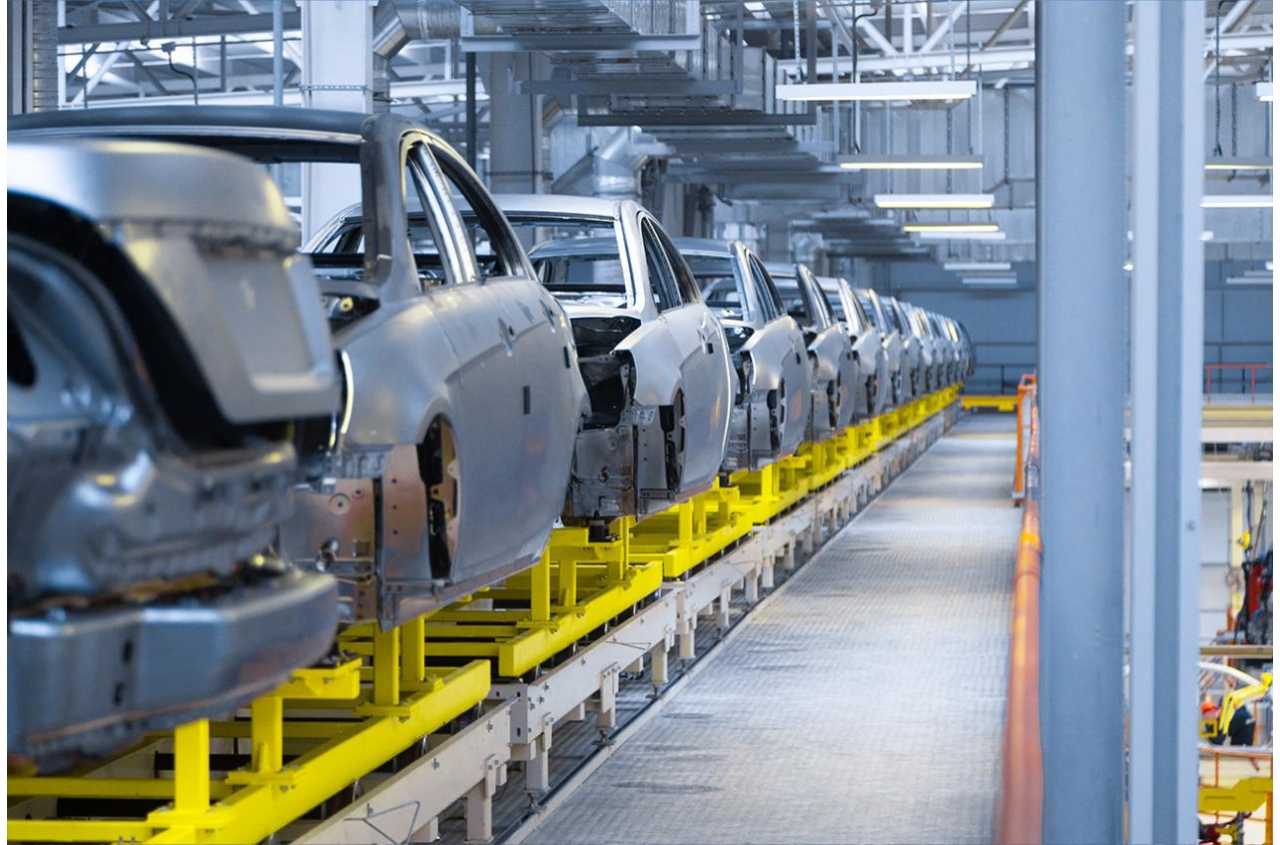
If one seeks to witness the highest mass-scale quality in manufacturing industry of 2026, that would easily be the EV factories of today. This industrial segment is now driven by extreme competitiveness and the need for zero defects, real-time visibility across millions of components, & all to be done with extreme consistency!
And this is becoming even tougher for EV manufacturers in 2026; now they have to fulfill a long list of customers’ demands, including a sub-500-mile range, charging in less than 20 minutes, and no margin of error in build, and have to compete against ultra-cheap models in the market.
To do this, they have to first implement quality assurance systems that perform with extreme accuracy, cover end-to-end automated production cycles, and help manufacturers meet customer demands. In 2026, this is done with the help of the following well-established and interconnected pillars of quality assurance.
2. Quality Standards & EV Manufacturing Industry
These standards are driven by ever-changing end customer expectations, especially after the arrival of new Chinese brands, which are much more competitive and feature-packed, raising the bar for both manufacturers and end customers. Now buyers expect much longer driving range on a single charge, less time to charge their cars, and to meet regional regulatory requirements, all with zero margin of defects.
Such a high-value and defect-free model of operations needs to build quality into the process of manufacturing EVs rather than fix the products in the end. For this, they focus on four major areas: process control, where they use automated systems to maintain tight tolerances in each manufacturing activity. This means coating thickness, battery assembly, and factors that comprise performance like humidity, temperature, & torque across all production stages of EVs are kept in check.
Next, Failure Mode and Effects Analysis with 100 percent material and component traceability is heavily employed for defect prevention and rapid recall containment if there are compromised materials or components being used. Quality parameters are checked against set standards in QMS and also against regional compliance requirements, including IEC, UL, IATF 16949, ISO 9001, etc.
2. QA Framework for Modern EV Factories
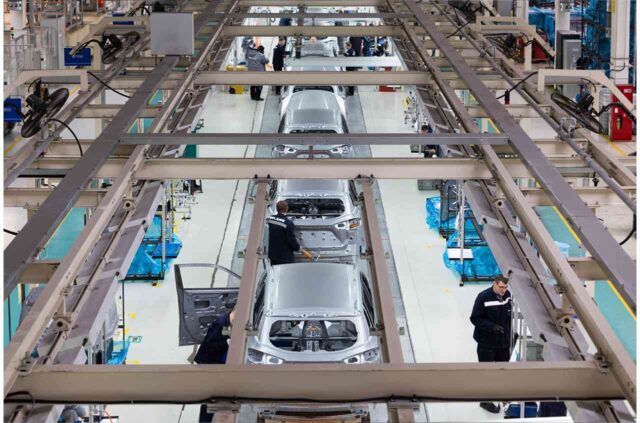
Such tightly controlled operations in modern EV manufacturing yield more than 99.5 percent of first-pass yields, which is much more than traditional manufacturing facilities. This astonishing quality in manufacturing industry of EVs is observed due to a four-point implementation framework designed to take full advantage of advanced electric powertrains, automated assembly systems, and software-driven vehicle control systems; more details below.
2.1 Automated Process Quality Assurance
Such setups are designed with processes that always keep the end work as minimal as possible, and for that, process QA is focused on designing, monitoring, and continuously improving every manufacturing step in the EV production lines. For this, automation, data, and robust controls are used to keep tight tolerances, and all the focus is primarily on the design and inspection of in-line operations.
This covers all the core activities: battery cell stacking and its winding, automated electrode coating, electrolyte filling, packing assembly with precise torque control, & functional integration of software and related electrical subsystems in an EV. The tight tolerances are maintained by establishing automated process capability and guardbands early in the project phase by using Design of Experiments (or DoE) and Statistical Process Control (or SPC).
Modern EV manufacturers go one step further with advanced metrology techniques carried out by impedance spectroscopy, automated optical inspection, inline X-ray, and laser profilometry. These activities are implemented in a synchronized QA ecosystem interconnected through IoTs with manufacturing execution systems & digital twin models of an EV manufacturing facility.
2.2 Automated Product Quality Assurance
Even though most of the focus has shifted to process-level cell screening for EVs, manufacturers still implement strict product QA to ensure that the products’ integration into the vehicle meets functional, safety, and longevity requirements after they are installed in the deliverable EV.
Having said that, the gravity of product quality in manufacturing industry of EVs and its QA is more towards battery cell testing, where these new energy power sources go through extreme routines of production sampling and end-of-line cell verification. For this, different techniques are used, including open-circuit voltage, capacity verification through partial and full charge/discharge cycles, internal resistance/impedance spectroscopy, etc.
Next, real-world hazards are simulated in which mechanical, thermal, and abuse tests are conducted to check the physical performance of the battery. Then, functional testing of EV motor & power electronics is done along with these batteries in place. These tests analyze efficiency maps across different speed and load profiles to finally check insulation resistance and electromagnetic compatibility.
If defects pop up in this QA framework, a lifecycle is initiated in which containment actions are first initiated, followed by detailed root-cause analysis, and finally, corrective action plans are generated, which can cover supplier corrective action requests and process revisions to finally close this loop.
2.3 Vendor & Supply Chain Quality Assurance
This QA layer is implemented to make sure everything entering an EV plant and used on the production line will not compromise final product quality. For this, the first step is supplier qualification, especially for critical materials required in EV manufacturing. The most important one is for battery production, where materials for the cathode are checked for parameters like particle size distribution, Ni/Cu/Al/Mn content, moisture, and residual sodium.
For this, tests like ICP-MS, XRD, SEM-EDS, moisture analyzers, and laser diffraction are commonly used. Similarly, qualification is done for battery anodes, electrolyte, separators, etc. to match exact thresholds, as battery safety is a top concern of EV manufacturers.
To maintain traceability, barcode or RFID tagging is maintained right from the start with which details of the supplier certificate of conformance, last lab test results, and Production batch ID are linked. This data can be pulled up all the way back to materials entering a facility whenever an anomaly is detected on production lines by IoT sensors, hence enabling end-to-end tracing.
EV also makes access to their cloud-based QMS available to their suppliers, where they can collaborate with them rather than just being a traditional supplier. Data like material test results, CoCs & process logs are available to both parties, which allows cross-functional teams to quickly map any future failure modes across the entire supply chain.
2.4 Software & System Quality Assurance
This QA layer focuses on control systems and embedded software in the EV manufacturing facilities, which drive automation infrastructure for both production and testing activities. This layer is designed to make sure that both hardware and software driving it work safely, reliably, and securely.
For this goal, this layer touches battery management systems, motor control units, domain controllers, & PLCs/robotics attached to the production lines. With each zone, this layer is responsible for focusing on specific permits; for example, the battery management system (or BMS) is responsible for battery cell voltage monitoring, fault detection, charge balancing, thermal management, etc., and it does that by cycle life testing, fault injection, and HIL simulation.
Similarly, parameters like torque control, overcurrent protection, and efficiency maps are monitored for motors. Similarly, sensor fusion, communication latency, and ADAS logic for domain controllers. Moreover, DevOps is also covered in the continuous QA framework of EV factories, where post-deployment and further improvement in operations are worked on.
3. The Real-Time Quality Loop
If you have noticed, there is a lot going on in the above four major frameworks of quality assurance, and to make them work together in a tightly integrated ecosystem is the real challenge for EV factories.
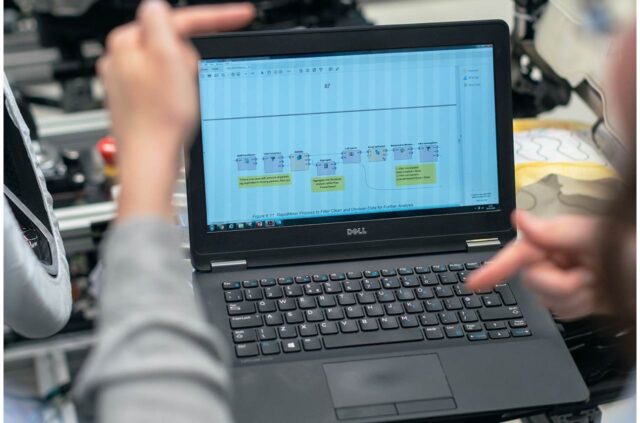
For this, interconnectedness is maintained through a real-time quality loop that involves IoT sensors in the field, MES, automated production lines, automated testing equipment integrated with them, and other subsystems.
For example, if there is an error in the production routine leading to thickness deviation in battery cathode coating, this is detected during the activity and quickly flagged in the process QA layer where impedance spectroscopy testing on cells is triggered.
During the tests, if the results show elevated internal resistance, the BMS software picks up this anomaly & quickly updates its fault-detection models via the DevOps pipeline. Moreover, the MES also gets this anomaly information, which generates queries to the linked supply chain database so that they can identify the cathode material lot used for that specific unit and others similar in the lot.
4. Challenges in EV Production
Even with such well-organized QA layers in place and capable automated hardware with intelligent software to make them work together, in the real world, issues like late defect detection, slow recall containment, and data silos still exist. This is observed in most newcomers to the industry with their new projects or during scaling.
Apparently the biggest problem related to quality in manufacturing industry of EVs has been fragmented data in EV production; in 2026, a typical EV factory can generate well over 500 terabytes of quality data per month, and QA layers in place need to be well optimized to process such huge amounts of data for actionable steps. If not taken, this data just flows for days while cross-referencing systems, leading to millions in losses for such a high-value product.
Modern automotive companies involved in EV manufacturing now implement an “inspection intelligence layer” among the above four layers of QA. This layer seamlessly connects inline metrology, detailed results of various test results, supply chain data connected to each component, and software logs, all in real time.
5. Inspection Intelligence with Jettest
This is where JETTEST has been helping global EV makers from all around the world to add that missing “intelligence layer” of testing in the above four-pillar QA framework and get rid of the manufacturing challenges we mentioned above.
Its AI-powered inline inspection & data integration platform received global attention, as these systems enable automated testing without creating data silos and shrink time to react to production anomalies. The automotive motor driver burn-in line is a fine example here, which is designed to perform automated performance validation of electric drive systems in modern EVs.
To ensure that the EV on the production line meets QA standards (of the product QA layer), this inline equipment simulates real operating conditions for vehicle motor drives to test voltage/current, output power, & communication functions. JETTEST’s other solutions for conducting automated testing for other high-value parts of EVs, including steering wheels, pumps, GPS navigators, compressors, etc.
All these high-precision components for automated test systems strengthen all the above four QA layers in EV factories and also help manufacturers’ compliance with international standards for automotive systems.
6. Wrapping Up
The EV industry of 2026 represents extreme implementations of frameworks being used to assure quality in manufacturing industry. Modern QA systems are engineered into every second of EV production with end-to-end traceability and extreme efficiencies available from sophisticated interconnected automated systems.