1. Introduction
Any business entering the US market with their electronic product has to deal with FCC certification costs, and understanding which product category their product falls into is crucial to estimate the final costs. The fee structure from the Federal Communications Commission in 2026 remains steady, but there are subtle changes and more changes in lab testing due to the surge of complex electronic devices in the US.
Nevertheless, any manufacturer or importer related to electronic devices has to comply with these rules. To get a better understanding of what you have to deal with when applying for FCC certification this year, we have compiled this article for you, where we explained all the basics of the certification costs and legal ways to bring the final cost down.
2. FCC Certification Basics
The core purpose of FCC certification for an electronic device is to make sure that it won’t interfere with other devices in use, like radios, TVs, or phones. The rules and regulations explained by the FCC attempt to control radio waves from your devices, and every electronic device maker has to get this FCC mark to show that it’s safe to use in the US.
These certifications cater to two types of devices based on their profiles of wireless emissions: the first one is non-wireless devices (also called SDoC or No Wireless), and intentional radiators (also called FCC-ID).
The first one, non-wireless devices, as is pretty evident from the term, doesn’t emit anything in the electromagnetic sense. Common examples are power adapters or LED panels.
For such devices, their manufacturers self-declare compliance after internal or accredited lab testing. FCC certifications don’t need any form of dedicated testing for such devices.
The second type, the intentional radiators, are required by the Telecommunication Certification Body (or TCB) under the FCC to check such devices up to 40 GHz in special rooms. If they don’t show any interference, then they get to be approved for safe usage.
3. Core Cost Components
3.1 Lab Testing
This will add up the most, up to 60 to 70 percent of the total FCC certification cost in 2026. The price will depend on the preliminary scans, frequency range of your device, and chamber type.
One specific test is “Conducted Emissions Testing,” which will use LISNs on 110V/220V setups to measure line-conducted interference of the device in the range of 150 kHz to 30 MHz. This test typically costs between $1,200 and $2,500.
Next is the “Radiated Emissions Testing,” which costs around $2,000 to $5,000 and takes three to five days. During these tests, the devices are kept in an “open area test site” or 3m/10m anechoic chambers.
Both can capture field strength up to 6 GHz, which can even be extended to 40 GHz for Wi-Fi 6E. With this setup, personnel conduct pre-scans to clearly identify peaks and later perform a full scan with ferrites/substitutions to confirm fixes.
If your device falls under the intentional radiator category, then it will go through a separate type of lab testing called Specific Absorption Rate, or SAR. It is employed for body-worn devices like wireless mics. Another type is power density or MPE for fixed gear, which uses computational modeling or liquid-filled phantoms for testing procedures. Price can reach between $2,500 and $6,000 for these tests.
3.2 Application Reports
For the application process, you will be dealing with Form 731, and its preparation will cost you somewhere between $100 and $500. Starting with hiring an engineering consultant who will help you compile a 50+ page comprehensive submission of documents with attenuation tables and tuning instructions in the required formats.
Add a TCB review fee of somewhere between $120 and $500, which will be charged for processing plus site visits. Moreover, these documents require test reports and internal photos captured in 8MP showing shielding.
Compiling this will cost you between $500 and $1,000 for this; if express services are used, add 25% more, but you will get a 10-day turnaround versus a much slower 4 to 6-week standard processing time.
3.3. FCC Fees
The fee structure is fixed, but it adds up as your device becomes more complex. The first one is guaranteed code, a company’s ID for all products, which you will get via the FCC website. It will cost you a one-time fee of $60.
Next, you will pay $35 for the Equipment Class. Filing of each type of device technology to be tested. For example, separately for Bluetooth and WiFi. Next are TCB review fees for wireless, which cost you between $120 and $500 and cover document checks and site visits.
3.4. Pricing by Device Tiers
The pricing range of FCC directly depends on the device complexity, starting from basic non-wireless commercially available products to much more advanced wireless systems. Start with unintentional radiators; the price typically ranges from $600 to $5,000 in total, which will cover conducted/radiated emissions under Part 15B Class B limits.
For Bluetooth devices, the price ranges between $1,000 and $4,000 in 2026, with their compliance to Part 15C tests for the 2.4 GHz band edge and basic SAR evaluations. For Wi-Fi-integrated devices, this price climbs up between $6,500 and $12,000, as it will require these devices to have an extended chamber time of 5 GHz/6 GHz scanning plus modular approvals for antennas.
This price can reach up to $12,000 to $15,000 for high-power intentional radiators like drone controllers or broadcast transmitters and even longer chamber times. Companies that are involved in e-commerce for such products can easily shave off up to 30 percent of testing costs since they can have pre-certified modules in their newer models of such devices.
4. Step-by-Step Certification Roadmap
The above cost classification is not enough for successful FCC certification. It also requires companies to make a clear roadmap of methods to control certification costs and processing timelines. This starts with device classification and ends with market-ready labeling. This is how to do it in a well-planned and sorted-out method.
4.1 Classify Devices
Your device can be either an unintentional radiator (falls under SDoC) if there is no intentional transmission or intentional (falls under FCC ID) for any RF output above the frequency threshold of 9 kHz. To make sure where your device falls, it’s always a good idea to consult with the FCC’s Equipment Authorization Search to avoid retesting fees.
4.2 Pre-scan in-house
It is highly recommended to do so, as this will directly save you an estimated range of $1,500 to $3,000 on fixes. For this step, use rented LISNs and spectrum analyzers to identify peaks associated with your device, well before making any lab commitment.
4.3 Selecting a lab
For FCC-ID lab testing, it is recommended to partner with ISO 17025-accredited labs and to always verify the scope for the frequencies relevant to your devices; for example, 6 GHz is used for Wi-Fi 6E.
4.4 Submitting form
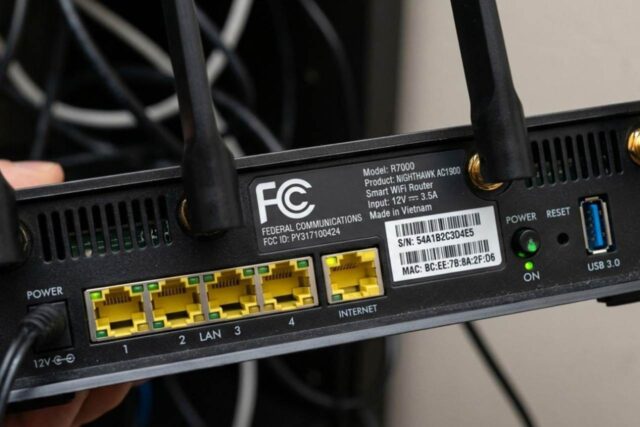
The Form 731 will go with at least 50 supporting documents, including device schematics; internal and external photos with 10+ angles; detailed test reports related to your device; and attenuation tables in required formats.
4.5 Label and declare
The most common practice is to put the awarded label and its DCC ID on both the product and its packaging. Some manufacturers even print it in the user manuals and also add related warnings for their users.
5. Factors Influencing Total Costs
Several variables directly add up to the final FCC certification costs even before the filing process is initiated, sometimes even between 30 and 50 percent in the final cumulative spending. One of them is device complexity, which surely tops the list and is the most common troubling factor for electronics importers.
Devices that use multi-band wireless systems in their circuitry, like the new Wi-Fi 6E, require manufacturers to separate equipment class filings (costing them $35 each) plus extended frequency sweeps up to 40 GHz. This will increase the cost and will also inflate lab time by 30 to 40%.
Power levels will also affect FCC costs; high-power transmission devices must be subjected to harmonic suppression tests across 10+ bands. This will push radiated emissions toward $6,000 alone.
Another common variable that adds to final costs is test failures due to prototype designs, which can trigger retakes and cost $2000 to $4000, depending on the results. Companies using pre-certified modular parts save here and get their reports much quicker.
6. Cost-Saving FCC Partners
To suppress these costs as much as possible and make the process much quicker, companies rely on professional and trusted partners who help them transform these FCC certification costs from a burden to a strategic advantage. Such companies should be aiming to build an efficient in‑house pre‑scan and test setup that can eliminate thousands of dollars in FCC lab re‑tests and redesigns.
In 2026, global businesses are increasingly opting for automated testing services and reliable industrial partners like JETTEST to maintain FCC compliance velocity without investing in in-house spectrum analyzers. Its offerings of industrial‑grade electronic loads and programmable DC power supplies enable manufacturers to simulate real‑world operating conditions and accurately detect conducted emissions early in the design phase.
Products like the Fully Automatic PCBA ICT/FCT Test System with 3 kW equipment power can execute both in-circuit tests and functional circuit tests on printed circuit board assemblies and semi-finished products. This all-in-one system combines both tests in one workflow with ultra-precise accuracy for testing outputs, timing, interfaces, and sometimes firmware behavior.
Such hardware works for companies engaged in FCC testing routines to find defects, escape rates, and downstream test/repair costs and feeds directly into quality‑control and compliance documentation, making the entire process more efficient and error-free.
7. Wrapping Up
In 2026, the FCC certification cost starts from a realistic budget of somewhere around $600 in the SDoC range and climbs all the way up to $15,000 for high-wireless-power devices. The major cost in these comes from lab testing (almost 60 to 70%), and to slash prices, partnering with smarter testing solutions like JETTEST significantly helps electronics importers and related businesses.