
1. Introduction
A good or bad product is not about luck but depends on deep critical thinking on how to improve product quality and value for its customers. Every product is an opportunity for its creators to design something that can solve a problem for its buyer and also effortlessly fit into their lives.
But improving product quality is not an intuition or one’s ability; it requires a well-disciplined strategic planning process, which, if ignored, can ruin an entire business.
Every year, we are observing over $1 trillion in products that end up in returns and recalls, leading to permanent damage to small to giant businesses on the planet. We are going to address this for your next product here in this article.
TL;DR — Improving Product Quality in 2026
Master core principles (metrics, PDCA, TQM, feedback, leader benchmarks) then execute a 5-step roadmap: Foundations → Ideation → Supply optimization → Build/test → Sustain with Kaizen. Leverage 2026 AI/tech like JETTEST.net for automated inspections, error-proofing, and real-time SPC to achieve “right-first-time” production across e-commerce, manufacturing, or tech. Result: Slash defects 30-50%, boost margins, and build customer loyalty—start with audits and JETTEST trial today.
2. Core Principles of Product Quality

Improving the quality of your next product requires you to follow a two-step process: first, build rock-solid foundations based on the principles outlined below, and second, follow a step-by-step plan to increase the value of what you want to sell. This is how to do it.
2.1 Metric Precision
The very first thing to look for is where your current quality metrics stand, and from there, you have to go up. Working without data and working on vague goals is just wishful thinking, and we have to avoid it in order to improve the quality of our next product.
Start with clear and relevant KPIs for your industry. For example, e-commerce companies can use metrics like net promoter score (aim for above 70), zero in on return rates (aim for below 5%), and first-pass yield. For tech firms making gadgets, they can track metrics like mean time between failures and/or failure rate for a specific part of their hardware offerings.
The approach here to check quality defects should be specific, measurable, achievable, relevant, and time-bound (or SMART goals) on a monthly or quarterly basis. This will allow you to go with a data-driven approach towards product problems and will enable managers to go forward with evidence-based decision-making.
2.2. Adopt PDCA Cycle
The second principle of improving product quality is to follow the iterative cycle of Plan-Do-Check-Act, and it is now even more crucial in the fast-paced technological era of 2026. Start by identifying issues and hypothesize possible fixes to them. Then, proceed with testing on pilot batches and measure results.
If results are consistently promising, then pick this fix as final and standardize it for the current generation of products. In 2026, you can use AI during the check phase in this loop, which can boost the speed of this process and also provide predictive insights in your testing.
2.3 Apply TQM
Not everything has to be improved in the production process itself to improve the outcome, but management around it has to be improved, too. Companies use Total Quality Management as a cultural overhaul, which uses set rules of customer focus, effective leadership, clear engagement, a process approach to work, gradual improvement, evidence-based final decisions, relationship management, and systems thinking.
These rules are employed to output products reaching 99.99 percent free from errors. This management framework also shines in hybrid workforces where management trains their teams via advanced VR simulations for transferring hands-on skills, ensuring “right-first-time” production.
2.4 Use Feedback
Feedback is a quality compass for a product, and if you are ignoring it, your next release isn’t going to serve the customer well. In 2026, you can use AI sentiment tools to parse reviews quickly and then use that to revamp your products.
Companies are using 360-degree employee feedback for process tweaks even on a weekly basis to make their products more relevant to their customers and boost repeat buys.
2.5 Benchmark only Leaders
Dreaming small is a crime, and the same applies to the benchmarks you set for the quality of your product, especially if you want to climb the quality ladder. To benchmark top-tier brands, analyze them via their public reports, teardown videos, and tools like SimilarWeb for e-commerce metrics.
When doing this, first identify your peers who are on top of their game. Then map their KPIs, compare them with your business, assess your performance, and then adapt. Aiming high with tiny baby steps is the prime way to learn how to improve product quality in any industry.
3. This is how to improve product quality in 2026
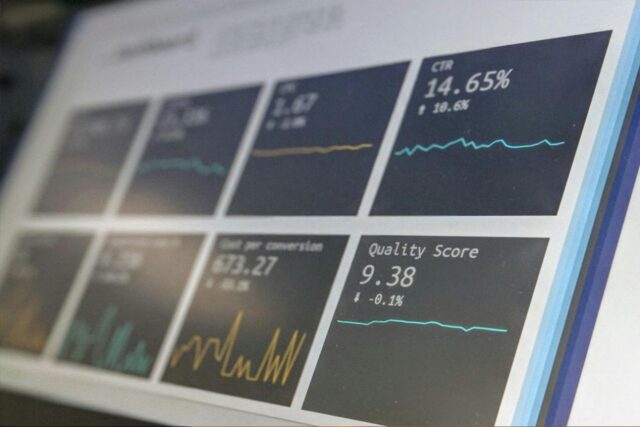
Once you are all set with the product quality principles, the next step is to do the real work. In practice, you will be dealing with a five-step roadmap, which is basically your new optimized quality assembly line.
This framework is developed by adapting timeless strategies (lean operations and Six Sigma) and today’s AI-infused systems, all this with techniques to handle a supply-chain-volatile world of 2026.
3.1 Foundations—Get the why right
Poor foundations doom 80% of quality initiatives. So, before you fix your product and go through all the trouble of doing so, ask the very commonly overlooked question of “why” you need it and why a change is needed.
To do that, first, measure your baseline by checking inventory defects, interviewing related personnel about those problems, and checking how many returns are being eaten by those problems in your product.
Moreover, involve front-line workers early rather than in the middle of the team of messengers, as those working with their hands spot the problem early. Next, tie exec bonuses to the company’s product quality KPIs; for example, OEE is a common one to attach bonuses to.
And finally, quantify the company’s ROI with each step of planned improvement in the product, as it will guide your way forward.
3.2 Ideation and design thinking
Instead of building a fixed strategy, adapt to the design thinking of empathize, define, ideate, prototype, and test the prototype. The idea here is to use creativity right from day one rather than a later step, and for this, several AI tools are helping firms in 2026 to improve their production quality right from the early planning phase.
The best way to do that is to shadow customers from day one and map their pain points by building personas. And then employ the technique of prompting questions of substitute, combine, adapt, modify, put to another application, eliminate, and finally reverse (SCAMPER).
Again, using AI for substituting (for example, swapping materials) in product design is super fast and efficient. Using this framework for one idea is a waste of resources and time; set a metric of at least 30+ ideas per sprint, which will give you 5-10 prototypes and 80% user approval, with just a few left to make final approved changes.
3.3 Optimize Supplier and Supply Chain Quality
Once you have figured out where and how to improve with your prototype, the next step is to improve supply chains, as weak lines can easily torpedo 70 percent of the quality issues. In 2026, disruptions are becoming a norm, so optimization of the supply chain means that you develop scorecards, maintain audits, and use tech traceability. This will ensure that upstream excellence properly flows downstream.
To make this happen, score your suppliers on a 100-point system where delivery speeds will rank 30%, the rate of defects in received material will be 25%, responsiveness is 20%, the quoted cost is 15%, and sustainability checks are 10%. For example, if the defect rate is more than 20 percent, this supplier should be red-flagged.
Moreover, use multiple sources to mitigate risks, especially in critical supply chains for your products, and share FMEA stats with your supplier for joint operation and collaborate together to deal with defects and supply chain issues.
3.4 Building and Testing
When designs are optimized and materials are all in place, the next step is to employ Poka-Yoke Production for improving product quality. This process technique promotes automating error-proofing and the use of lean cells, which minimizes work in progress, resulting in detecting errors in an instant and on the spot.
Such a process uses a layered testing regimen in 2026 where vision AI is used to scan 100 percent of the supplier goods with SPC charts generated every hour and intervened at every 2 sigma shifts. And finally, AQL sampling and stress tests are done on the real-world working of the product.
3.5 Sustain and Gradually Improve
All the above are new AI-powered fast-track processes of how to improve product quality, but improving that isn’t a race but a marathon. Using kaizen events suggests that sustaining 1 percent product improvement results in a compound result of 12x in one year.
Successful improvement plans and their implementation use quarterly and annual benchmarks of their progress and implement a “zero defects” working culture for long-term operational goals.
4. Reliable Testing Platform in 2026
Both TQM and PDCA, a critical phase of improving product quality in the framework mentioned above, require the necessity of a concrete technical edge. For this, JETTEST helps companies with automated intelligent manufacturing to help improve their products by employing a “right-first-time” strategy
Products like the Optical Shaft Inspection Instrument from JETTEST prevent non‑conforming parts from moving downstream. It does that by precisely inspecting and measuring cylindrical/rotating parts (shafts, pins, axles, etc.) for dimensional accuracy and surface defects, hence supporting the metric‑driven quality control, Poka‑Yoke (error‑proofing), and real‑time SPC we mentioned above.
The platform also helps companies to integrate end-to-end with their manufacturing execution systems, which allows them to turn their production process into a data-driven powerhouse. Partnering with JETTEST enables companies to move forward towards enhanced quality production in 2026’s industrial and mechanical‑assembly environments with precision and tight tolerances.
5. Your Quality Breakthrough Awaits
In 2026, learning how to improve product quality is not just about finding errors but requires a disciplined strategy and advanced automation technology to gradually improve the value of final products for their customers. Leveraging specialized testing partners like JETTEST makes this a data-driven and automated process.