
1. Introduction:
Fire up any search engine and go through any of the fast-paced evolving industries like renewable energy, electric vehicles & grid-scale storage sectors. You will find one thing in common: traditional, hands-on quality control is being replaced with smarter automated solutions. This consequently leads to the much more popular question of what is automated test equipment and how it works in 2026.
Automated test equipment, or ATE, is quickly making its way into almost every large and medium-scale industry. Where it is employed heavily in heavy power electronics engineering and works in highly intelligent, software-defined ecosystems, it outpaces legacy testing methodologies. More in these systems below.
2. What Is Automated Test Equipment?
2.1 Definition:
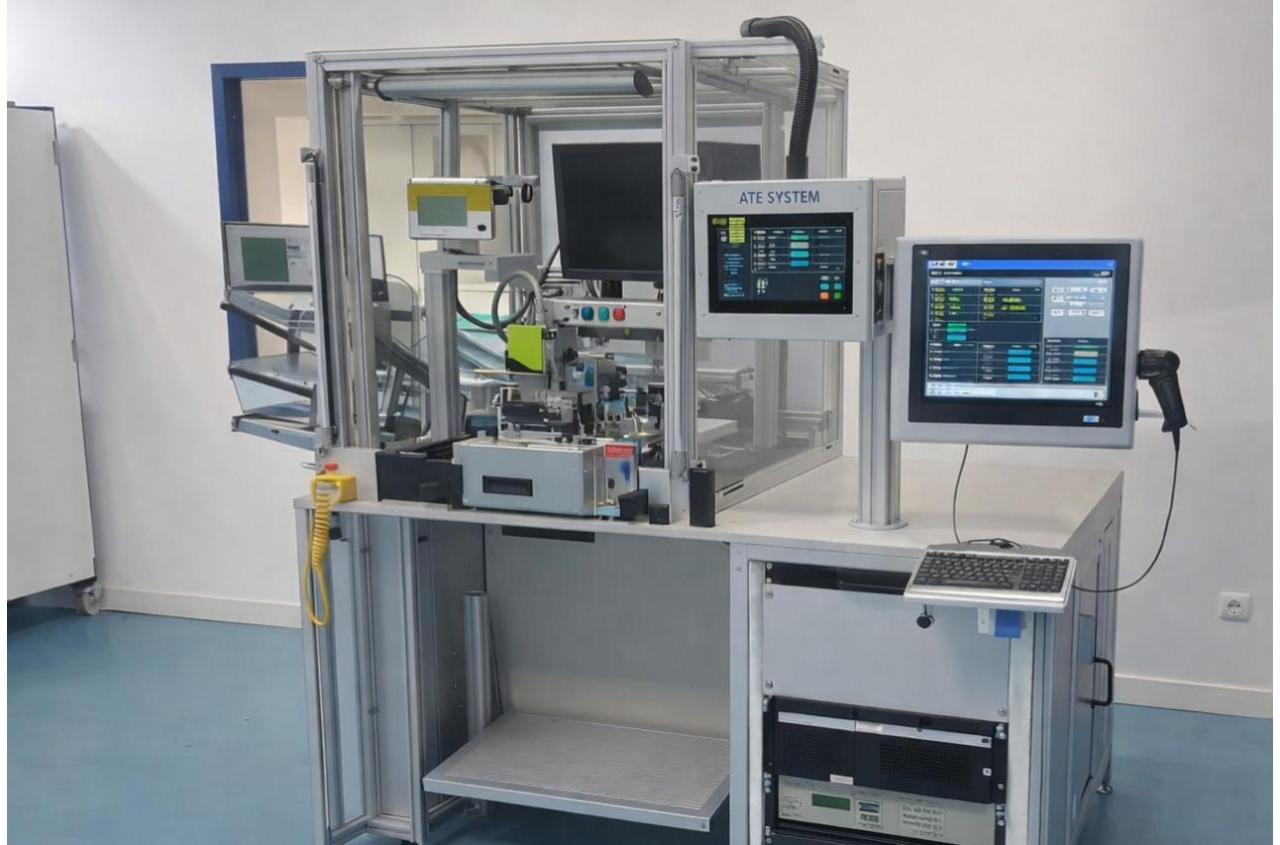
ATE is an integrable piece of equipment that is designed to automatically perform diagnostic, functional, & parametric tests (with minimal human intervention) on a device under test, usually industrial products in the form of components and complete systems. Such hardware runs on pre-programmed test sequences and replaces manual setups that can’t meet the modern requirements of commercial production or validation lines.
2.2 Key Components
In any form of ATE, four typical integratable layers work together to output rapid and ultra-high-precision measurements for a production line. The first one is the controller, the brain of this equipment, whose task is to run those preprogrammed test sequences and all the related scripts in test management software.
Next is the interface whose job is to physically and electrically bridge the test equipment to the DUT in question. and also handles important channels like handling high-voltage lines, sensor paths, and communication buses. Next is the Instrumentation Suite, which is there to act as the muscle and senses for the equipment.
This layer has a digital mix of different useful systems like digital power supplies and meters, oscilloscopes, regenerative electronic loads, etc. And finally, there is a software layer that is responsible for running test profiles, simulating real-world grid anomalies, and connecting with the rest of the software layers in a facility.
2.3 Working of a typical ATE
This equipment works by creating a synchronized loop of all the above-mentioned four components and enables detailed hardware stimulation, data capture, and software analysis testing routines. There are no probes like in manual testing routines, but all is done through pre-scripted testing instructions in the software.Of course, the device under test still needs to be mechanically & electrically connected to the system, which can be done through “bed-of-nails fixtures” in the case of circuit boards and heavy-duty “mass interconnect interfaces.”
Once in place, the system creates simulated real-world conditions for the DUT by using specific software commands, which communicate with programmable internal instruments to apply specific electrical inputs. Then an array of specialized measuring instruments records the response coming from the DUT, and this test data is fed back into the central ATE software for deep analysis and logging.
3. Benefits of Modern ATEs
3.1 Reduced Test Time and Cost per Unit
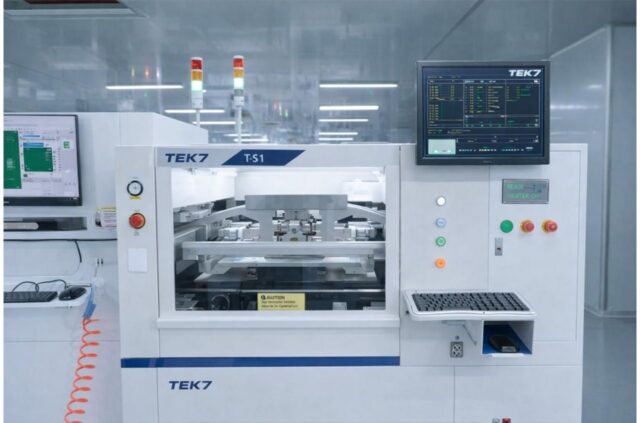
These software-designed ATEs are really a leap forward in terms of testing efficiency in a high-stakes manufacturing site. Such equipment integrates with existing lines and can effortlessly condense multi-step validation profiles into seconds, which would take hours through manual inspection.
While CapEx is significant for such systems, the expenditure for daily operations comes down drastically, which helps CapEx numbers very quickly with higher throughput without needing higher working space volumes. And all this happens with extreme accuracy and repeatability; as such, ATE works with the same programmatic routine every single time.
3.2 Improved First-Pass Yield and Traceability
Such equipment doesn’t just flag with binary numbers but can track the exact component, trace, or firmware register that caused a failure during the test. Then they can also interlink why this is happening and map the fault direction. This helps technicians quickly rework units rather than the old routines of manual inspection, which required them to implement scrapping and do granular inspection.
This is done with comprehensive test data that links detailed and relevant parametric measurements to the faulty units, along with other useful information like thermal profiles and waveforms. This data is punched with a barcode to maintain end-to-end traceability, which also helps companies to maintain rigorous documentation standards of regional compliance.
3.3 Scalability from R&D Prototypes to High-Volume Production
Modern Industry 4.0 and 5.0 working ecosystems require a unified testing framework that scales across the entire product lifecycle in their facilities. For this, today’s ATEs are designed with modular software architectures and modular instrument standards to make this possible.
This enables engineers to use core test codes during R&D and everyday operations and also helps factories scale by adding horizontal architecture and more parallel channels to their testing layer.
Such a scalable and modular testing layer helps businesses to eliminate friction between design & manufacturing engineers and also supports their future expansion plans without needing to rewrite test scripts or address integration issues that often arise during scaling.
3. Modern ATE in 2026
3.1 AI & Machine Learning
In 2026, such equipment is not just a standalone testing platform but now works as an intelligent, highly dense & virtualized ecosystem backing an edge AI model linked directly to high-frequency telemetry. These new breeds of ATEs use ML clustering algorithms that can not just detect issues but also perform intelligent fault classification and root-cause analysis for each anomaly they filter out in a DUT.
Moreover, this all happens with extreme robustness, as these equipments are designed with self-healing test frameworks & sequence optimization capabilities. In case of any revision of product parameters, these devices can dynamically adapt to them and adjust their test scripts to such minor product revisions. The result is unhalted production lines and more efficiency for the manufacturing plant.
3.2 Parallel & High-Density Testing
Extreme channel encapsulation & concurrent execution architectures are being introduced to get rid of bottlenecks when scaling up production and testing platforms in a manufacturing site. For this, a single ATE controller is used to implement multiple devices under test by exploiting high-speed solid-state switching matrices & effective use of advanced multi-channel programmable instrumentation.
Moreover, to get maximum possible efficiency from a limited physical footprint of a manufacturing site, the use of high-density PXI Express slots along with compact, rack-mount bidirectional power module packs is now becoming common, as such an arrangement ensures greater channel counts per square foot. This is done to increase total factory throughput without investing in further physical factory expansion.
3.3 Digital Twins & Virtual Commissioning
This implementation is most common in the industry of high-power energy storage systems, where building a new test line used to take several months, but now, with modern ATEs and advanced digital twin architectures, engineers design new lines with these immersive simulation frameworks, avoiding any delay and halting of operations.
Moreover, on-field engineers can now virtually execute entire test scripts against the simulated environment. Such simulated frameworks enable them to make scaling safe so that by the time the physical hardware is planned to be assembled, the testing software behind it is fully validated, and all the related risks are eliminated.
3.4 Cloud-Connected & Remote Monitoring
Modern factories eliminated legacy bottlenecks by using ATEs deployed as cloud-integrated assets. These systems work with unified global fleet visibility with the help of cloud-connected ATE software that helps large-scale enterprises monitor machine health parameters of this equipment and conduct (and standardize) identical test lines across multiple production facilities worldwide.
Moreover, cloud analytics platforms use predictive models on aggregated fleet data to generate proactive maintenance tickets when there is a drift, even at a level of sub-microseconds in their testing parameters.
4. Use Cases of Modern ATEs
4.1 PV Inverter Efficiency, Grid & THD Testing
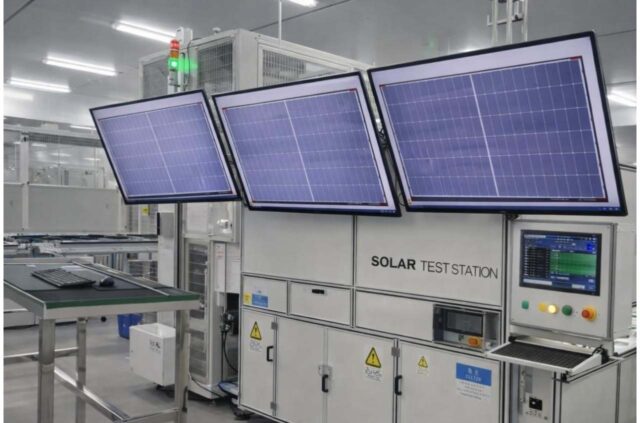
In solar manufacturing, modern ATEs mimic static, cloud cover, and several other weather changes by using programmable solar array simulators (or SAS). This setup introduces rapid changes in current-voltage curves for the solar panels and attached inverter systems to check performance across different spectrums. The precision is kept down to fractions of a percent when the system tries to produce max output in varying conditions.
4.2 Testing for Energy Storage System
A normal working ESS should be able to switch in milliseconds when drawing excess power from the grid to injecting power back into the grid. Modern ATEs simulate battery conditions with high-voltage, high-power bidirectional DC power systems whose rapid directional shifts are monitored, whether they work with or without creating voltage spikes.
4.3 Battery Pack Aging, SoH Tracking, and Burn-In Testing
Early mechanical or chemical failures are effectively filtered out with modern ATEs for a fresh batch of batteries, especially in the modern EV industry. It works by implementing burn-in protocols, subjecting the battery packs to continuous, elevated thermal & electrical cycles within the controlled environment of the test bay. Such ATEs also deploy regenerative battery test channels, which can redirect energy in a closed-loop design & effectively minimize the physical footprint required for thermal mitigation.
5. Testing Success with Jettest
One of the most common operational bottlenecks faced by global manufacturers is the one that happens when they begin to configure a standard automated test equipment system from separate components in their facility. JETTEST solves this with its new portfolio of highly integrated and specialized platforms designed to target these bottlenecks and match the booming scaling of newer Industry 4.0 and 5.0 working environments.
One example is of an industrial-grade end-of-line verification architecture of 2026, Jettest’s Final ATP Line for Energy Storage Packs, designed to carry out rigorous final acceptance test procedures based on 2026 standards. These protocols are absolutely crucial for next-generation, high-capacity energy storage packs, and these lines do that by providing a fully unified, multi-channel testing environment.
Robust energy-recoupling high-power bidirectional DC subsystems are used to handle high-voltage battery arrays, and comprehensive BMS interfacing is used to make it work with a wide variety of industrial battery management system protocols of today. The entire testing package is designed to eliminate the integration risks that frequently impact homegrown test lines.
6. Wrapping up:
We went through a popular online search of “what is automated test equipment” and its related concepts. To sum up, we can state that these integrated platforms are now helping manufacturers embrace a major technological leap forward for high-volume hardware validation, where accuracy, repeatability, and safer scalability are in check.