
1. Introduction
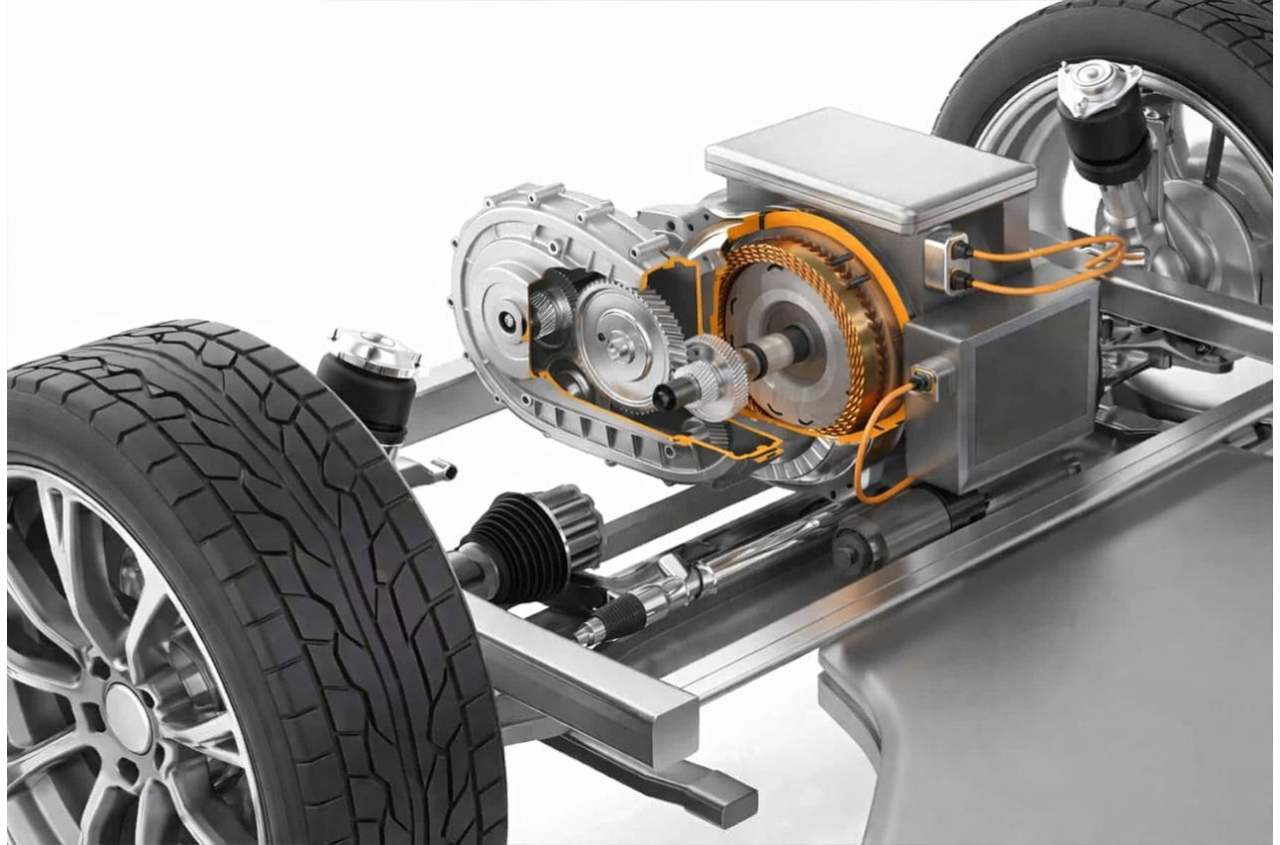
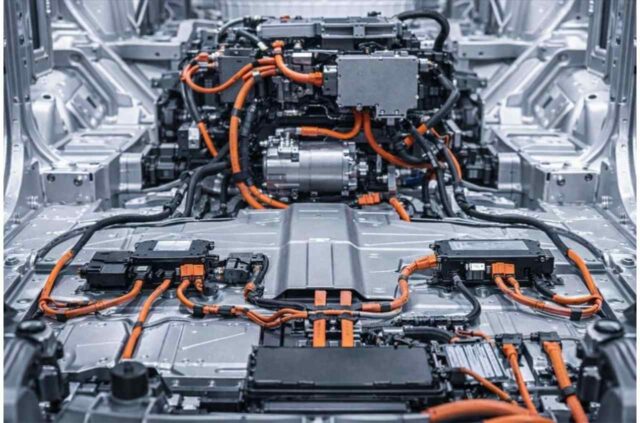
Just like gasoline-powered automobiles assembled with thousands of mechanical parts, electric vehicles also use thousands of basic electronic components before they come on the test tracks. Core parts of an EV run on an advanced sodium battery pack, an inverter, and a control unit, all of which use a layer of electronic components, including resistors, diodes, connectors, capacitors, and inductors.
As EVs become better at the way they do, the circuitry in them is also becoming extremely complicated. Self-driving technology, a futuristic dashboard stuffed with touch features, and luxury seats that do massages and multi-function steering—all these are packed with incredibly complicated electronic components.
Moreover, these EVs now run at much higher voltages & are also expected by their buyers to survive harsher thermal and vibration conditions than almost any other consumer product on the road. Imagine a single capacitor or a solder goes bad; this will not only compromise the car’s functions but will also seriously hurt the manufacturer’s reputation.
No car company wants that, especially in the 2026 fierce competition of the automotive industry. Below, we have gone through the four most common basic electronic component faults reported in the last few years and how companies are battling them.
2. Situation of Component Failures in 2026
The current automotive industry is being taken by EVs by storm, but they have also inherited quite a few manufacturing problems. EVs are notoriously known for their recall data, frequent warranty patterns, and bad field reports from the first half of the year. If you look closely, all points in the same direction: electronic components, not just batteries.
These components are becoming one of the leading sources of EV reliability problems, and the data speaks for this; Ford, Kia, Tesla, and all the major brands have faced extreme financial pressures due to recalls of thousands of vehicles linked with a rather simple component fault. Let alone Ford, which had to deal with 4.3 million vehicles in a recall (reported on February 20, 2026) due to an electrical fault.
In 2026, companies are very much interested in spotting a very boring and basic electronic component fault, which might not be that much of a threat, but in reality, it can cause major setbacks to their profits in the long run. During their production routines, they use aging and stress testing, which costs a fraction of what it costs to catch it after a vehicle has already reached a customer.
3. Common Faults in Electronic Components
3.1 Capacitor Degradation Under Thermal Stress
Even with incredibly advanced technologies we are witnessing in the EV industry, the problem of degraded capacitors still remains a major issue and is one of the most common reasons for faults linked with basic electronic components. They remain failure-prone because they’re also among the most heat-sensitive components in our world of automobiles, and field data still suggests them to be the most common reasons behind faulty systems in EVs.
Use of electrolytic capacitors in cars, in particular, is observed to lose capacitance over time as the internal electrolyte evaporates. This is accelerated when EVs are continuously exposed to sustained hot temperatures.
Even without heat exposure, these cars themselves cycle between hot & cold temperatures every time a driver drives their vehicle and then later fast-charges it. This constant and repetitive thermal cycling stresses the internal structure of the capacitors used in the car far more than steady-state heat would.
Once capacitors start to degrade due to excessive heat, it confuses the battery management system, which leads to problems like misjudging the state of charge, triggering false fault codes, and failing to detect a genuine overvoltage/overcurrent event in time.
To avoid all of this, manufacturers now use advanced and automated Accelerated aging testing routines, which give them a much clearer picture of expected lifespan before a component is ever integrated into a vehicle. This also enables them to design better cooling designs and identify and replace the materials that act as culprits in an EV’s charging system.
3.2 Resistor Drift Affecting Circuit Accuracy
Just like capacitors, resistors are equally important in any modern smart application, and the same applies to EVs. They work as quiet workhorses as they are found almost everywhere in their circuitry; from current sensing to voltage dividers to thermal monitoring, these basic electronic components are everywhere.
They are incredibly robust, too, but they do drift due to repeated load variation and prolonged exposure to heat & mechanical stresses. A resistor that has drifted from its designed specification propagates into a number of issues; the most common ones are the impact on the control unit to slightly misjudge battery load and the thermal sensing circuit to misread temperature by a few degrees.
To tackle this, EV manufacturers use precision component testing designed for AEC-Q200 reliability standards, which is done to track resistance stability across simulated operating cycles. This testing method flags the circuitry parts whose drift trajectory suggests they won’t hold tolerance for the vehicle’s claimed full service life.
3.3 Diode/Semiconductor Breakdown
Both are core to EVs’ power conversion systems, and their degradation can happen when they are overexposed to uncontrolled transient voltage spikes from switching events, prolonged fast-charging sessions in hot environments, regenerative braking, etc. These events don’t immediately cause them to fail but can slowly weaken the component’s internal structure, which they were designed with to work normally, leading to future failure.
Probably the most catastrophic effects in EV breakdowns arise from diode and semiconductor failures. These could include loss of power conversion, shutdown of the inverter, and, in some cases, damage that cascades to neighboring components on the same circuit. This is because these components sit in the high-power arrays of EVs, which makes them a primary concern for the manufacturers and gets a lot of safety and testing attention from them.
To avoid such conditions, EV manufacturers use stress testing to detect such issues. The stresses can include surge testing in the form of voltage transients and thermal cycling and burn-in testing routines, all designed to quickly catch early-life failures before a component ever reaches a vehicle.
3.4 Connector and Solder Joint Fatigue
They are one of the most common reasons linked to “hard-to-diagnose” EV faults as reported in the past five years and are receiving a lot of attention. Thermal cycling in modern EVs is common, which is known for causing designed microscopic expansion and contraction at the joint. This can cause it to physically fail or, in the worst case, cause an “intermittent connection,” which is a term given to faulty soldering that works fine but not in specific conditions.
Most of such issues are now taken care of by automated testing systems that use advanced imaging and AI-powered testing elements integrated right into manufacturing lines. Manufacturers incorporate vibration testing combined with thermal cycling in their testing routines to simulate accelerated timeframes of real-world usage and track resistance changes at the joints.
3.5 Inductor and Transformer Performance Loss
Repeated electromagnetic cycling also happens in such systems, which is also known to loosen or stress the windings over time in inductors and transformers used in EV circuitry. All of these issues don’t trigger abrupt halts but slowly creep into the core systems and start to appear as energy losses, added heat generation elsewhere in the system, and reduced charging efficiency of the vehicle.
Outcomes will be gradual efficiency loss and a shorter diving range. Accelerated aging protocols and long-term aging analysis are done during prototyped routines to get an accurate data-backed lifespan estimate for these components so that realistic performance expectations can be passed on to customers.
4. Fixing electronic component faults in 2026
4.1 Aging Analysis Across the Supply Chain
Manufacturers have now made long-term aging analysis a standard over a single-point efficiency test, as most of the anomalies related to even the very basic electronic components are cumulative and gradual. EV manufacturers use accelerated aging to develop data-backed lifespan estimates for these components, which is applied at the individual component level and to incoming new batches of components from suppliers before they’re allowed to be integrated into a subsystem.
4.2 Lifecycle-Based Validation
The goal with this validation is to estimate how well the electronic components inside an EV will perform when they are exposed to years of thermal cycling and vibration in real-life driving.
For this, manufacturers use testing routines that are designed to accurately simulate years of real-world operating stress in a compressed timeframe and record their response. These protocols use thermal and electromagnetic cycling, tracking efficiency loss, and core degradation over simulated years of use
4.3 Predictive Failure Modeling/Data-Driven QC
Accelerated testing for each component used in different internals of an EV generates enormous amounts of data, including the capacitance loss curves, r-joint resistance changes under vibration, resistance drift trends, & semiconductor junction behavior under surge, which are most important.
Evaluating them without AI-powered systems won’t explain if there is any link between the individual data points. By using ML models and data-driven QC in AI frameworks, manufacturers can easily flag & correct a risky component trend before it ever turns into a field failure or a recall.
5. Jettest Solutions for EV Component Testing
All of these most common faults we discussed above don’t happen in isolation, as they spread out in an interconnected network of anomalies, but usually tend to cluster inside the same subsystem. EV manufacturers are always interested in approaching these issues with collective monitoring and a corrective approach, where the OBC Power Burn-in System from Jettest saves the day this year.
Designed to implement thermal, electrical, & load-based burn-in directly to the OBC as a unit, this platform is a one-stop solution to all the most common manufacturing problems linked with different types of electronic components being used in the manufacturing of EVs of today.
Works as a fully automatic test system and can verify circuit boards of different systems and subsystems and is capable of rapidly and accurately checking soldering quality and overall functional performance. Through automated testing, this platform identifies defects to ensure every power board and its components meet quality standards before they get into the final delivery schedule.
6. Wrapping Up
The shiny new EVs of 2026 are packed with the next generation of automotive features, but their performance in real life is as good as the integrity and normal function of their basic electronic components. EV manufacturers now use lifecycle-based validation and an advanced OBC platform integrated with production lines to improve the quality of the components and to pass on realistic performance claims.