
1.Introduction
If you have been following the latest on solar manufacturing, automation, and Industry 4.0, you might be quite excited about the revolutionary new technologies hitting the work floors this year. These include the promising perovskite-silicon tandem cells, which are now exceeding the efficiency barriers of the past; new automated systems that are nearing 99 percent efficiency; and advanced tech of Industry 4.0, setting the stage for 5.0 soon.
There is so much happening in the industrial landscape of repeatable processes, reduced human error & blazing-fast cycle times. With so much going on, we have covered below the most important developments in 2026 and what global businesses can expect in the coming years for their respective fields.
2. Perovskite-Silicon Solar Cells
2.1 Efficiency Gains and Stability Breakthroughs
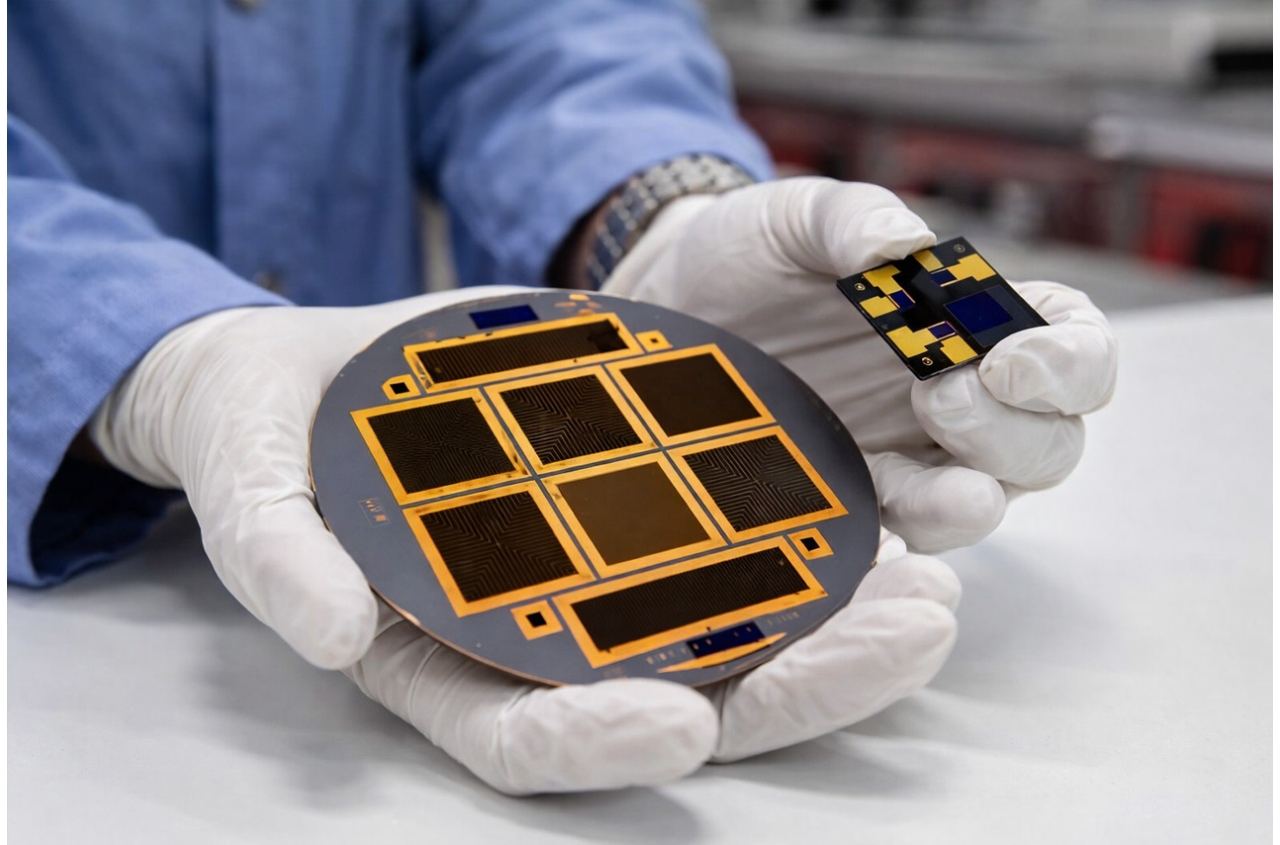
These cells featured a revolutionary design: a stack of a top perovskite layer on a traditional silicon bottom cell, designed to capture different parts of the solar spectrum, leading to better efficiency. Theoretical numbers were between 43 and 46 percent in laboratory settings, but this was never reached in practice, as the highest number recorded was 30.1 percent.
But recently, a new highest efficiency number of 34.85 percent to 35.0 percent was achieved by Chinese solar technology giant LONGi Green Energy Technology, which is still the current peak value in the solar industry. Although the solar technology used in real-world utility sales is still stuck at 24.5 percent module efficiency, these breakthroughs pave the way for better power generation in the future.
2.2 Manufacturing Challenges Still to Solve
Even with such big announcements and proven results, these new silicon solar cells are still a long way from competing with established silicon modules in the market right now, as maintaining consistent perovskite film thickness & its composition over large areas is still difficult. The slightest variations can lead to significant efficiency drops & reliability issues.
And this is where things get tricky, as these new solar cells are sensitive to temperature and humidity; both variables are hard to control in the outer environment. Other factors include solvent evaporation rates and substrate quality that make things even harder. A recent study in Nature by LONGi and Soochow University solved most of these issues with an advanced, flexible tandem cell, but mass scaling awaits.
Lab-scale deposition methods are not yet suitable for scale production through automation, but in 2026, many pilot programs are underway; if successful, they can be moved to a later stage to prepare for mass production. The constraints mentioned above can be controlled with precise and ultra-fast manufacturing technologies; this is where automation and Industry 4.0 come in to save the day.
3. Industry 4.0 Technologies
We are past the road of theoretical claims, as in 2026, companies are already deploying mature automation and Industry 4.0 technologies, which are paying off in the form of improved yield, reduced downtime, and maintaining consistent quality. This is happening in all mainstream and high-value industries like automotive, aerospace, solar, batteries, electronics, and consumer goods.
This year, Industry 4.0 has already reached $238.89 billion and is also expanding strongly with a compound annual growth rate of almost 18 percent. These numbers are driven by several intelligent technologies, of which these five got the most attention.
3.1 Agentic AI & Advanced Machine Learning
This year, we are witnessing AI transforming from a basic anomaly-flagging tool for human augmentation to a fully autonomous framework in Industry 4.0, which is pushing newer facilities to Industry 5.0 standards. Modern industries are now embracing widespread deployment of agentic AI, which turns autonomous systems into independent systems and requires less human intervention.
In their autonomous nature, these systems are designed to process data with massive velocity, enormous volume, & variety of data streams from facilities’ shop floors and implement predictive maintenance. With these systems, large-scale industries already receive 30 to 50 percent less downtime in their operations, with financial returns of 300 percent to 500 percent ROI in a decent 12- to 15-month time span.
3.2 IoT Sensors & Real-Time Process Monitoring
These smart sensor networks are designed to seamlessly convert raw machine data into actionable big data and thus transform physical hardware into data-generating endpoints. Their adoption rate has been astonishing, now climbing to over 21.1 billion active devices recorded this year. Such a huge number is due to their affordability, which was made possible by the automated mass production of silicon required to manufacture these, and this number is still growing.
This year, the implementation of these sensors with computing & cloud-based extended ERPs is already happening, which makes them work in one cohesive ecosystem. These sensors operate in an ultra-reliable and low-latency communication environment, which enables management to implement instantaneous quality control adjustments directly on the assembly line.
3.3 Digital Twins & 5G Standalone Networks
This year, companies are moving past the 3D models of their operations to a more simulation-led engineering frameworks where they react instantly to what is happening on the physical floor. 5G standalone networks are making this happen, which works as an independent, cloud-native core network for ultra-reliable low latency, reaching 27 milliseconds this year.
Such a system is now delivering similar low-latency results for massive machine-type communication (or mMTC), where such systems can monitor 1 million connected devices per square kilometer. From the latest report of Fortune Business Insights, global companies embraced higher utilization rates of 54 to 62 percent in 2026 and are already getting a 15 to 35 percent increase in overall equipment effectiveness with such digital twins powered with SA networks.
3.4 Software-Defined Manufacturing
In the world of automation and Industry 4.0, new industrial standards and friction between the aging OT equipment (SCADA, PLCs, etc.) already used in the last decade and modern MES and ERP running with cloud analytics are finally solved with software-defined manufacturing. This new framework works with Open Platform Communications Unified Architecture and Message Queuing Telemetry Transport & the Unified Namespace to remove rigid and point-to-point hard-coding.
Both create a unified namespace of software architecture where machines working on a floor publish their operational data to specific “topics,” & ERP and MES systems subscribe to them. This removes any crashes, latency issues, and polling overhead with legacy systems.
3.5 Autonomous Mobile Tugger Trains
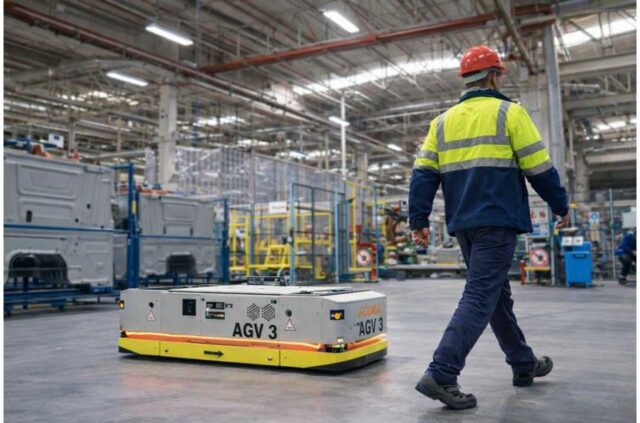
Adoption of autonomous mobile robots is on the rise, but the mobile tugger trains are getting a lot of attention as many global logistics hubs phase out human-driven fixed fossil-fuel-reliant internal shuttle traffic, especially the internal forklifts, which are linked with high yearly safety incidents. These new smart tugger trains are designed to deliver & collect different materials on the working floor and at multiple stations.
Moreover, this year we saw autonomous mobile tugger trains being deployed, which have significantly reduced floor traffic, eliminated pedestrian accidents, & minimized physical strain. These trains are already observed to cut down up to 12.78 tons of CO₂ emissions per facility annually, making a significant impact in circular economies and green initiatives.
4. Transition to Industry 5
This was a common misconception that automation will eventually replace humans from working floors, which actually happened in real life to some extent in 2026; we are now witnessing manufacturers leaning towards a much-appreciated Human-in-the-Loop (a.k.a. HITL) augmentation, which focuses on protecting, upskilling, and augmenting their existing workforce rather than replacing them entirely with robots.
The latest data from PRISMA-ScR research indicates that such human-in-the-loop frameworks are linked with more than 86 percent of artificial intelligence-powered systems and more than 80 percent of collaborative robots (a.k.a. cobots) in 2026.
Together, these two major technologies, coupled in digital twin SA networks, are observed to be extremely helpful for maintaining compression of risk and time and also reducing product development and reconfiguration times by 20 percent to 50 percent.
Moreover, modern operations in an IoT sensor grid coupled with cloud AI analytics are now used to implement cloud-native resource optimization and smart power cycles, which can regenerate energy and material in their production routines, all contributing to green incentives. All these technologies are enabling a smooth transition by using lean supply chains of Industry 4.0 to circular and regenerative models of Industry 5.0.
5. Intelligent Manufacturing with JETTEST
In this super-fast transition from Industry 4.0 to fully autonomous manufacturing frameworks, companies seek quality at scale in their manufacturing lines, and this is what JETTEST provides for them. In 2026, this platform is globally recognized for its next-generation and intelligent manufacturing solutions, which are designed to test and enable reliable automation for the verification layer in Industry 4.0 operations and beyond.
The PV inverter test systems and automated household energy storage PACK assembly lines are great examples here, as both of these comprehensive solutions are designed for modern high-value manufacturing of products like PV solar cells and energy storage inverters. For solar cells, they handle inverter efficiency analysis, PV power supply test systems, photovoltaic energy storage B/I systems, etc., to automate the validation process with extreme precision.
Similarly, for PACK assembly lines, these test lines from JETTEST handle BMS communication testing, end-of-line testing, aging tests, etc. to verify product endurance and its other performance markers. These two, along with others in their portfolio, are designed and industry-proven to deploy reliable and future-proof testing, burn-in, and automation infrastructure for the coming 5.0 transition of manufacturing.
6. Wrapping Up
It’s a wonderful time to be alive and experience how human-made industries are experiencing their next big transformation. Built on the modern automation and Industry 4.0 standards already in place, the future of PV solar cells and other high-value manufacturing is going to be run in fully integrated digital ecosystems. In the future, robots, cobots, and humans together will be working for anti-fragile and resilient manufacturing facilities.