
1. Introduction
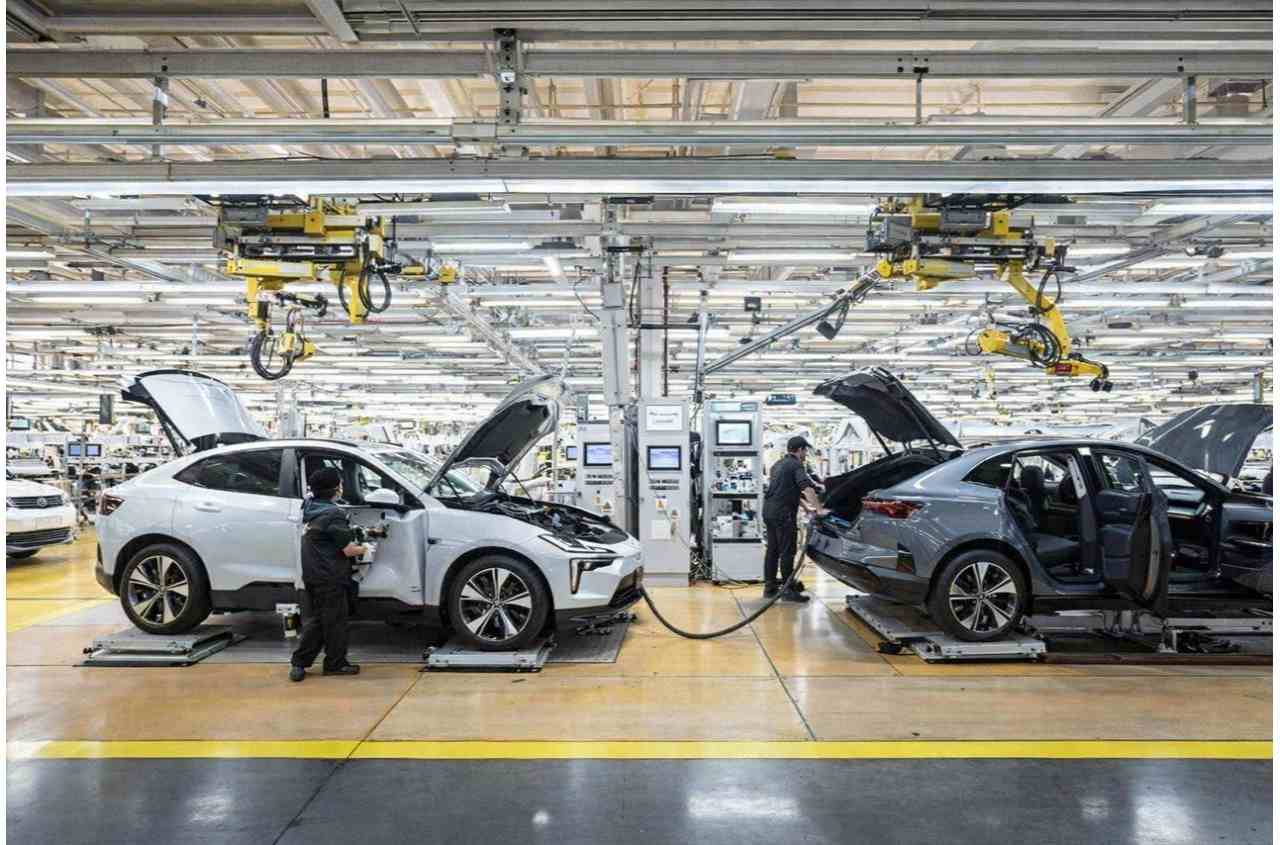
In 2026, EVs are now in the mainstream with Chinese brands at the lead. In fact, the recent report from the IEA indicates that total global electric car sales are expected to reach more than 23 million by the end of this year, making a big impression in the market. But behind these sales numbers, there is a problem of electronic component testing linked with systems used in EV production.
Your car manufacturer might tell you otherwise, but the reality is that the recent quick developments in car tech have also inherited the problem of a growing gap between how fast EVs are hitting the road & how thoroughly their critical components are being tested for real-world durability. We are going to investigate this rather major problem, what is happening to fix this, and how major car manufacturers are dealing with this.
2. The Rapid Rise of EV Production
The recent numbers of EV adoption aside, the 15% year-on-year rise tells a story of a future taken over by electric vehicles. Other surveys indicate that nearly 30 percent of new-car sales are going to be taken by EVs this year, and the momentum is continuously increasing. This year, the EU saw a steep increase in sales, especially in Italy, where sales increased 82 percent.
This is happening because of many reasons: a global increase in prices, new policy announcements from governments favoring planet-friendly transportation, and more affordable cars from Chinese brands. All this has led to a projected number of 510 million new vehicles to be on the road by 2035.
Falling prices for lithium-ion batteries and a surge in demand for stationary storage are reshaping the battery industry and also pushing the EV revolution. But with these transportation trends of positive sales, the testing infrastructure used in the factories hasn’t kept pace, which is becoming a big problem.
3. What Component Testing Actually Involves
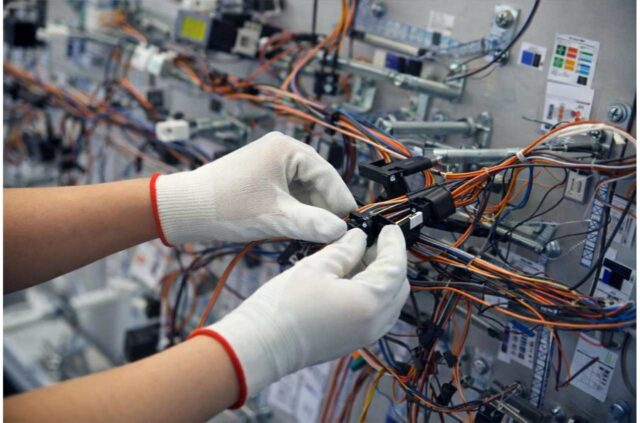
Typical electronic component testing in the electronics industry is done to verify whether all the parts in a final product are functioning correctly & meeting specified parameters. This can be done with simple tools like digital meters and LCR meters, and components like resistors, capacitors, integrated circuits, etc., are checked, but when it comes to EVs and their relevant parts like electric drives, motors, battery packs, and other complicated internals, this testing goes way beyond the traditional methods.
In EV manufacturing, testing schemes for electronic parts are designed to make sure that the considerations of safety, high-voltage reliability, & efficiency of the powertrain and control systems are maintained as documented in the warranty claims of the produced vehicle.
Apart from how well an EV is manufactured in terms of physical specification, electronic testing is done to strengthen safety layers and also catches a different class of problems, if any. Moreover, these testing routines are designed with the methodologies of functional testing, environmental testing, and aging/reliability testing.
On production floors, these tests are divided into core areas: testing routines for battery pack & management, inverter & power electronics, on-board chargers, electric motor & drive, and DC-DC converters. These core areas are exposed to testing workflows that are designed to catch different types of failure before a product ever reaches the road.
As the EV revolution is gaining pace, these testing technologies have started to feel the pressure, as most of these routines require time, and this is where fast-scaling EV production schedules don’t have to spare.
4. Why and Where the Testing Gap Is Showing Up?
One of the most significant reasons is that production timelines in today’s EV industry have compressed, but testing timelines haven’t. The 23 million units of demand number we just mentioned above means that new models and component revisions are much faster compared to what manufacturers used to do a decade ago.
Although large-scale manufacturers have been planning well ahead, new players are struggling to keep up with the expanding market, and their lab capacity hasn’t scaled with demand. Overcoming this problem requires years of construction and developing plans. This is a serious bottleneck that has nothing to do with EV manufacturing practices themselves but everything to do with testing and final validation infrastructure.
Other reasons include that regional expansion, which is outpacing regional testing standards, and battery/power electronics innovation are moving faster than test protocols can adapt. All these chokepoints are contributing to electronic component testing gaps for manufacturing modern EVs and are now globally recognized as a dispute.
5. Consequences of Testing Gaps in EV industry
If readers think this is all just claims, not real-life events, they are quite wrong. Here are a few examples: Major car manufacturers like Toyota, Subaru, and Lexus were hit with major battery/power system recalls in 2026 that cost them millions. One specific problem was linked to electronic component testing of battery control units, which caused them to abruptly shut down the electric drive system, resulting in a sudden loss of power while driving.
This particular incident was not a sudden fault; Toyota’s safety team had first flagged this failure during the pre-production testing routines of the linked cars one year before, which was later said not to be a problem but was later proven wrong. Similarly, more than 100,000 vehicles of Hyundai were recalled after a glitch in the battery management system’s monitoring software.
The list goes on and on; the Tesla Model Y faced an issue of a battery pack contactor defect, which led to a recall of 13,000 vehicles. A fault in the software that could cause the high-voltage system to shut down made BMW recall more than 70,000 vehicles. Recall logistics of modern EVs are dramatically more expensive than for traditional vehicles. Almost all of these faults leading to recalls can be linked back to gaps between what testing caught and what actually shipped.
6. How the Industry Is Responding
6.1 Faster, AI-assisted testing methods
The EV industry of today has a clear realization that the biggest bottlenecks in its manufacturing operations are testing limitations in production timelines rather than manufacturing capacity itself. For this, EV brands are now increasingly turning to smarter AI systems that are exceptional at compressing validation cycles without cutting corners.
Among them, advanced and evolving machine learning models are increasingly used to analyze IoT data from component tests. All of this is handled in real time while quickly flagging any potential anomalies, all of which is miles faster than manual review ever could be.
As mentioned above, electronic component testing schemes require substantial time (e.g burn-in & aging testing), & to cut the time required for a full aging cycle to complete, advanced AI-assisted systems are now being used. These systems are designed to identify degradation patterns partway through a test, which enables field engineers to pinpoint design flaws & helps companies avoid those hefty recalls.
6.2 Predictive analytics
EV manufacturers are also leaning heavily on predictive analytics to get ahead of component failures before they ever happen. This is done by using predictive models to analyze historical failure data, sensor readings & production variables in the production workflows.
All this data is fed from the field and from the production floors themselves, making production workflows a continuously improving feedback loop for design improvements. These systems complement the physical burn-in & aging equipment, still doing the heavy lifting on the factory floor.
6.3 Simulation-based aging tests
Companies are also using simulation-based prototype practices, especially for aging tests of EV batteries. This allows them to conduct component testing in a digital world where the manufacturing lines and their connected MES can predict long-term degradation behaviors.
This is a big deal for manufacturing departments, as now they can tweak the design of components and associated sub-internals inside them based on material properties, stress inputs, & historical failure data. All of this was done without needing to physically run every test to completion.
Having said that, the need for physical tests doesn’t go away, but the use of digital twins helps manufacturers effectively triage testing resources toward the highest-risk components first and also adds an effective layer of safety built right in to modern battery chemistries and power electronics.
7. Meet the Labs Closing the Gap
As mentioned above, physical component testing still holds its ground for reliability and safety alongside advanced AI-assisted monitoring systems and digital-twin operations. One of the most critical decisions EV manufacturers make is whom to partner with when it comes to choosing physical infrastructure, technical expertise, and capacity to run rigorous validation tests at scale.
In 2026, Jettest established itself with its industry-proven testing services and products, which are purpose-built for the demands of automotive systems, power electronics, solar, & energy storage applications. Its services are designed with the intersection of power, storage, & component reliability testing, making sure that the automobile companies of today avoid testing bottlenecks & keep up with the pace of modern industries.
In EV manufacturing, Jettest offers a complete range of testing equipment made for automotive production routines. These testing solutions are designed for executing performance testing, environmental stress screening, CAN/LIN communication diagnosis, and multi-channel parallel aging functions. The OBC power burn-in system from Jettest has received worldwide attention thanks to its positive results in high-volume testing.
It is designed as a fully automatic electronic component test system, specially used for power supply circuit boards. This automated equipment works by rapidly checking soldering quality, related QC checks & overall functional performance. The entire workflow is automated and maintains extreme accuracy. Unattended aging tests with MES-based tracking, flexible configuration profiles, and built for scale—all this makes it extremely desirable in the current EV manufacturing industry.
8. Wrapping Up
With the rise of EV manufacturing, the need for reliable and fast-paced electronic component testing is growing. Consequences of bottlenecks in testing have created immense problems for car manufacturers in the past two years, which have also pushed them to move to advanced AI-powered testing workflows and reliable physical automated testing equipment.